Category Archives: Book reviews

Book Review: Sea of Tranquility by Emily St. John Mandel


Sea of Tranquility is a wonderful novel of time travel which takes the reader from Vancouver Island in 1912 to land five hundred years later on a colony on the moon. It is an imaginative delight, exploring time travel and its fragilities. It’s also science fiction at its best and I’ve just wondered why I have read so little of this genre.

The novel begins in 1912 with Englishman, Edwin St Andrew who is forced by his family to travel to Canada. He’s not particularly keen to settle in the new frontier but during a walk in a forest, he encounters a shocking phenomena of a violin playing and a swooshing sound for which he can find no explanation. 

Two centuries later, a famous writer, Olive Llewellyn hears a musician playing violin in a subway while trees emerge around him.  Her latest book is about a pandemic which resonates just a little too much given our recent history. She inserts a strange paragraph about the musician. Another three hundred years later, we meet naïve but bored, Gaspery-Jacques Roberts who lives in the dark colony on the moon. He becomes a detective who is sent on a time-travelling mission to 1912 to investigate the anomaly witnessed by Edwin.

There is a lot in this novel to keep you focussed on the timelines and the characters who are all well-developed yet complex, each with their own motivations and desires. Edwin St Andrew is a man trapped between two worlds, the old and the new, struggling to find his place. Olive Llewellyn is torn about her daughter and the changing world around her as she faces yet another pandemic.  Gaspery-Jacques Roberts is desperate to prove himself yet struggles with the moral and ethical issues around time travel.

The author creates a cohesive and believable world. The scientific and technological elements make sense adding depth to the narrative.

Overall, this is a delightful and imaginative novel that explores the complexities of time-travel and the fragility of human existence. It kept me hooked until the very satisfactory and surprising end. I really enjoyed this short action packed novel.
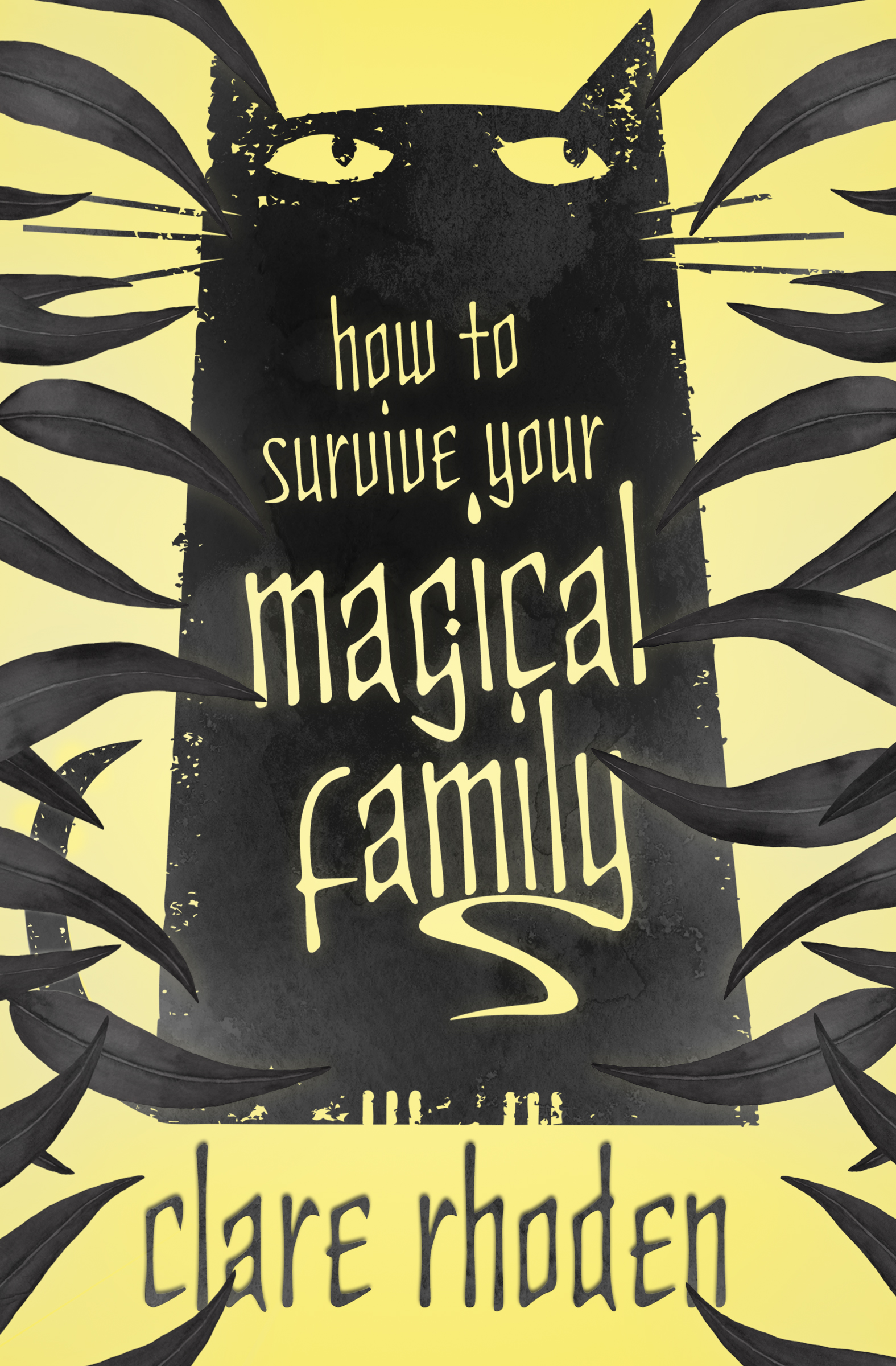
Book Review: How to Survive your Magical Family by Clare Rhoden

I don’t read too many young adult fantasy novels but I’m glad I read this one.

Who could resist a magic family who live in a home filled with magical cats?

It begins with fourteen-year-old Toby who lives with his older sister, Helen, and his dad. Poor Toby is the only one in the family who does not seem to have any magical power beyond understanding cats. One night he and his sister find a cat and her litter of kittens. Toby also finds a silver bracelet. What he finds is not ordinary, as a mature cat called Katkin springs out ostensibly from the bracelet she’s been caught in for many years.

And so starts a series of events involving Toby’s kidnapping and the unfolding of secrets his family has kept from him. Stepping in is another character, Toby’s next-door neighbour, Mia who witnesses Toby’s kidnapping and gives chase.

The kidnapper, Orsa is pure evil as you’d expect but the crows and the cats are on the side of good as they help to try to free Toby. The big question is why has he been targeted.

The story is told from Toby’s as well as Mia’s points of view. It moves fast keeping the reader engaged wanting to turn the page to know more.  Both of these characters were likeable but the one I loved the most was Katkin. Her story and her personality was quite endearing.

It’s also a coming of age story as Toby realises the importance of his place in his family and the power he truly has. It’s a delightful book. Could there be a sequel? With the ending, I suspect there might be.

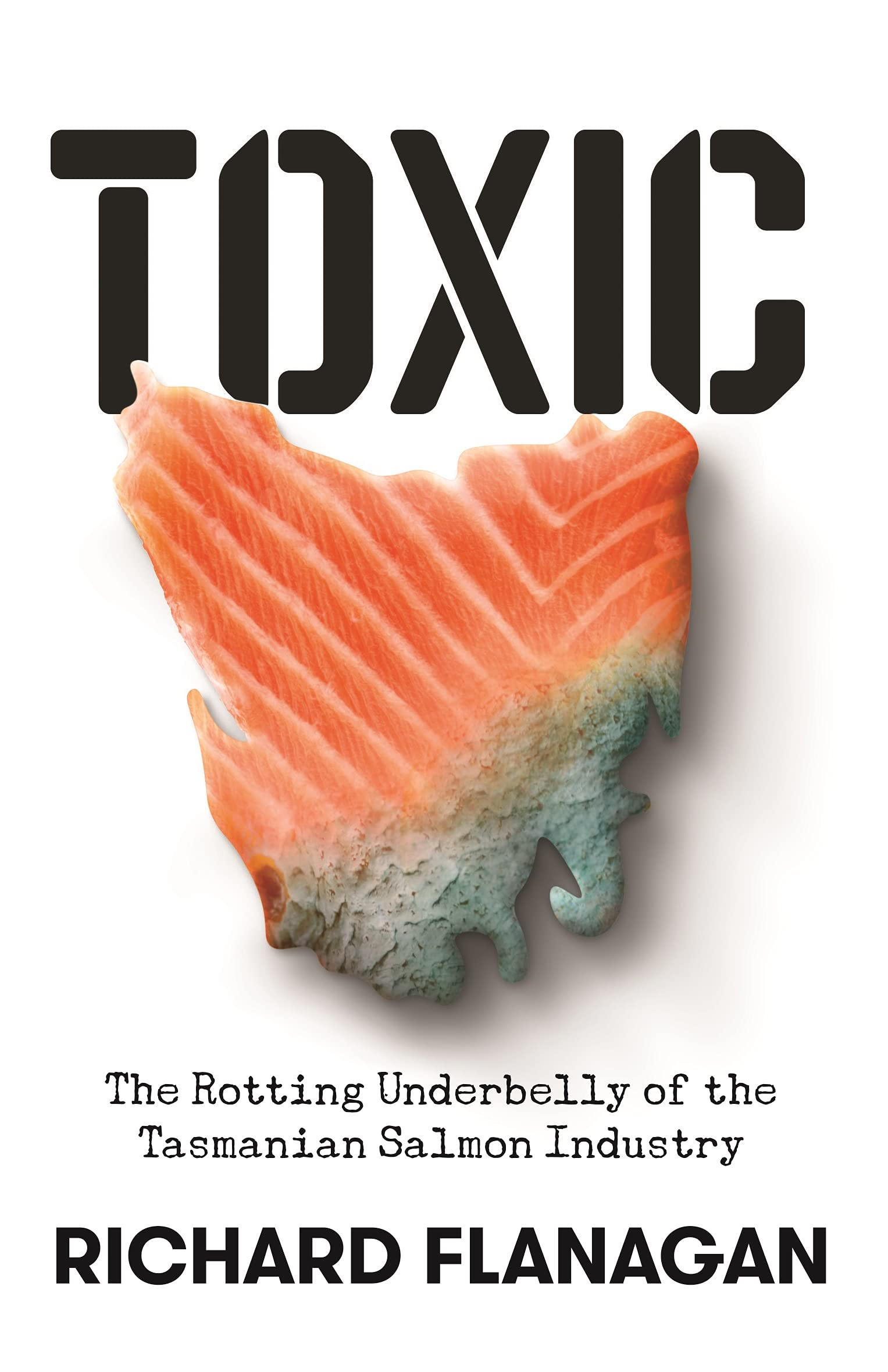
Toxic: The Rotting Underbelly of the Tasmanian Salmon Industry by Richard Flanagan

If you like to eat salmon, this book reveals what lies on our plate could well be a horror story which no movie could ever replicate. I like salmon but definitely not now that I’ve read this book.

Flanagan does a thorough job of revealing the craziness that is salmon farming. From the introduction of a fish to Tasmanian waters which is not suited because the temperature is not cold enough, the unfolding environmental damage this farming causes, to the Tasmanian government turning a blind eye on this multi-billion-dollar business.

It is an eye-opening story and I for one have completely turned off salmon. I was already wary after seeing the Four Corners report some years ago which revealed that the pink colour of salmon is artificial. I turned off it for a while but like many, I just forgot and fell for the seduction of the fish on my plate. Flanagan gives us a horror story of what we are really consuming and it’s not pretty.

“For we eat horror: factory farmed chicken heads and guts and claws and feathers, as well as petrochemical dyes, possible carcinogens and anti-biotic residue. We dine on destruction.”

Flanagan shows us so much more about how a farmed salmon lives in overcrowded filth, plugged with antibiotics, fed with soy which means that Brazilian rainforests are being pulled down to meet the demand for animal feed including farmed salmon. Another by-product is that the drinking water for Tasmanians has been at times compromised, not to mention the entire ecosystem of the once pristine Tasmanian coastline.

“Tasmania’s long history of well-documented corruption of politics by major industries such as forestry and gambling —and its lack of an ICAC—means Tasmanians survive in a culture where the expectation is that the system is corrupted.”

“Even when the salmon companies were found to have committed criminal acts—such as the recently uncovered scandal of Tassal’s illegal caging of seals in 2016—the Tasmanian government worked to ensure they evaded prosecution.”

Flanagan argues quite successfully in my opinion, backed up with solid and thorough research that the whole salmon industry in Tasmania stinks. At times, he writes with raw emotion and you can’t escape the affect it has on the reader. Agitation by people is one thing but not buying the product might just save the environment.  Read this one and be shocked but more importantly be informed.

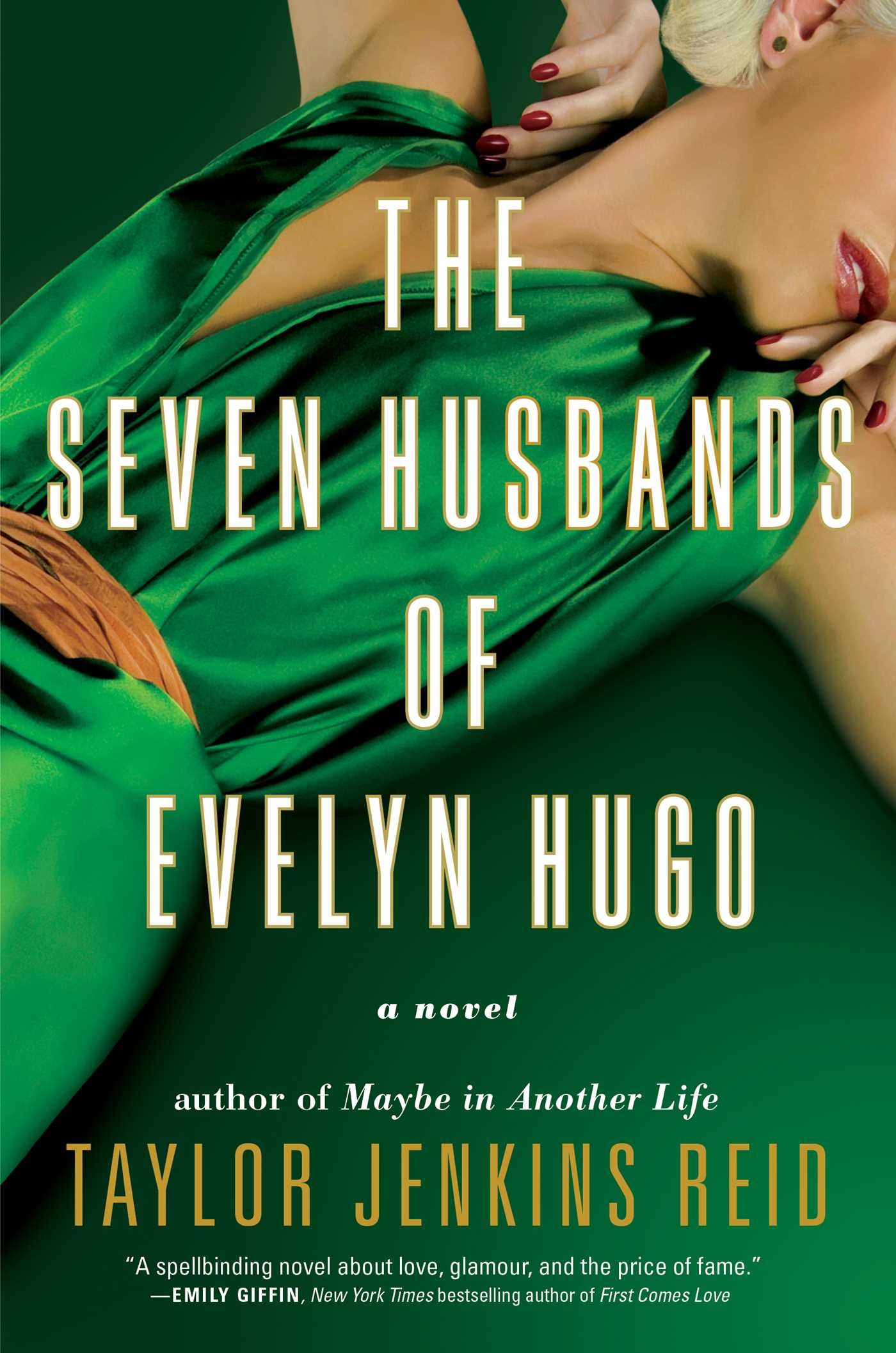
Book Review: The Seven Husbands of Evelyn Hugo by Taylor Jenkins Reid

I’ve taken a while to get to this one despite the hype. I adored Daisy Jones and the Six by the same author and after reading this one, I will have to hunt for more of this author’s work, because her books are just so damn good.

The novel follows the life of Evelyn Hugo, a glamorous movie star who rose to fame in the 1950s and 1960s. Evelyn, now in her seventies and has decided to give a tell-all interview to an unknown journalist named Monique Grant. As the two women sit down for the interview, Evelyn begins to reveal the secrets of her past, including her seven marriages, her rise to fame, and the tragedies that have shaped her life. You almost believe she’s a real person but of course it is fiction.

It’s an epic journey through each stage of her life from her early days and her rise to fame. As we progress through the story, we discover that her life is not as it may seem. Secrets are kept hidden and lives fabricated into something entirely different in order to feed the publicity machine for the tabloids and fans. The author gives us an insight into the inner workings of Hollywood and the sacrifices made by actors. It reminded me very much of the lives such as Rock Hudson and Judy Garland both stories hidden from the public.

What makes this story so compelling is the character of Evelyn herself. She is not always a likeable character, but you can’t help but feel sorry for her. She is the product of Hollywood and can never be her true self. Her struggle with this makes you cheer her on while understanding the choices she has made. There’s a nice twist towards the end which I guessed.

Overall, it is a beautifully written novel that is both entertaining and thought-provoking, with well drawn characters. It’s a story that stays with you long after you’ve finished.  I was hooked entirely. Try this one which would be especially good as a holiday read.

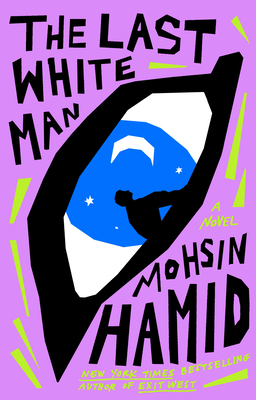
Book Review: The Last White Man  by Mohsin Hamid

This is a story about Anders, a white man who wakes one morning to find his skin has turned dark and when he looks into the mirror a stranger’s face is all he sees. Terrified he tells his new lover, Oona. Before long, there are reports coming from all over the country that this happening to other white people.

The main characters are Anders and Oona whose relationship grows as the established order of society is challenged and changes. It reminded me very much of what may have been inspired by our response. Like the pandemic, there is panic buying and fear as more and more white people change colour. Suspicion, resistance and racist vigilantes, riots and violence ensue.

There is also the voice of another generation in Ander’s father and Oona’s mother. The relationship Anders has with his father is tender and illuminating. Oona’s mother resists and fights, clinging to her conservative views until the end.

The writing is quite different, in very long paragraphs, punctuated only by commas. The following excerpt is an example which goes for almost a page.

“”When Anders got back in his car it occurred to him that the three people he had seen were all white, and that he was perhaps being paranoid, inventing meaning out of details that might not matter, and at a traffic light he confronted his gaze in the rear-view mirror, looked for the whiteness there, for it must be somewhere, maybe in his expression, but he could not see it, and the more he looked the less white he seemed, as though looking for his whiteness was the opposite of whiteness… “

Reading this novel with paragraphs so long made me almost hold my breath, as tension and change escalates. But it’s not all doom and gloom as Hamid shows us what society can do and perhaps it is a way of giving us hope for the adaptability or even a metamorphosis of humans into a better non-racist future.

It’s a short read and I’m sure will be on the awards list. I enjoyed this one.

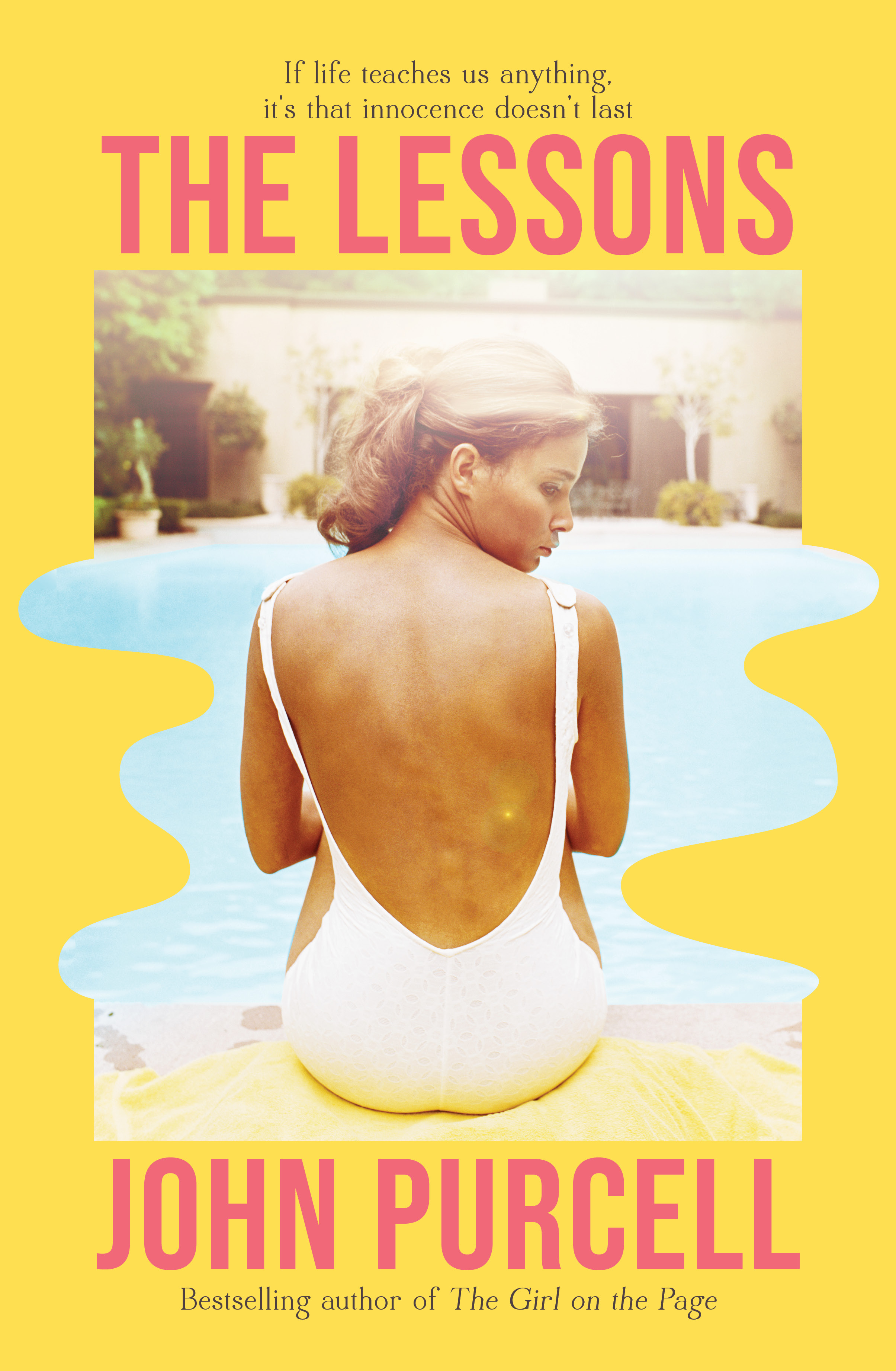
Book Review: The Lessons by John Purcell

This novel is a compelling story of a forbidden first love, class division and betrayal.

It’s 1961 when sixteen- year- old Daisy comes home from boarding school and meets young farmer, Harry. They fall deeply in love but her mother intervenes deciding that Daisy should be away from his influence and sends her to her Aunt Jane’s house unaware that the young Daisy is pregnant.

Daisy has always been convinced that her mother does not love her, and given that her mother was forced to marry Daisy’s father because she herself was pregnant at a young age gives rise to their fractious relationship.

Interspersed between the 1961’s timeline we meet Aunt Jane in 1983. She is a writer of renown on her way to a literary event in New York where she is interviewed about an earlier work exploring a coming of age novel, said to be drawn from real life.

We are privy to the point of views from Daisy, Harry and Jane which is cleverly handled to propel the story forward as Purcell explores how far a person would go for love, given numerous obstacles thrown their way.

Jane, a bohemian character in a marriage of what seems to be convenience is lost in her own relationships. Harry is a simple man who knows what he wants and that is Daisy. The interference by her mother and Jane creates a tragic outcome for the young lovers who go through life always yearning for one another.

I worried about Purcell’s handling of the female point of view particularly during a troubling event but I thought he handled it sensitively and well. The power of this novel is the characters and Purcell cleverly ensures that the reader quickly engages and cares about each one of them, even the ones who don’t behave all that well.

I really couldn’t put this one down, loved the swinging sixties, filled with lusty scenes, class differences and the final eyebrow raising reveal towards the end. Yes, check this one out.

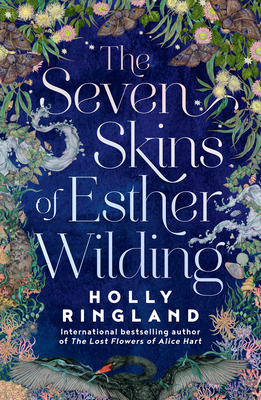
Book Review: The Seven Skins of Esther Wilding by Holly Ringland

I have mixed feelings about this book which is about love, sisters, daughters, sorrow and grief mixed with fairytales and women’s voices.

Sound like a lot? It is and it’s quite a long read.

The story opens with Esther. A swan crashes into her ute from above and she thinks it’s her missing sisters spirit. Her sister Aura last seen walking along the beach disappeared twelve months earlier and Esther has been called home for a memorial service. She has a fractious relationship with her tattooist mother Freya but together with her therapist father, Esther is asked to go to Denmark. Why? Because her sister had lived there for three years before returning home  broken and deeply sad and they believe Esther should go and find out what happened.

The plot slowly unfolds as we discover stories surrounding tattooing and how women’s stories can be told on their skin. We discover that Aura has a childhood diary where her teenage ramblings stop when she’s about to turn sixteen. It picks up again when she’s in Denmark when her studies into folklore and fairy tales brings her to write about the seven skins, lines and passages she also has tattooed on her body the meaning of which remains a mystery.

I enjoyed the imagery and the arc of Esther’s character even though she wasn’t a particularly likeable character but that wasn’t the point. Her grief and the trauma of losing her older sister, the relationships around her and her self-discovery was touching and quite moving. The other characters weren’t terribly engaging either serving little purpose than to tiptoe around Esther.

Mostly the novel centres on Esther’s point of view with occasional drifts to others and this I found to be unfulfilling because it failed to move the story along. I also found long chunks of information about each skin, her flashbacks about her sister and the fairy tale reference to be quite repetitive. Even her one night stand with Tom was repeated a few times. There was a lot of detail and description which was nice when it deserved a place but many times, I found it merely slowed the story down. Perhaps that was the intention for this slow boil of a novel but it didn’t suit me.

A minor plot issue, but given that Freya came from Denmark herself, why she as a mother would not hop on a plane to find out what happened to her own daughter did lose me a bit. I didn’t really buy her reasons but took the leap of faith and accepted it.

Having said that, there was lots about this novel I did enjoy. The idea that grief can paralyse a person, the bonds of sisters, especially an older sister’s impact on her younger sister ( I must remember that, as I am an older sister). It is beautifully written and quite lyrical but overall it didn’t quite work for me.