Category Archives: Book reviews

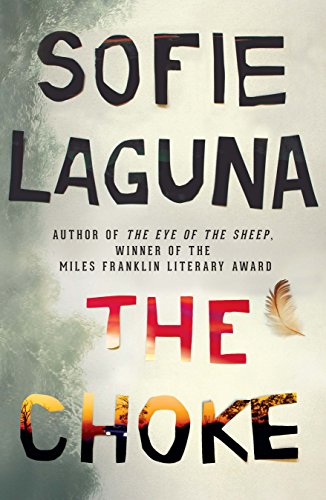
Book Review: The Choke by Sophie Laguna

This book is extraordinary.

I know that’s a big call but let me explain why after I explain the premise.

Justine is a child, abandoned by her mother when she was a toddler and barely noticed by her irresponsible and occasional father. She is brought up by her paternal grandfather who is haunted by his experience as a POW on the Burma Railway. The two desperately need each other, finding sanctuary with the chooks on an isolated property next to the Murray River. Justine is not just abandoned by her family but by the system too and lives as an outcast in the shadow of her father’s criminal activities. As she grows into her teenage self, she encounters great difficulties which make little sense to her until she makes a decision.

From the first page to the last, the writing is exquisite. Told from the point of view of Justine, Laguna masters the language to expertly capture the essence of young innocence and bewilderment in an aggressive and incomprehensible world of males. The drawing of the characters is masterful. You want to reach into the pages and pluck Justine from her surroundings and her poverty, to reassure her that life can be better. But we can’t, and when there are glimmers of hope, they’re dashed. Her pain is our pain as we observe Justine trying to make sense of her situation and when she decides to wrestle control of her life from the incompetence of others, it’s gripping.

The story and the writing resonated long after the book’s ending and remained with me, weeks after finishing.

I think this maybe my book of the year. Yet it’s only February.
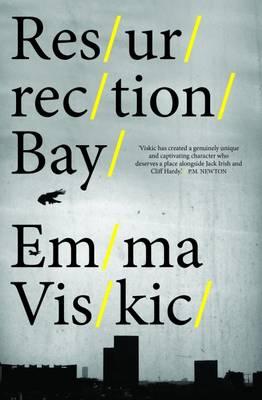
Book Review: Resurrection Bay by Emma Viskic

I’d heard about this book and the author, and when I saw it the other day, I just had to buy it. And no, it’s not on my list for 2018.

It’s another crime novel for me, (remember I only started reading this genre a few months ago) set in a fictitious town in coastal Victoria, Australia. I’m really getting into some truly wonderful stories. Resurrection Bay is no exception.

Caleb Zelic is a deaf man whose insights into people’s behaviour allow him to pick up clues when on the hunt for the killer of his childhood friend. As a private security investigator he works with his partner, ex-cop Frankie who has her own demons. All they have is the text message to Caleb from his dying friend. Caleb uses lip reading and facial expressions to communicate and is a master with body language. But he fails to see what’s going on behind his back as he stumbles headlong into danger. Along the way, he learns unpleasant truths not just about the people around him but himself as well.

From the first paragraph to the last, I was gripped by the authors writing. It’s fast paced and I found I had to slow down my reading to keep up with the many minor characters in the story. I loved the main characters particularly Caleb who refuses to allow his deafness to dominate his life. This is handled extremely well and gave a lot of insight into how deaf people deal with their environment.  There’s  a lot to like about Caleb and his vulnerability. I  found myself flinching as I almost yelled out loud telling him to watch out. Luckily, I was in the privacy of my own lounge room.

No wonder it’s won lots of awards. It’s well written and a quick and easy read. Give it a go. I’m sure you won’t be disappointed.

Book Review: Skylarking by Kate Mildenhall

Kate and Harriet are best friends who grow up on an isolated cape in the 1880’s where their fathers are the lighthouse keepers. They do everything together and as they grow into young women their lives are disrupted by the arrival of a man, McPhail. A moment in his cabin changes their lives forever.

The author, picked over the bones of a true story and imagined the lives of the girls. From the first line and last lines in the prologue, the reader is propelled head-long toward the climax.

“The sky was clear and blue forever that day.”

“I remember the way Harriet turned, breathless, laughing, a strand of her golden hair caught on her bottom lip. After that, I try not to remember.”

We are dropped into the stunning wilderness of the cape near Jervis Bay, NSW, and into the lives of the families. We are privy to everything about the girl’s friendship, their deep love for each other and the expectation of them as young women in that era. Loyalties are tested and risks taken as we are led to the edge of the cliff and back again.

The writing is beautiful and evocative; the cover stunning. This is a wonderful Australian debut novel by Kate Mildenhall.

Book Review: The Lost Pages by Marija Pericic

Marija Pericic won the Vogel Prize for this stunning debut novel set in Prague in 1908. Pericic reimagines the relationship between literary giants, Max Brod and Franz Kafka.

Knowing little about either novelist, I was quickly drawn into a story full of anguish, tension and human fragility. The author veered away from the known story that Brod was asked by his friend Kafka, on his death bed to destroy all of his unpublished work. Instead, Brod publishes it making sure that posthumously, Kafka is revered and honoured into the future.

What happens though, if history is rewritten? What if Brod, a tortured man with physical disabilities is filled with self-doubt and actually loathes Kafka as his rival? What if Brod falls in love with a girl who loves Kafka? It makes for a compelling read. Does it matter that the work is fiction? It’s an interesting take on historical figures. Events are true but the rest is not.

The writing and development of characters was exquisite as we are taken into Brod’s point of view. His disability is a key theme “The tongues of those who inhabited my world were silent, but their eyes were not. Their eyes spoke, that sea of eyes through which I moved each day. They glanced and looked in secret and averted their gazes, and this looking and not-looking spoke louder than any voice of disgust, curiosity or, worst of all, pity.”

Life in Prague in the early 1900’s is rich with description and mood which changes with the deterioration of Brod’s mind. The twist at the end caught me by surprise leaving me yearning for more.

My Reading List for 2018

In my last post I listed the books I read for 2017 and chose my Book of the Year. https://sckarakaltsas.wordpress.com/2018/01/01/books-of-the-year-2017/

It’s time to start compiling the books I want to read in 2018. Some in my list are ones voted on by my book group, some I’ve heard about and others are recommendations.

Let’s see how many I actually get through.

Here goes -:
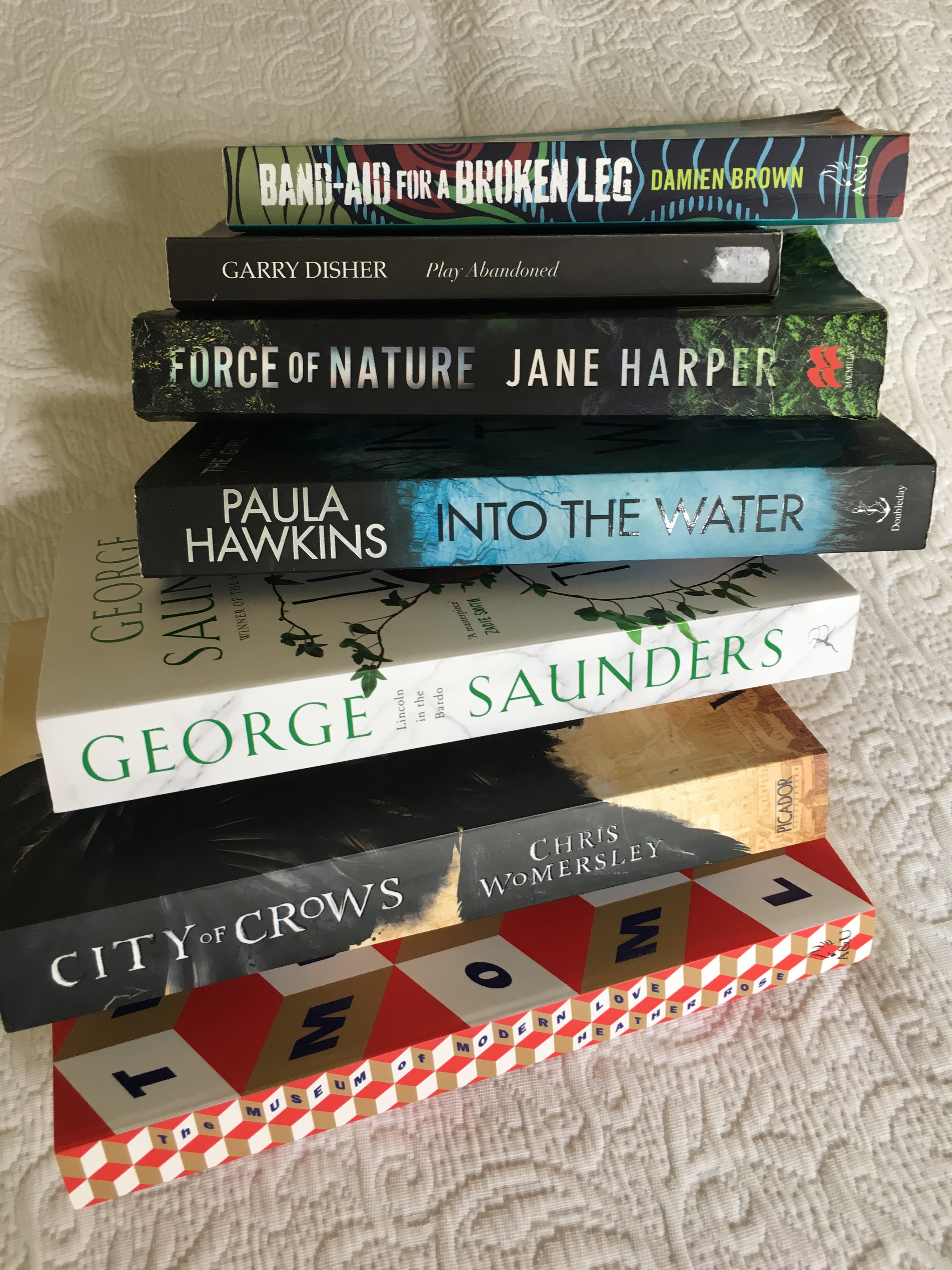
1. Lincoln in the Bardo by George Saunders
2. Into the Water by Paula Hawkins
3. A Gentleman in Moscow by Amor Towles
4. Never Let Me Go by Kazuo Ishiguro
5. The Sympathizer by Viet Thanh Nguyen
6. Little Fires Everywhere by Celeste Ng
7. The Choke by Sophie Laguna
8. Force of Nature by Jane Harper
9. City of Crows by Chris Womersely
10. Our Souls of the Night by Kent Haruf
11. The Museum of Modern Love by Heather Rose
12. Band-aid for a Broken Leg by Damien Brown
13. Skylarking by Kate Mildenhall
14. Conspiracy of Lies by Kathryn Gauci
15. The Horsemen by Tim Pear
16. The Lost Pages by Marija Pericic
17. Fever Dream by Samanta Schweblin
18. Play Abandoned by Garry Disher
19. The Hate U Give by Angie Thomas
20. Eleanor Oliphant is Completely Fine by Gail Honeymoon

No doubt there will a few new releases thrown into the mix as well. If you have any recommendations, I’d love to hear about them.

Book of the Year: 2017

I decided at the beginning of the year to  keep track of what I read and have surprised myself with the list. I know for some readers, twenty seven books is not that many, just over 2 per month.  I guess that’s not too bad especially since I haven’t included all the books and papers I’ve read as research for the current book I’m writing.  Interestingly, my list contains 18 books by women, of which 12 happen to be Australian. My selection is skewed to Australian writers, there are 17 on the list which makes me think I should widen my choices. But there are just so many good Australian authors and if you’ve never tried one, then you should.  I’ve completed reviews on half and hope to continue this into 2018 as I become more diligent with my reading.

Here is the list for 2017.  I wonder how it compare to yours.
1. Beauty is a Wound by Eka Kurniawan *
2. Talking to My Country by Stan Grant
3. The Invention of Wings by Sue Monk Kidd
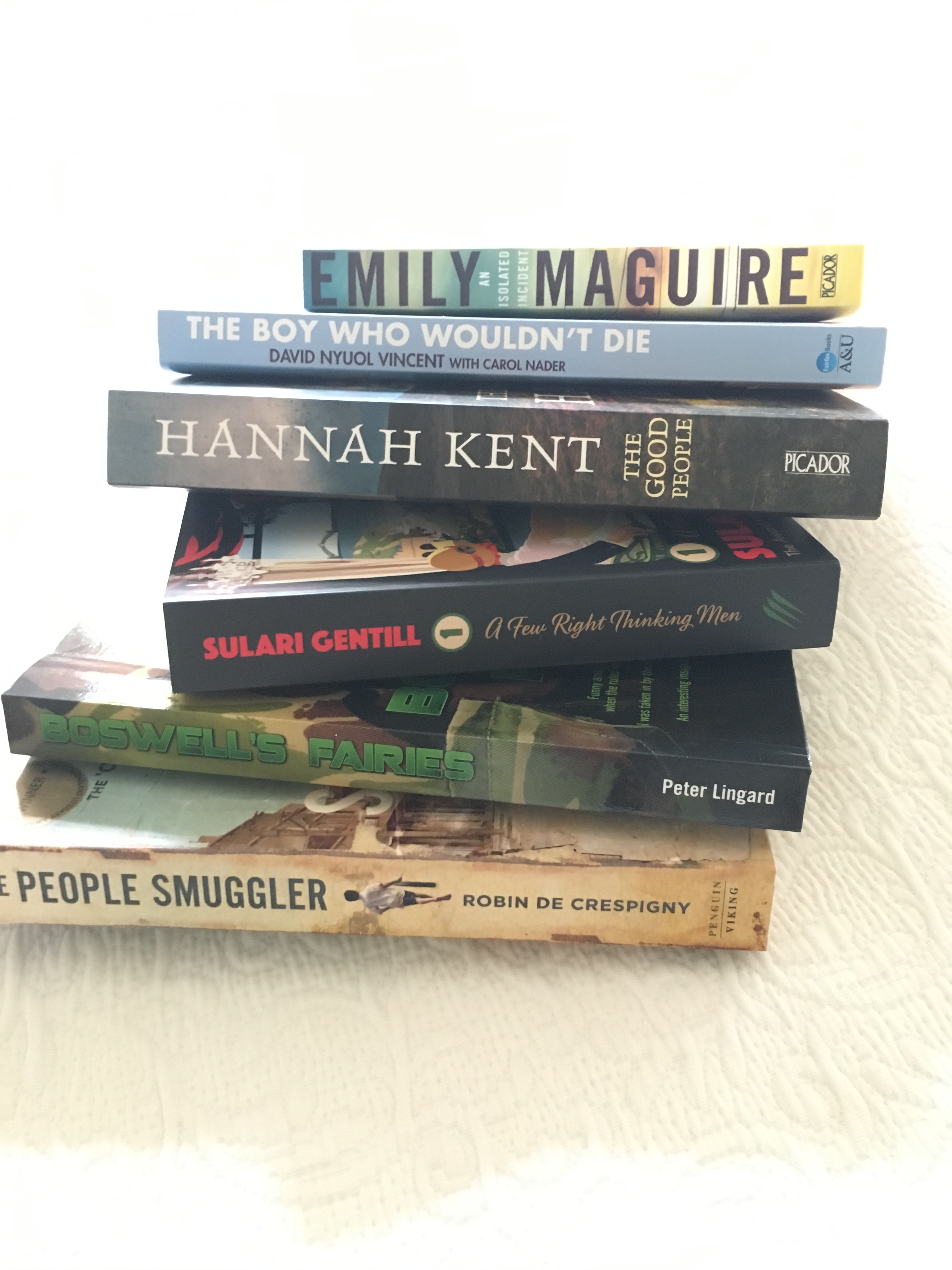
4. The Boy Who Wouldn’t Die by David Nyuol Vincent
5. By Grand Central Station I Sat Down and Wept by Elizabeth Smart *
6. A Shadow’s Breath by Nicole Hayes
7. The Good People by Hannah Kent
8. The Embroider by Kathryn Gauci
9. The Sciences of Appearances by Jacinta O’Halloran
10. The Mermaid Chair by Sue Monk Kidd
11. Eileen by Ottessa Moshefgh *
12. The People Smuggler by Robin De Crespigny
13. Reckoning by Magda Szubanski
14. North Water by Ian McGuire *
15. Everything to Live For by Turia Pitt
16. The Mandibles by Lionel Shriver *
17. The Last Days of Ava Langdon by Mark O’Flynn
18. Beauty in Thorns by Kate Forsyth
19. The Heat by Garry Disher
20. A Few Right Thinking Men by Sulari Gentill
21. Commonwealth by Ann Patchett
22. Boswell’s Fairies by Peter Lingard
23. The Noise of Time by Julian Barnes *
24. The Lakehouse by Kate Morton
25. An Isolated Incident by Emily Maguire
26. The Dry by Jane Harper
27. The High Mountains of Portugal by Yann Martel *

My top picks for 2017 are highlighted in bold. The ones with an * are my least favourite and as for the rest, I’d recommend each and every one of them. But I have to pick my book of the year, and it is pretty hard as it’s very close. But my choice would have to be  The Good People by Hannah Kent. Beautifully written, it’s a haunting story of three women in rural Ireland in the 19th Century.

On to 2018. Happy New Year everyone.


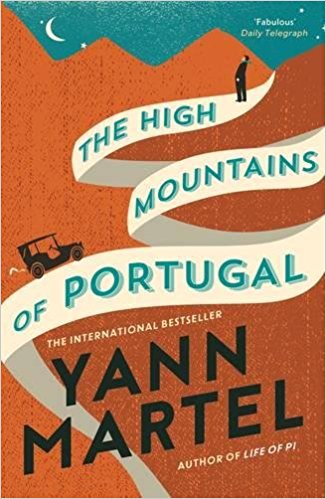
Book Review: The High Mountains of Portugal by Yann Martel

I loved Martel’s Booker Prize Winner, Life of Pi and was keen to read The High Mountains of Portugal. This is not so much a novel but three separate stories spanning a century. It begins in 1904 when a young man, Tomas goes in search of an artefact which he believes will jeopardise Christianity. Using the strange mode of transport for its time, the motor car, Martel takes us on an interesting journey. Thirty-five years later a Portuguese pathologist devoted to Agatha Christie murder mysteries finds himself in his own murder mystery. Fifty years on, a grieving Canadian goes to a village in Portugal with a chimpanzee and Tomas’s initial quest is brought full circle.

Part fable and fantasy Martel takes us on an almost spiritual journey. The detail is sometimes laborious and at other times fascinating. Try to imagine getting into a vehicle for the first time when there was none around and navigating it in first gear through gawking villagers who’ve never seen a car before. I laughed when Tomas parked the car under a tree. Later he realises that he did not know how to reverse the car and instead chopped the tree down only to be faced with a stump which he could not drive over. However, the journey, at times, becomes all most as tedious as a real life one. I found myself skipping some repetitive sections to get to the point. The second story meandered. Although the third was better.

It’s not a fast paced read and it has little in plot. Yet the themes of love and loss are delicately weaved into what is sometimes absurd surrealism. Martel writes beautifully and plays with style and ideas, but I’m afraid this wasn’t quite enough for me.