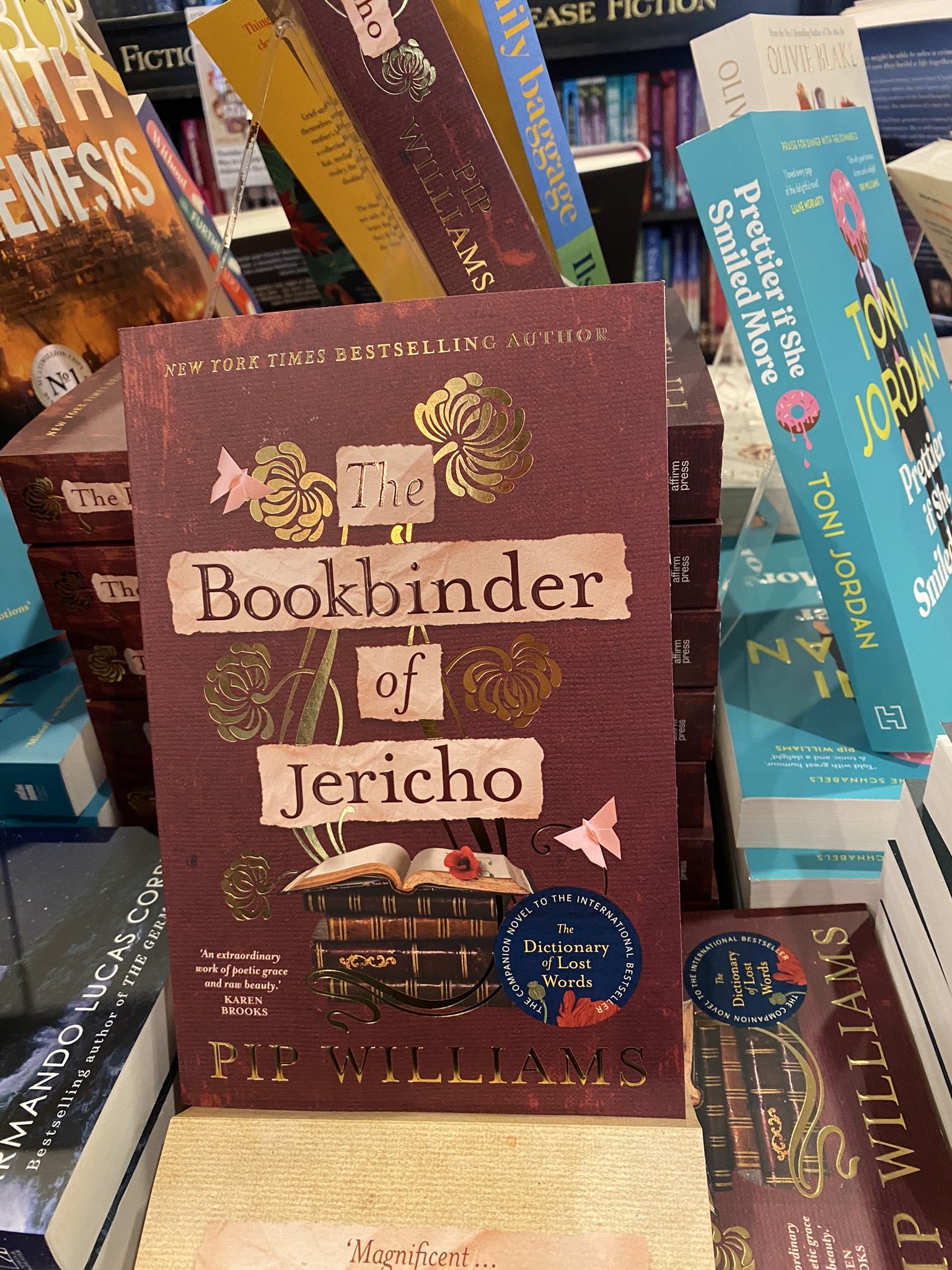
Book Review: The Bookbinder of Jericho by Pip Williams

From the author of the best-selling novel, The Dictionary of Lost Words, comes The Bookbinder of Jericho, another wonderful story set in Oxford but this time about a female bookbinder.

Peggy and her twin sister, Maude follow in their recently dead mother’s footsteps to work at  Clarendon Press as bookbinders. It’s the beginning of the First World War when the press begins to lose the male employees as they join the  ranks of war recruits. The story follows Peggy as she yearns to read the words on the pages she binds, the difficulties of the war, her relationship with Maude who needs looking after too.

It begins slowly and I admit to being a little impatient as I was forced to learn, in intricate detail the mechanics of book binding. I was glad I did and was soon taken in with the characters, difficulties of life and the pace of the war and its consequences until it consumed me to turn page after magnificently written page.

“There is satisfaction in sewing the parts of a book together. Binding one idea to the next, one word to another, reuniting sentences with their beginnings and ends. The process of stitching can become an act of reverence, and when there are more sections on the frame than on the bench, you begin to anticipate the moment the parts become a whole.”

The class system is magnified with injustice as is the role of women used to assist the war effort in every position normally occupied by men. But more importantly Williams shines a light on the significance of education for women portrayed by Peggy’s love for learning yet denied because of her class as well as her circumstance.

“Your job is to bind books, not read them.”

Williams immerses the reader in the everyday of Peggy’s life, beautifully giving us her observations, her frustration, vulnerability, and her insecurities, all while navigating us through the history. Tilda, a character from Williams earlier book, is a VAD (Voluntary Aid Detachment) sent to assist the wounded in France. Through her letters, Williams cleverly reveals the horrors of the injured and dying, the difficulties of the health workers as well as educating us about little known Australian painter, Isobel Rae.

The tenderness between the sisters is poignant, their relationship tested as the women forge different paths away from interdependence. “Maude didn’t find it easy to compose an original sentence, but she chose what to repeat. She understood, I think, that most of what people said was meaningless.”

This is a novel for booklovers, historical readers and for anyone who just loves a moving story.  A must read.
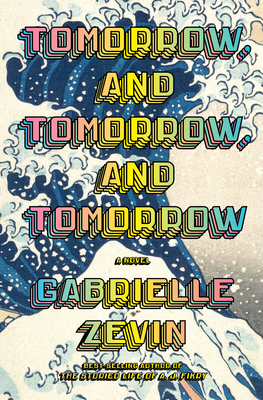
Book Review: Tomorrow and Tomorrow and Tomorrow by Gabrielle Zevin

I was curious about this book which has been receiving rave reviews world-wide.

It’s about two children who meet in a hospital. Sam is recovering from surgery to his smashed foot and the other, Sadie is visiting her sister who has cancer. They meet in a games room and soon develop a friendship over their mutual love of gaming.

Fast forward several years they bump into each other in a subway, each at university and each still in love with gaming. Together they make a game and with their mutual friend, Marx their game becomes a smash in the world of gaming.

At first glance, you might not consider reading this one. While it is about gaming, we are taken into the lives of Sadie and Sam and their evolving complicated relationship of friendship and how that is tested as their success grows.

Zevin gives an insight into gaming and its power over its audience, but more than that she shows us the history of the technology and its influence into everyday gaming lives. Yet, she didn’t delve deeper into the lives of gamers where the downside can be devastating for those addicted day and night. Nevertheless, this novel is so much more than gaming. It is about relationships and Zevin’s treatment of the friendship is tender yet complicated as she deep dives into their motivations, their personality and their treatment of each other.

I also liked the diversity of the characters, Sadie is Jewish, Sam is half Korean and Marx is half Japanese and the cultural mix was enlightening without singularly drawing attention to itself.  It’s an enjoyable journey to follow the lives of these two characters. Sometimes, they aren’t that likeable although Sam probably wins the most sympathy of the two. The supporting cast of Marx and Sam’s grandparents are stars while Dov is unlikeable.

It’s a long book and there were a couple of occasions where it dragged a little, but not for long. The writing is great, the story compelling and very readable. And now I might just have to see what the fuss is about and play a game. Give this one a go.

The Month that was…May 2023

What I’m watching…

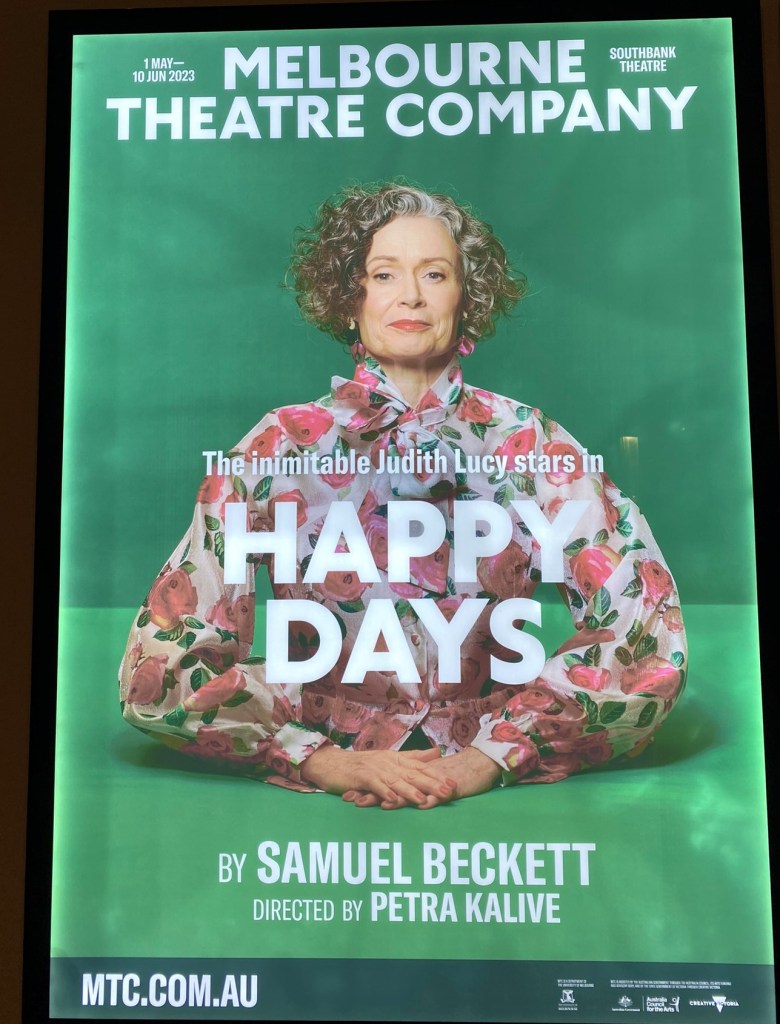
A month at home enjoying the last of the falling autumn leaves and summer’s heat. But I did manage to take in a play, Samuel Beckett’s Happy Days starring the incredible Judith Lucy. Ms Lucy, best known for her comedic abilities, shone in this virtually one woman show. The play itself left me scratching my head and required a lot of thought and analysis which enlightened with reflection. It’s on in Melbourne until June 10th.

We also took in the Monet & Friends at The Lume, Melbourne where the digital screen of art comes alive one walls and floors. It truly is an immersive and magical experience Highly recommended but hurry as I believe it ends in early June.

What I’m reading…

Watch out for my upcoming reviews but here are the ones for The Fancies and The Sea of Tranquility

Until next month…

Book Review: The Fancies by Kim Lock

I read Kim Lock’s earlier novel, The Other Side of Beautiful and loved it. I was very excited to hear that her latest had just been published and I was not disappointed.

This is a story about small towns and the characters who live there. Abigail Fancy is the daughter of Young Dick Fancy and Nell Fancy who are town’s mover and shakers. Abigail  returns home after a stint in jail despite the fact that she’d sworn she’d never return to the town which drove her out. But after twenty-four years it’s time to face her enemies and her demons.

This is a novel about characters and Lock has delightfully teased out many likeable and unlikable ones. Some are quirky, some inquisitive, some gossipy while others are tough and caring and full of self-importance. At the heart is a down to earth story filled with Australian vernacular laced liberally with humour and wisdom diving deep into misogynistic world where there is little justice.

“Word of Abigail’s return spread fast.

After the barbeque at Young Dick’s, Col Morton, starry-eyed, headed straight downhill to the pub and told the publican, Larry Dinwiddle. Larry told his wife Beverley, the postmistress, who then told Sheila Rocket, who was the first through the post office doors the next morning. ‘

The setting is a small fishing town on the coast of South Australia and Lock paints a great picture of community, the crayfishing industry and landscape.

The story of what happened twenty-four years ago unfolds slowly and the climax towards the end is delightful. Old Dick, the grandfather is dying and has dementia earning his own alternate short chapters when he applies moments of lucidity and brutal honesty and the town’s secrets begin to unravel despite Young Dick’s best efforts to keep a lid on everything.

How many times do I have to tell him? I’m not gonna be here tomorrow, let alone next bloody Christmas. I’m carking it, I say. Dropping off the perch. Taking a dirt nap. Shuffling off this mortal coil. Dying, I tell him. Are you thick in the head?”

I just loved this book. It’s funny, sad and cleverly constructed with characters you want to spend time with. It would be a great movie and it reminds me of the quirkiness of The Dressmaker. Let’s hope this one makes it to the big screen. In the meantime buy this one and read it.

Book Review: Sea of Tranquility by Emily St. John Mandel


Sea of Tranquility is a wonderful novel of time travel which takes the reader from Vancouver Island in 1912 to land five hundred years later on a colony on the moon. It is an imaginative delight, exploring time travel and its fragilities. It’s also science fiction at its best and I’ve just wondered why I have read so little of this genre.

The novel begins in 1912 with Englishman, Edwin St Andrew who is forced by his family to travel to Canada. He’s not particularly keen to settle in the new frontier but during a walk in a forest, he encounters a shocking phenomena of a violin playing and a swooshing sound for which he can find no explanation. 

Two centuries later, a famous writer, Olive Llewellyn hears a musician playing violin in a subway while trees emerge around him.  Her latest book is about a pandemic which resonates just a little too much given our recent history. She inserts a strange paragraph about the musician. Another three hundred years later, we meet naïve but bored, Gaspery-Jacques Roberts who lives in the dark colony on the moon. He becomes a detective who is sent on a time-travelling mission to 1912 to investigate the anomaly witnessed by Edwin.

There is a lot in this novel to keep you focussed on the timelines and the characters who are all well-developed yet complex, each with their own motivations and desires. Edwin St Andrew is a man trapped between two worlds, the old and the new, struggling to find his place. Olive Llewellyn is torn about her daughter and the changing world around her as she faces yet another pandemic.  Gaspery-Jacques Roberts is desperate to prove himself yet struggles with the moral and ethical issues around time travel.

The author creates a cohesive and believable world. The scientific and technological elements make sense adding depth to the narrative.

Overall, this is a delightful and imaginative novel that explores the complexities of time-travel and the fragility of human existence. It kept me hooked until the very satisfactory and surprising end. I really enjoyed this short action packed novel.

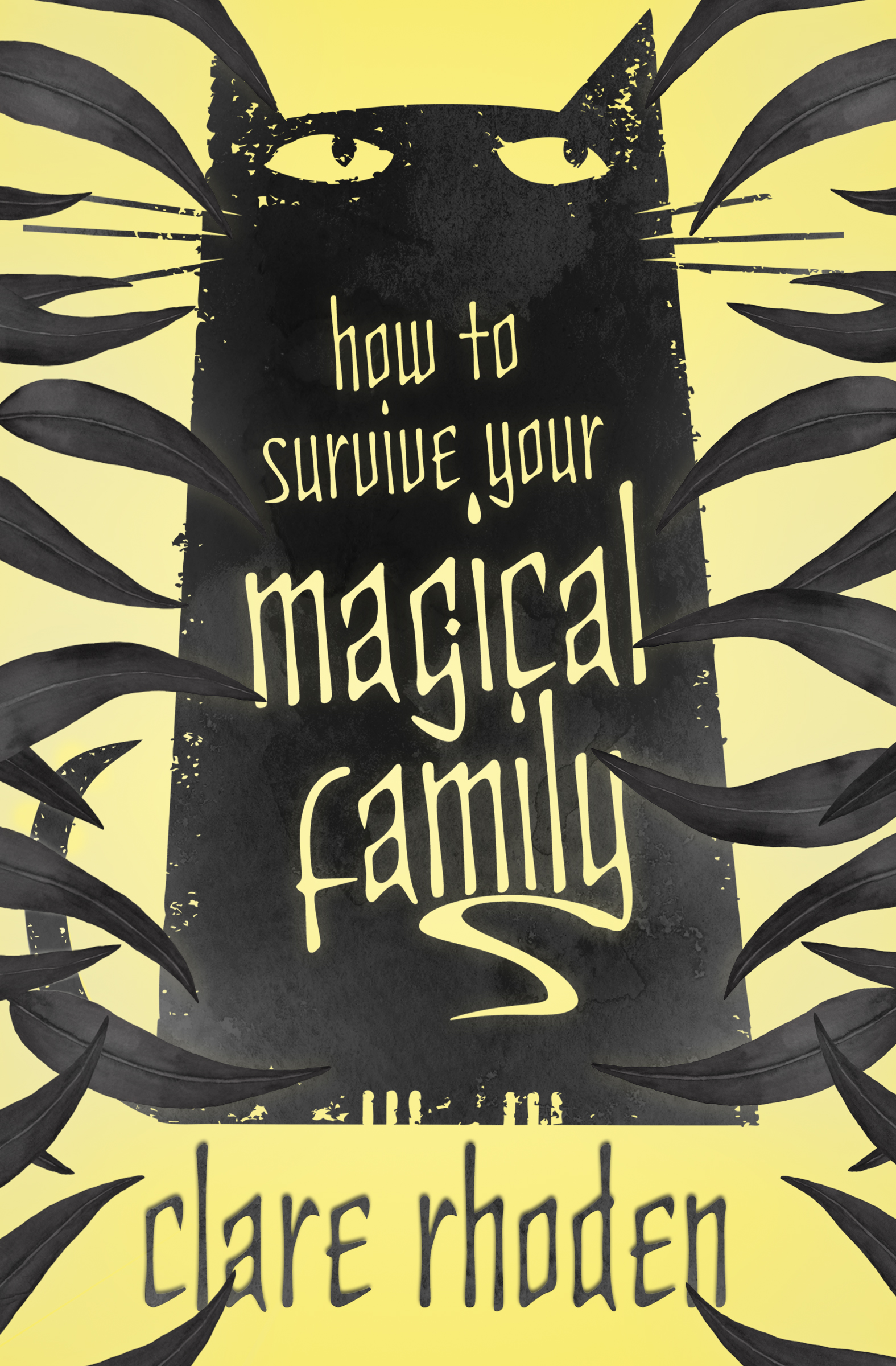
Book Review: How to Survive your Magical Family by Clare Rhoden

I don’t read too many young adult fantasy novels but I’m glad I read this one.

Who could resist a magic family who live in a home filled with magical cats?

It begins with fourteen-year-old Toby who lives with his older sister, Helen, and his dad. Poor Toby is the only one in the family who does not seem to have any magical power beyond understanding cats. One night he and his sister find a cat and her litter of kittens. Toby also finds a silver bracelet. What he finds is not ordinary, as a mature cat called Katkin springs out ostensibly from the bracelet she’s been caught in for many years.

And so starts a series of events involving Toby’s kidnapping and the unfolding of secrets his family has kept from him. Stepping in is another character, Toby’s next-door neighbour, Mia who witnesses Toby’s kidnapping and gives chase.

The kidnapper, Orsa is pure evil as you’d expect but the crows and the cats are on the side of good as they help to try to free Toby. The big question is why has he been targeted.

The story is told from Toby’s as well as Mia’s points of view. It moves fast keeping the reader engaged wanting to turn the page to know more.  Both of these characters were likeable but the one I loved the most was Katkin. Her story and her personality was quite endearing.

It’s also a coming of age story as Toby realises the importance of his place in his family and the power he truly has. It’s a delightful book. Could there be a sequel? With the ending, I suspect there might be.

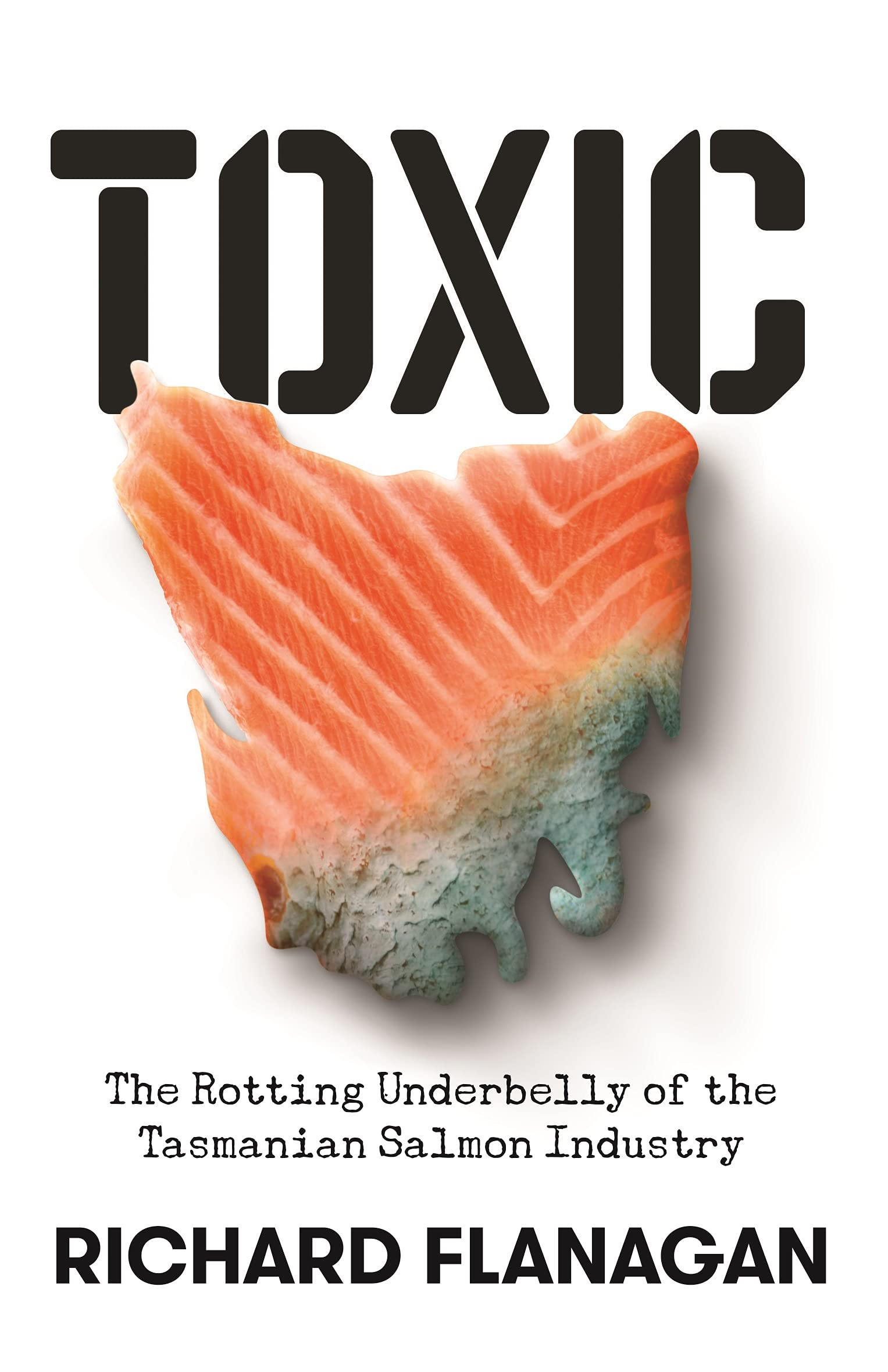
Toxic: The Rotting Underbelly of the Tasmanian Salmon Industry by Richard Flanagan

If you like to eat salmon, this book reveals what lies on our plate could well be a horror story which no movie could ever replicate. I like salmon but definitely not now that I’ve read this book.

Flanagan does a thorough job of revealing the craziness that is salmon farming. From the introduction of a fish to Tasmanian waters which is not suited because the temperature is not cold enough, the unfolding environmental damage this farming causes, to the Tasmanian government turning a blind eye on this multi-billion-dollar business.

It is an eye-opening story and I for one have completely turned off salmon. I was already wary after seeing the Four Corners report some years ago which revealed that the pink colour of salmon is artificial. I turned off it for a while but like many, I just forgot and fell for the seduction of the fish on my plate. Flanagan gives us a horror story of what we are really consuming and it’s not pretty.

“For we eat horror: factory farmed chicken heads and guts and claws and feathers, as well as petrochemical dyes, possible carcinogens and anti-biotic residue. We dine on destruction.”

Flanagan shows us so much more about how a farmed salmon lives in overcrowded filth, plugged with antibiotics, fed with soy which means that Brazilian rainforests are being pulled down to meet the demand for animal feed including farmed salmon. Another by-product is that the drinking water for Tasmanians has been at times compromised, not to mention the entire ecosystem of the once pristine Tasmanian coastline.

“Tasmania’s long history of well-documented corruption of politics by major industries such as forestry and gambling —and its lack of an ICAC—means Tasmanians survive in a culture where the expectation is that the system is corrupted.”

“Even when the salmon companies were found to have committed criminal acts—such as the recently uncovered scandal of Tassal’s illegal caging of seals in 2016—the Tasmanian government worked to ensure they evaded prosecution.”

Flanagan argues quite successfully in my opinion, backed up with solid and thorough research that the whole salmon industry in Tasmania stinks. At times, he writes with raw emotion and you can’t escape the affect it has on the reader. Agitation by people is one thing but not buying the product might just save the environment.  Read this one and be shocked but more importantly be informed.