Book Review: An American Marriage by Tayari Jones


33590210. sy475
A popular novel, this one is also a timely one to read given the Black Lives Matter protests worldwide at the moment.

The story is about a young, black educated couple. Roy, a rising executive and Celestial an upcoming artist, are newly married and intensely in love. Their lives are shattered when Roy is arrested, charged and jailed for twelve years for something he didn’t do.

His incarceration tests their love and their relationship and the dilemma is posed as we question ourselves – what would you do if this happened to you? Married for only eighteen months, the couple were still exploring the dimensions of their relationship. He’s in jail clinging onto hopes and dreams of a life with her. She moves on, opens her business and achieves accolades in the art world.  How can their relationship survive when they grow in different directions without the same experiences? What happens to their families and what positions do they take?

When Roy is eventually let out,  he tries to pick up from where they left off. The perception of what their lives should look like, seem almost patriarchal as we see the influential role the fathers of Celestial, Andre and Roy play in their children’s lives.

This is a love story of sorts told by three different people. The third character is Andre, Celestial’s long-time friend who introduced her to Roy and who stands by her. The structure is interesting as some of the story is told via their letters. Roy’s angst is particularly moving and we feel for him over the injustice of his incarceration and the consequential fallout on his family.
Without giving away spoilers, the person who he shares his jail cell seemed conveniently coincidental and I must admit to an eye-roll, yet it’s important to the story. Everything else is believable as the plot unfolds.

The characters are interesting and I warmed to Big Roy and Olive, Roy’s parents. Even though I understood her, I found difficulty relating to Celestial and she seemed remote particularly in the closing scenes. Her thoughts and feelings seemed to be fade away. Perhaps that’s what the author intended – for we fully witness the change in Roy through his thoughts and actions.

It’s an enjoyable read and beautifully written. I’d recommend it.
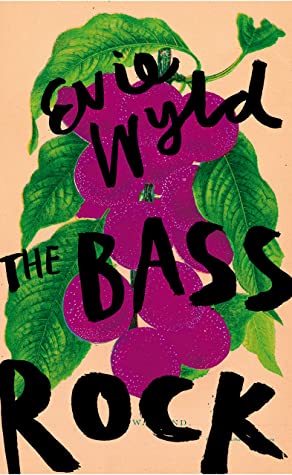
Book Review: The Bass Rock by Evie Wyld


This is a book where the reader needs to work. By that, I mean not everything is delivered to you and neatly tied up in a bow. You must concentrate and think beyond what is on the page and it’s not a book for everyone.

For a start there are three different stories in three different timelines and numerous characters and some side stories along the way. And what they all have in common is Bass Rock set in coastal Scotland.

“something about the Bass Rock was so misshapen, like the head of a dreadfully handicapped child.”

There is Sarah, a young woman in the 1700’s accused of being a witch who is on the run after being saved by a priest and his son. Then in a post-WW2 setting, there is Ruth, who marries a widow and tries to come to terms with being a young bride and stepmother to two young boys. The third story is about Vivienne in present day who grieves for her dead father and comes to Bass Rock to be caretaker of the house once lived in by Ruth.

It’s a difficult thing to do full justice to three very rich stories. For me the strongest story is around Ruth and could have stood alone or at least could have withstood sharing the pages with Vivienne. The one with Sarah was difficult for me to engage with and had little connection to the other two stories. 

In Ruth’s story, the behaviour of the village townspeople, and in particular the priest is quite bizarre, yet she is made to feel the odd one out. There is a mysterious ghostly presence in the house which is felt by Ruth and Vivienne and the unravelling of this separate story is violent and difficult to read. The manipulation of Ruth by her husband is infuriating and what goes on in the boy’s boarding school is left to the reader to piece together.

“Ruth had slept badly, waking throughout the night, too hot or too cold, with the smell of the school in her nose, like thick mud and flowers left to rot in their water.”

This is a tale of murder, domestic, sexual and psychological abuse, generational trauma in a largely patriarchal setting. At times brutal, the harshness of life for the women matches the harshness of the landscape. Somehow the thread of resilience and survival binds the women in their relationships with others. For Ruth it’s with Betty the housekeeper, for Vivienne it’s with Maggie a woman she befriends and for Sarah it’s with the boy.

It’s an intricate, haunting and thought-provoking novel, beautifully written. I found myself re-reading it to make sense of some of the story and fully analyse and appreciate the characters.

Nevertheless, this one will stay with me for a quite a while.

Book Review: The Dutch House by Ann Patchett


Pic from Goodreads


This character driven novel broodily unpacks the drama of a family over five decades.

Right after WW2, Cyril Conroy buys a run-down mansion as surprise for his wife, Elna. With their daughter Maeve, they move into the house which is still filled with the previous family’s abandoned belongings. Elna is uncomfortable and unhappy with the ostentatiousness of her new surroundings and Cyril brings in servants to help in the mistaken belief that this will make his wife happy. Elna has a son Danny, ten years after Maeve and she continues to be restless disappearing for days when finally, when Danny is three, she inexplicably abandons her family and disappears for good.

Danny is the unreliable narrator of this story. He tries to make sense of his past as well as his present. He remembers little of his mother and his father is remote. He relies on the servants and his older sister for his care. When his father marries Andrea, two more children are brought into the house. Life becomes more difficult for Danny and his sister when it’s clear that Andrea is a reluctant step-mother. When his father dies, Andrea throws fifteen-year-old Danny and her sister out to look after themselves.

The thing about an unreliable narrator like Danny is that he is on the periphery of the family story. As an adult, he is almost clueless about the women of this family, including his wife, struggling to understand how they think and why. Yet his clingy possessiveness of his sister (mother substitute) affects him for life.

Is your childhood home as central to who you are? In this case it’s pivotal. The Dutch House is a symbol for what was good and bad in the brother and sisters’ lives.

I found it interesting that Danny wanted so much to be like his father. A father who became rich without his wife knowing, who bought her The Dutch House as a romantic and generous gesture not knowing his wife hated it.

‘God’s truth,’ Maeve said. ‘Our father was a man who had never met his own wife.’

Danny falls into the trap himself with his own wife and history repeats itself except that he eventually comes to realise it. His reliance on his sister was interesting and almost stifling. And although we learn a lot about Maeve through his eyes, there’s a lot we don’t know. We never know if Maeve had romantic interests or friends and I wonder if the closeness Danny had for her was not as close as it could have been.

The same can be said of the step-mother painted as evil and money hungry who loved the house, yet she is as mysterious to brother and sister and reader alike.

It’s a modern-day Cinderella story up to a point and the love between the siblings is intense and tender. I love Patchett’s writing style, easy to read, yet beautifully crafted. It’s a slow burn of a story, so take your time and enjoy it.


Book Review: The Testaments by Margaret Attwood

42975172
I was curious to read this, having read and enjoyed the much lauded, The Handmaids Tale. I was probably more intrigued to see why The Testaments shared the 2019 Booker Prize with Girl, Woman, Other by Bernandine Evaristo. See my earlier review (https://sckarakaltsas.com/2020/02/21/book-review-girl-woman-other-by-bernadine-evaristo/

First, a bit about the book. It picks up fifteen years after the end of The Handmaid’s Tale, a sequel touting the answers to what happened to Offred. But this isn’t so much the case. Attwood cleverly pieces the narrative through the eyes of three women, although it took me quite a few pages to work that out. We have the elderly Aunt Lydia, (previously a judge before Gilead) who used the system to rise through the ranks. The others are two young women, one in Canada who was a baby refugee from Gilead and the other born and raised within Gilead. The three are involved in Gilead’s downfall.

It makes for interesting reading and like The Handmaid’s Tale is a fascinating look at a dystopian world inspired by past and present tyrannical regimes according to Attwood. The character of Aunt Lydia is quite brilliant in contrast to the two young women, who sounded similar in character, and perhaps that was the point  when we learn about their connection.

I have mixed views about this one. I feel as if it were written purely to satisfy the readers who wanted more from the first book and from the hugely successful television series which I didn’t watch. Did it satisfy those questions? For me, it didn’t because I didn’t yearn for a sequel in the first place. Perhaps I’m being cynical but I wonder if it was written to capitalise on the success because it surely would have been a money spinner.

Did it deserve to win an equal spot with Girl, Woman, Other? I would say no. It is well written as you would expect and it is enjoyable to read. There’s a clever plot with a thrilling finish. But is it the literary masterpiece I’d expected? For me, it wasn’t. But hey, check it for yourself.

Book Review: Elizabeth Macarthur: A Life at the Edge of the World by Michelle Scott Tucker

Elizabeth Macarthur: A Life at the Edge of the World

I have to confess to not having as broad a knowledge of Australian history as I probably should and so I was looking forward to this non-fiction book about Elizabeth Macarthur, one of Australia’s first farmers.

Elizabeth came out to Australia with her military officer husband John, on the second fleet. She must surely have been an extremely tolerant woman. John by all accounts was a pushy, complaining, selfish and irrational man prone to episodes of disputes and disagreement with all and sundry (including the odd duel or two) in the new settlement of Australia, with little regard for his long-suffering wife.

By all accounts, she tolerated him and their relationship was claimed to be a loving one. The poor woman endured a lot and the author has done an amazing job to piece together her life by way of letters, court cases, journals and newspaper articles. The author gives us a slice of what the Macarthur family was like as well as an insight into their vast land holdings and businesses and the politics and life in 1800’s Australia. It’s a fascinating look at colonial power over convicts, free settlers and the treatment of indigenous peoples, none of which is sugar-coated. Indeed, to read the brutal journey on a second fleet ship needs a strong stomach as conditions are described in gory detail, yet serves to highlight Elizabeth’s strength and endurance.

Elizabeth was a remarkable woman raising her children and running the Macarthur holdings, while her husband gallivanted off to the home country for several years. Yet her husband’s name in history is credited with establishing Australia’s wool industry. The author corrects this perception by shining a light on Elizabeth as well as acknowledging that many other women ran farms just as successfully. As is so often the case, we learn a lot more about John and the author does a gallant job to draw conclusions about what type of woman Elizabeth must have been.

It’s a well written and wonderfully researched book although I’d had just about enough of John, yearning for more on Elizabeth. Sadly, like so many women who were never acknowledged in history, we can only draw enough conclusions to elevate her.

If you’re after a snapshot of life in Australia in the eighteen hundreds, give this book a go. It’s worth it.

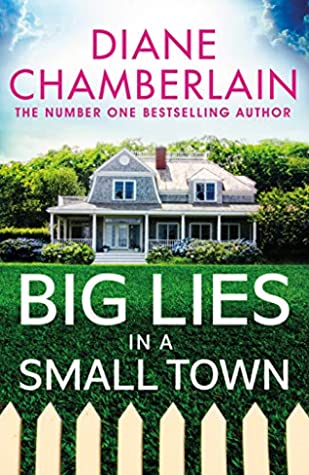
Book Review: Big Lies in a Small Town by Diane Chamberlain

Pic from Goodreads


The town of Edenton, North Carolina is front and centre of this dual timeline novel and what a surprisingly gripping historical mystery it is.


Morgan Christopher, once an art student is in jail for a crime she didn’t commit, when she is released on bail to restore a post office mural in time for the opening of a gallery in Edenton. She has no training on restoration and has a short deadline to complete it or she faces returning to jail. She sets to work on the mural and as she cleans and restores it, the painting reveals more than she expected.


Anna Dale, a young talented artist wins a contest in 1940 to paint the mural for the Edenton Post Office and we follow her story. Coming from the north near New York, she confronts prejudices and secrets in the small town. She disappears and so does the mural until it turns up in 2018 for Morgan to restore and the questions mount throughout the book until we reach the satisfying climactic end.


The prologue opens with three black children discovering a dead white man setting the scene for a deliciously slow unveiling. I so enjoyed this book, particularly the last half and was unable to put it down. The character development of Anna and Morgan was very well done. The two find themselves and each other with art.


Chamberlain does an amazing job with both timelines and her research into the real town and its history, good and bad,  was very enlightening. Both stories are compelling and heart-breaking fully engaging the reader from start to finish.


You won’t be disappointed reading this one and I’d heartily recommend it.

Book Review: Such A Fun Age by Kelly Reid


There’s a lot of hype around this book which can set expectations high.

Emira, a young black woman is a regular babysitter for Briar, a white three-year-old girl whose mother Alix is an affluent white woman. Briar is a talkative and highly inquisitive child with a nervous disposition. Late one night, Alix calls Emira to take Briar out while the police come by to investigate a broken window. Emira thinks about the money she needs and she leaves a party to come and look after the child.  (As an aside, why a three-year-old is not already in bed fast asleep pops into my mind but the nature of this child is explored to kind of explain it.)

Emira takes Briar to a grocery story because the child loves to look at nuts.  A security guard watches them and asks Emira has a young white child. Kelley, a white man happens to film the ensuing altercation.  This event has reverberations for Emira, Alix, Kelley and poor little Briar. 

It is hard to say a lot without giving away spoilers. The underlying issues around race and privilege are central themes as is women’s relationships with each other and the pressure women can place on themselves and on their friends.

Alix is a do-gooder and is genuinely horrified by what happened to Emira at the grocery store. Besides throwing money at her and support to take it further, Alix decides that she really needs Emira not just for babysitting, but as a friend and part of her family. Alix wants to get close, to know her to the point of stalking her babysitter’s texts.


“Alix often felt that Emira saw her as a textbook rich white person… but if Emira would only take a deeper look… Alix fantasized about Emira discovering things about her that shaped what Alix saw as the truest version of herself. Like the fact that one of Alix’s friends was also black. That Alix’s new and favourite shoes were from Payless, and only cost eighteen dollars.”


I had little sympathy for Alix who was completely needy, turning to her girlfriends for advice over the most ridiculous things. Her well-drawn character produced a range of emotions for me. Emira on the other hand just wants to do a job which pays her enough to qualify for health insurance. Well- educated, she is without ambition,  continuously doubting herself. She compares herself to her girlfriends and their own various successes and they don’t  quite understand Emira who’s highlight of the week is to be with Briar who adores her. Alix’s girlfriends are the same. And the relationships are very well handled.


“Sometimes, when she was particularly broke, Emira convinced herself that if she had a real job, a nine-to-five position with benefits and decent pay, then the rest of her life would start to resemble adulthood as well.”


It took a while for me to get into the first half of the book, getting to know characters I didn’t much like. The second half was dynamite with a sinister twist creating a great deal of anxiety about Emira, cheering for her and hoping her response would produce a positive outcome. 

Despite the hype, it’s a quick, easy read and worth checking out. But is it a five star read? Not for me.