Tag Archives: australian authors

Book Review: The Family Next Door by Sally Hepworth

34964898


Do we ever really know what goes on behind our neighbours doors? It’s an intriguing question and one which I’ve often thought about.

This story centres on four women who live in suburban Sandringham in Melbourne, a suburb I know well. They live in a court and Fran and Essie have similar aged children, while Angie has two older boys. They aren’t particularly close but when the single Isabelle moves in, things start to get interesting.

There are many secrets and the first half of the book concentrates on understanding these women and their stories. Then things move into the next gear fairly rapidly and the second half of the book is a nail biter with an unexpected twist. Which is just as well as I was beginning to lose interest in these women.

They almost seemed very similar and to be honest quite bland with little to differentiate from each other and I think that’s why I was beginning to lose interest.

I’m glad I persevered though because the second half was well paced and kept me completely interested so much so that I kept reading until the end.

Another Sally Hepworth book to consider although not quite as good as The Mother-in-Law, nevertheless an easy one to read.

Book Review: A Room Full of Leaves by Kate Grenville

50993145

Oh, what a story Kate Grenville has put together.

I’d read about Elizabeth Macarthur in the incredible non-fiction work by Michelle Scott Tucker (see my earlier review https://sckarakaltsas.com/2020/05/22/book-review-elizabeth-macarthur-a-life-at-the-edge-of-the-world-by-michelle-scott-tucker/ ) where she brought Elizabeth out from behind her famous husband John Macarthur. And it was a glimpse behind the façade of a woman who perhaps should have been given more credit for Australia riding on the back of sheep instead of her notorious husband.

In this book, we are asked to imagine that Elizabeth has kept a secret memoir from her time before she comes to Australia on the second fleet. It conveys her inner most thoughts and feelings and Kate Grenville brings us a story of what might have really been going on in this famous marriage. It’s fascinating.

Grenville as always, beautifully captured the colonial settlement, the struggles and deprivations from Elizabeth’s point of view. Importantly it also gave a voice to how women had to carefully navigate their lives around who they should marry. One wrong decision meant the difference between happiness and sadness, poverty or respectability. In Elizabeth’s case she made the wrong choice in marrying a man like John yet the conclusion that she would have made the best of it is entirely believable.

It’s an easy read and beautifully written and I couldn’t get enough of it. Then the last few pages drew her story to an abrupt close and I wondered why the rest of her life couldn’t have been explored like I wanted it to. It would have made for a huge volume of pages, that’s true, but perhaps the author felt that she had explored the more important parts of her life. We don’t get to see how Elizabeth managed the farm and brought about prosperity for her and her family. After the birth of her third child, the rest of her pregnancies are summed up in barely a sentence. Perhaps had I not read the comprehensive work of Tucker I may not felt a little cheated. Or perhaps I’m just greedy for more.

Highly entertaining and if you read this book then I’d suggest following it up with Michelle Scott Tucker’s work.

Book Review: The Wife and The Widow by Christian White


If you want a page-turning mystery, this one might just be for you.

This story set on a fictitious island off the Bellarine Peninsula and those of us from Melbourne will be familiar with some of the landmarks mentioned. It is told from two points of view, There is the widow, Kate whose husband is missing. When he fails to arrive home from an international conference, and is instead discovered dead on the island, Kate tries to navigate around her grief to find out what happened and instead unravels her husband’s secrets. The other point of view is the wife, Abby, a local who lives on the island and is forced to face the possibility that her husband could be a murderer.

The blurb itself is surely already intriguing enough to capture your interest and if you’ve read The Nowhere Child, you’ll understand that not all is what it seems. Indeed, I didn’t see the twist coming and when it came, I confess to scratching my head trying to work out what happened. It is quite brilliant.

Both female characters are well developed and the reader feels for them. The author weaves in themes of family, grief, and secrets and has us wondering how well one person can know another.

Give this whodunnit  a go.

Book Review: Damascus by Christos Tsiolkas


I’d heard that this book was a difficult one to read. It’s actually easy to read but the content at times, is what is difficult.

This is the story of Saul, later known as Paul who wrote the gospels and was credited with helping to establish the Christian church we know today. As you’d imagine this is an ambitious work and the research would have been mountainous.

It opens in 35 AD with Saul, who is initially non-believer of Jesus. Then he purportedly sees him on the road to Damascus. I had to read this section over as it wasn’t immediately clear what had happened. Paul (Saul) is set upon by bandits and ends up losing an eye and is severely injured. There was no reference to seeing Jesus in this section yet it becomes apparent that this momentous occasion was relayed to his followers as being the catalyst for his change in faith.  This was the first stumble for me and I reached for the internet to get greater clarity. Is the author indicating that it was just a knock on the head and the greatest moment of the ages could have been anything other than what the story has hinged on? I wonder.

The book is divided into sections according to years and different characters point of view. Lydia’s story and her meeting with Paul was very interesting and the suppression and lives of women on every level was well told. I enjoyed the parts from Paul’s point of view which is given to us as a young man and then as an old one.

There’s a section about Timothy who is said to have been the scribe for Saul who was illiterate. The two are incredibly close. However, the narrative from Timothy’s point of view as an old man becomes quite repetitive and longwinded and seemed to slow down the pace of the story. Perhaps it’s just me but I found myself skipping these sections. We know that Timothy loves Paul and it’s reciprocated. Did they have a homosexual relationship? It’s insinuated and weaves its way through the book. Given that the author is gay, it makes for an interesting and believable interpretation.

What the author also does well is to put us right into the filth, the stench and violence of the times where poverty is rife and human life worth little. Some of it is hard to digest but the repetition of the images for me, became diluted as the story progressed. There is little light and shade despite the span of years covered. But Tsiolkas is a writer known for his raw and sometimes brutal portrayal of life and we’ve grown to expect that the language will be profane and the descriptions to be shocking.

Don’t be surprised if what you read doesn’t prompt the same memory of what you learnt in Sunday school. I’d recommend this one with a caution. It’s probably not the best thing to read during a Covid-19 lockdown but if you’re interested in history after the death of Christ, then this is one to check out.

Book Review: Phosphorescence by Julia Baird


What a wonderful book to read during the stressful time of a stage four lock-down in Melbourne? I’m sure when the author wrote this book, she had no idea that her words would resonate so well in a world which has been turned upside down and where fear of a thing unseen could change the very way we live.

The author reminds each of us to explore what is around us. I don’t mean get into the car and travel (of course we can’t do that) but to really look with our eyes and listen, to search and find awe in the very things we take for granted.

“dive into a world where clocks don’t tick and inboxes don’t ping.” Easier said than done when there are competing demands all around us. But she argues, “open yourself up to awe, to the experience of seeing something astonishing, unfathomable or greater than yourself.”

Baird talks about immersing oneself in nature and discusses the notion of forest bathing having enormous benefits for our physical and mental being. “Studies have shown that opening ourselves up to awe can make us more patient, and less irritable, more humble, more curious and creative. 

And so, I have been doing just that. Walking amongst trees in our nearby park and thinking how lucky I am, that in a city of five million people i have access to parks and open spaces nearby. Exploring my long-forgotten garden and discovering the pleasure of plants hidden in a jungle of overgrowth, and spending time on things I’d taken for granted. Baird references what  Aboriginal people have told us and known all along about their respect for country, which has been ignored. Perhaps they’ve always had the answer.

Baird also explores a number of other ideas; the place for religious belief but not necessarily organised. That silence from human activity is shrinking and worth pursuing to allow us to appreciate what is around us. Indeed, as I sit reading this book, I tune into the traffic noise, the sound of a leaf blower outside my window and become distracted by the ding of my phone, to reach for internet news to feed my ever-growing anxiety and I realise Baird makes a heap of sense. 

There’s a lot in this book and much would be helpful to readers who maybe need a break to breath, to look what’s around them, appreciate the little things and just be. Check this one out and see what awes you.

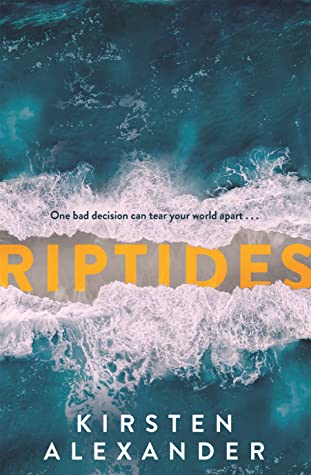
Book Review: Riptide by KirstenAlexander

Pic from Goodreads


Another wonderful Australian author writes a  pacey, well-written novel which transports us to Queensland in 1974.

 Charlie and his sister, Abby are travelling along a back road to their father’s farm where they encounter a lone vehicle who is forced off the road because Charlie, who has the wheel has drifted to sleep. The pregnant driver is killed and instead of alerting authorities, they flee leaving her beside the road. When they arrive at their father’s farm, they realise the dead woman is their father’s fiancé.

This is set in Queensland in an era of harsh corrupt policing and a right-wing government. It’s a family drama of secrets and lies never devoid of tension and twists, many of which I didn’t see coming. The guilt splits their family apart and plagues Abby and Charlie in different ways which we see because the narrative is split by their alternate point of view. My sympathy lay with Abby mostly, a woman trying to juggle three children, manage her high-flying husband, her self-absorbed brother and her grieving father. Somewhere in all that is a future she dreams of which now slips away. 

 This book is certainly a page turner and the references to the major events of the time such as Cyclone Tracey’s devastation of Darwin, were insightful and enlightening.

I’m in two minds about the ending which was abrupt and I found myself asking but what about… Nevertheless, it’s a good read and a compelling premise with lots going on, so give it a go.

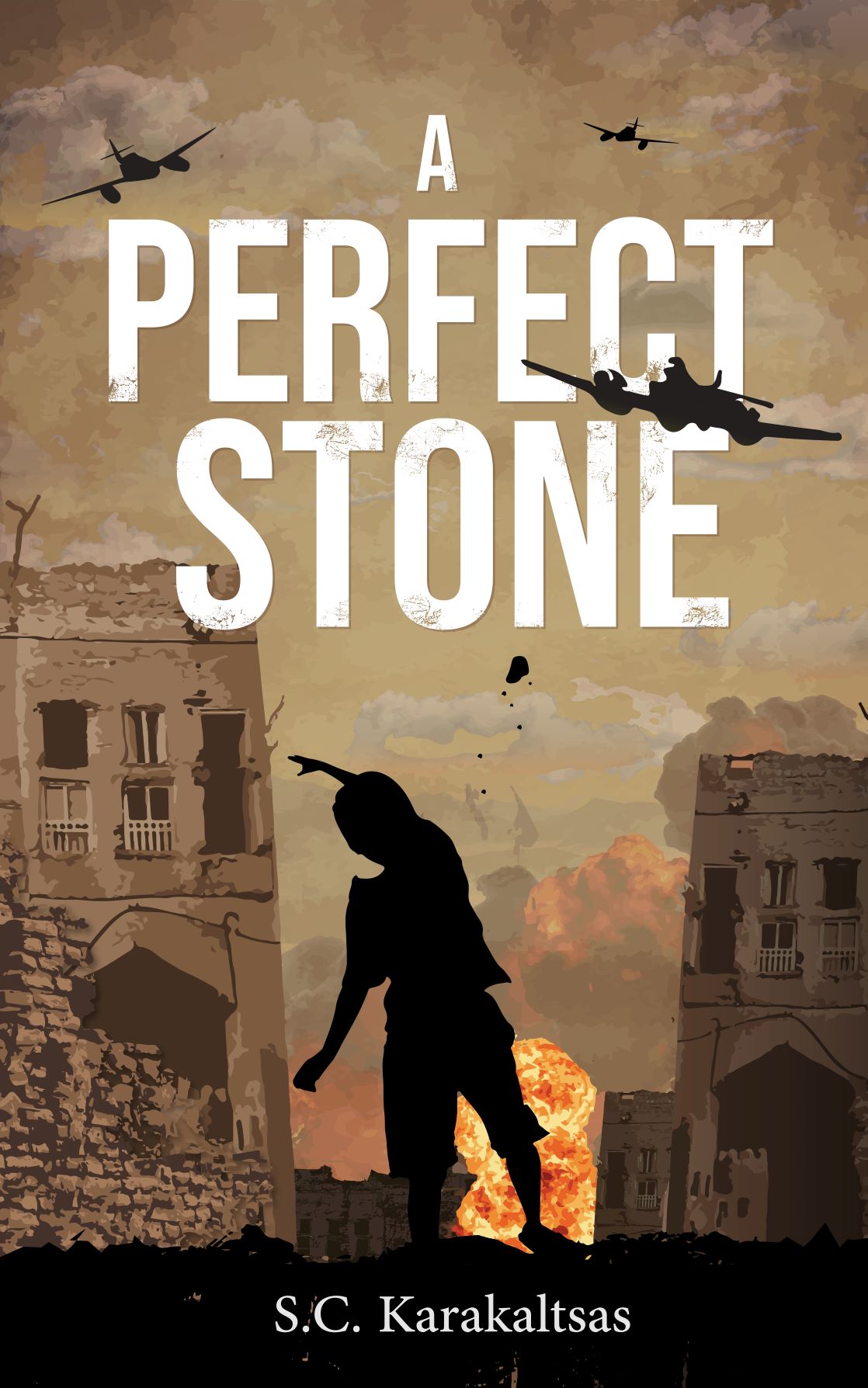
A Perfect Stone: Listed in Best New Greek Civil War Books to Read in 2020

I’m very excited that A Perfect Stone was selected as one out of eight top reads about the Greek Civil War for 2020 by Book Authority. You can check out the article here : https://bookauthority.org/books/new-greek-civil-war-books

A Perfect Stone is an historical fiction story about a boy’s journey across the mountains to escape the civil war. It’s available at many online bookstores including Amazon