Tag Archives: australian authors

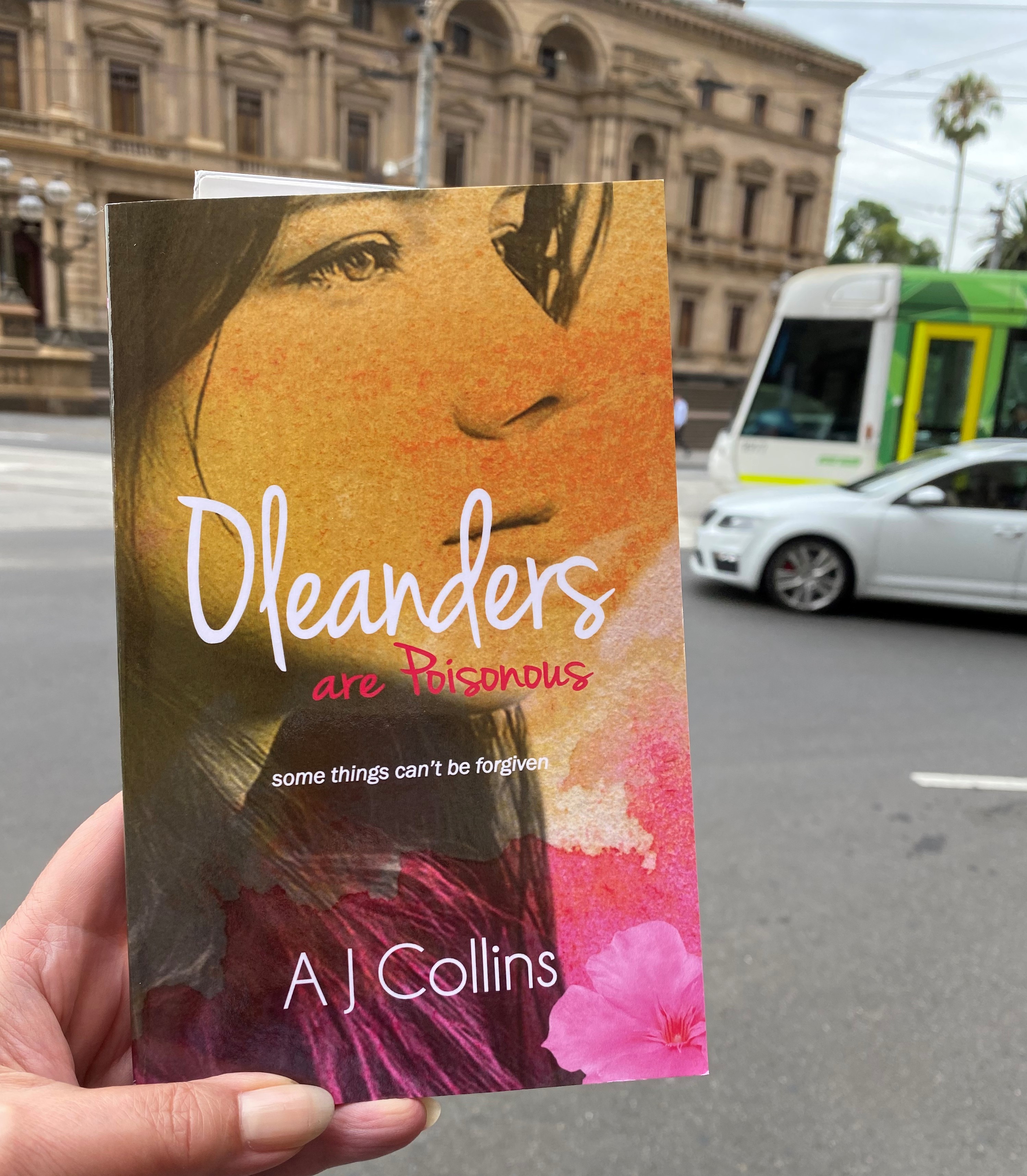
Book Review: Oleanders are Poisonous by A J Collins


I don’t normally read a lot of young adult fiction but what I have read is usually quite suitable for adults. Oleanders are Poisonous is one such book.


Lauren, is a young teenage girl who lives in a small country town. She has a close mate, Harry whom she’s known for years. Singing with him takes her mind off her home life where her mother is deteriorating from a debilitating illness. Lauren and her step-father, Samuel struggle to cope until one night on Lauren’s sixteenth birthday, when everything dramatically changes.


This is the first book out of a series of two. Being short, I read it in a few hours and found I couldn’t put it down: reading it on the train, on the escalator and in the dentist waiting room hoping he was running late – he was.


I was hopelessly hooked into this coming of age story, immediately caring so much about Lauren and what was happening to her. How she navigates her feelings and her way in the world had me cheering for her all the way. Collin’s writing is superb and fast-pace. Oleanders are Poisonous is an easy and quick read. 


Now for the sequel, Magnolia’s don’t Die.

Book Review: The Weekend by Charlotte Wood

This book is a difficult one to review as I have mixed feelings about it. I’d read The Natural Way of Things which won the Stella Prize and was blown away by it.

The Weekend is absolutely nothing like it. The story is about three seventy-something- year- old women who come together over Christmas to clear out the house of their dead friend. The relationship of the women is complex, as it is long, having known each other for more than forty years. Jude is an accomplished restaurant manager, Wendy, a published academic who owns a very old dog, called Finn and Adele is an ageing and out of work actress. Sylvie, the dead friend is the connection for the four and we are taken on a journey tackling their losses, loves, friendship, grief and betrayal.

It’s well-written and the setting on the north coast of N.S.W. is divine. Yet I struggled to find any real connection to any of the women. They didn’t seem like good friends, instead they each came across as needy and selfish, barely tolerant of each other. I didn’t understand why they were indeed friends. Jude was an odd character. Confident, well organised, supposedly self-reliant earning her own money yet she’d been a kept mistress for twenty years. The dog, Finn dominated the story a lot in an almost repetitive way. Wendy, seemed a bit dithering and Adele was narcissistic and self-absorbed, more like a teenager than a mature woman and that was a challenge for me to accept.

Yet, I was compelled along as it was an easy read. The second half of the book was almost like watching a dramatic play and I could easily visualise it. Perhaps this was intentional, perhaps not. In the end, I didn’t love it but I didn’t mind it.

Book Review: The Lost Man by Jane Harper

I’ve read every book written by Jane Harper and her latest, The Lost Man, certainly did not disappoint.

Cameron and Bub are brothers who have arranged to meet each other on the border of their large cattle property located in outback Queensland. Cameron doesn’t turn up and after a search, is found dead at a legendary stockman’s grave in the middle of nowhere. What’s puzzling is his car is found nine kilometres away. The car hasn’t broken down and is fully stocked with water and food and the driver’s door left ajar.

Cameron lived in the old family homestead with his wife, two daughters, his younger brother Bub and his mother.  Nathan, the older of the three brothers, who hadn’t seen his family in months has his sixteen-year-old son Xander staying with him when he gets the call about Cameron. It’s through his eyes that the reader is taken on a journey of family mystery and intrigue.

Cameron had been agitated in the months leading up to his death and with one policeman to cover hundreds of kilometres of remote area, it’s concluded that with no sign of violence or tampering with his car that he deliberately walked to his death. Nathan is not convinced.

The characters are very well drawn and the layers of the family’s history are cleverly peeled away revealing multiple secrets. The landscape, red dust and suffocating heat was beautifully descriptive of how harsh life is in the outback.

“He adjusted his mirrors as the sun’s reflection rose, blinding red behind them. They were heading west, towards the desert, and the sky loomed huge above the perfect flat horizon. By the time they hit the edge and turned north, they would be able to see the dunes; huge sandy peaks running north to south for hundreds of kilometres.”

Indeed, the central theme around mental health issues in the outback is well covered, the lack of resources and the isolation for both women and men is all too real.

“He had lain there, anxious and unsettled, as it dawned on him. He was entirely alone. No staff. Nothing but static on the radio… There was not a single other person near him for hours in every direction. He had been cast fully and completely adrift.”

There is such a lot in this book and like The Dry, I was guessing what happened right up until the end and was certainly surprised. I’m still trying to the digest the motivation and can’t say I’m fully convinced. Saying anymore would be to divulge the spoilers and that wouldn’t be fair. So, I guess that’s a good enough reason to read it yourself. It’s certainly a page turner and a perfect summer read and I’ll let you judge if you think the ending was right.

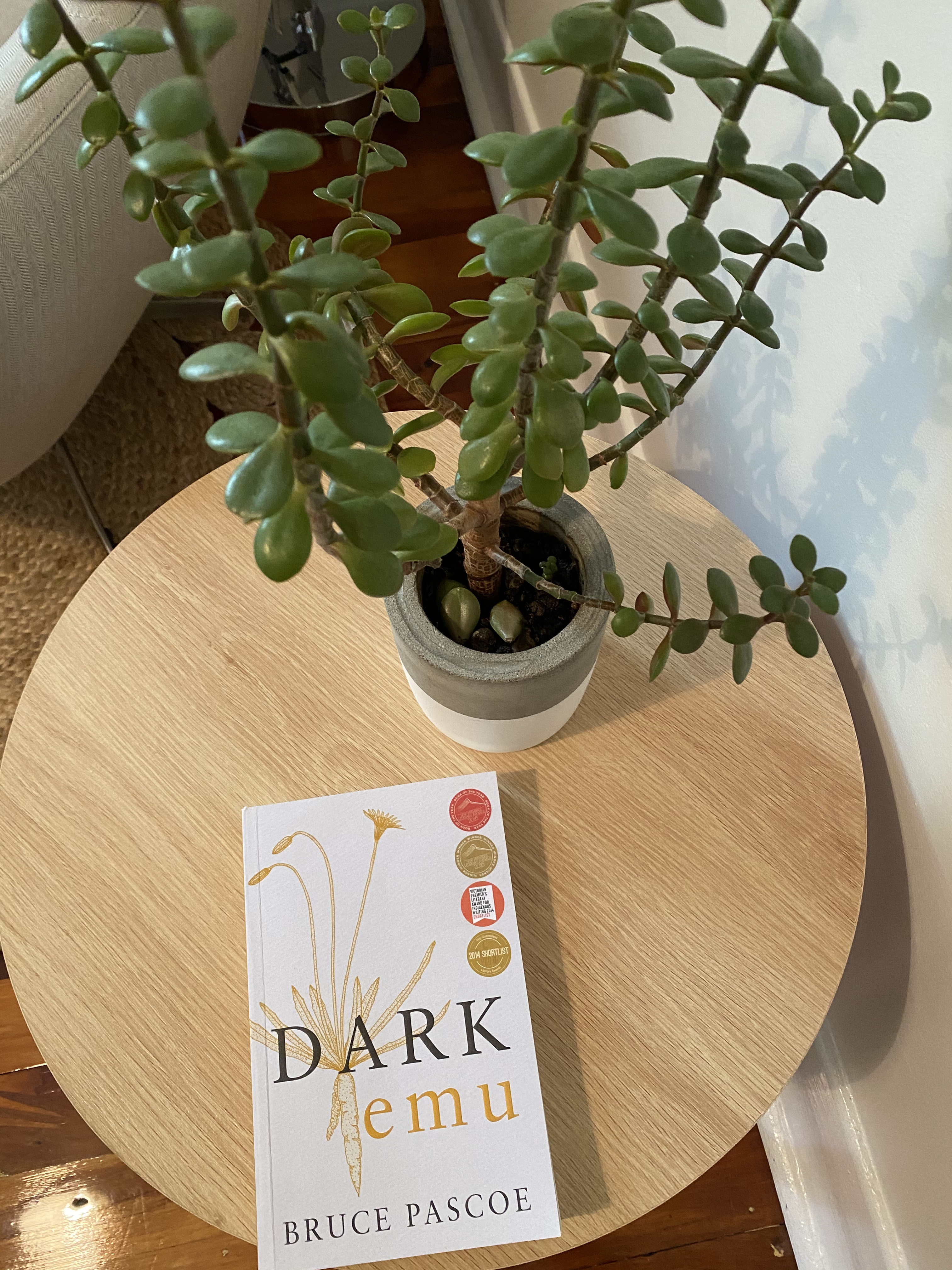
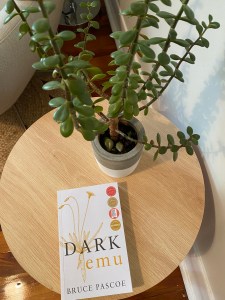
Book Review: Dark Emu by Bruce Pascoe

Bruce Pascoe, in Dark Emu has conducted a thorough research into the evidence by a host of sources to refute what was taught to me in school and what most Australians believed. And that is, we were under the impression that Aboriginal people were nomadic hunter gatherers. Pascoe turns this on its head to explain that Aboriginal people had their own villages with well-constructed huts, dams and water traps, toiled the land, grew crops and enjoyed a fair political system. Not only that, Pascoe convincingly argues that Aboriginal history is rich and is all around us, if we only care to look for it.

 “We’ve been taught that Aboriginal peoples arrived in Australia after crossing land bridges from Indonesia. … it was assumed that this happened 10000 years before sea levels began to rise – after the Ice Age. After the introduction of carbon dating, that figure ballooned to 40000 years and, after further research using more modern dating techniques, to 60000 years.”

Each chapter produces a raft of research and evidence to challenge the colonialist way of thinking of what happened before. Of course, the argument that Aboriginals were nomadic suited the colonialists as it gave them the opportunity to acquire the land – after all, in their minds, no-one else had ties to it.

Pascoe gives us evidence of advanced aqua cultural practices from sophisticated eel traps to sustainable fisheries. A few months ago, I went with friends to the Budj Bim National Park half way between Hamilton and Port Fairy in Victoria and was awestruck by the historic significance of the eel traps. What many Australians may not know is that Budj Bim is now on the UNESCO World Heritage List and features the earliest living example of aquaculture in the world. Simply astounding. In Australia there has been very little fanfare about this significant announcement. The Roman empire ruins across Europe has nothing on aboriginal culture.

The chapter around Fire was particularly enlightening as more than one hundred and fifty fires rage across Australia at the time of writing, causing untold damage to houses, people and millions of animals and plant life. I wonder if we had listened and to our Indigenous citizens whether we could have managed to ease the current disaster in any way.

“The Aboriginal approach to fire worked on five principles. One, the majority of the agricultural lands were fired on a rotating mosaic, which controlled intensity, and allowed plants and animals to survive in refuges. Two, the time of the year when fires were lit depended on the type of country to be burnt and the condition of the bush at the time. Three, the prevailing weather was crucial to the timing of the burn. Four, neighbouring clans were advised of all fire activity. Five, the growing season of particular plants was avoided at all costs.”

In fact, this has been discussed many times over the last few years yet action and further investigation has been slow. https://www.abc.net.au/news/2019-11-14/traditional-owners-predicted-bushfire-disaster/11700320

It’s natural to look for a scapegoat in the current bush-fire disaster which sees little end in sight until rain begins to fall. Climate change, land mismanagement, lack of funding, lack of leadership by our paid politicians, the drought, all have a part to play. But if what we learn takes into account a respectful dialogue with our Aboriginal elders then we may actually fix up our mistakes and change our thinking for a better future.

“If we could reform our view of how Aboriginal people were managing the national economy prior to colonisation, it might lead us to inform the ways we currently use resources and care for the land. Imagine turning our focus to the exploitation of meat-producing animals indigenous to this country. Imagine freeing ourselves from the overuse of superphosphates, herbicides and drenches. Envisage freeing ourselves from the need of fences, and instead experimenting with grazing indigenous animals and growing indigenous crops.”

Yes! My imagination is wild with possibilities and ideas. And so, this book serves as a timely message to all of us and as I peer around my own garden, I’ve started to question why the hell I have a water-sucking English style garden of roses, lawn and hedges and ponder about what was here before.

Dark Emu is sobering to read yet provides a hopeful argument for each of us to change our thinking. This is an important one  for all Australians to read.

NOTE: Bush Fire Fundraiser 

I’m participating in a fundraising effort for our firefighters. It’s a twitter auction involving hundreds of Australian authors. Incredible items are being auctioned -from signed books, writing retreats, mentoring, workshops etc. If you’d like to know more head over to the webpage below and if you have a twitter account, type in#authorsforfireys and make a bid.

Get in quick. The twitter auction ends 11pm on 11 January, 2020 (Melbourne/Sydney time)

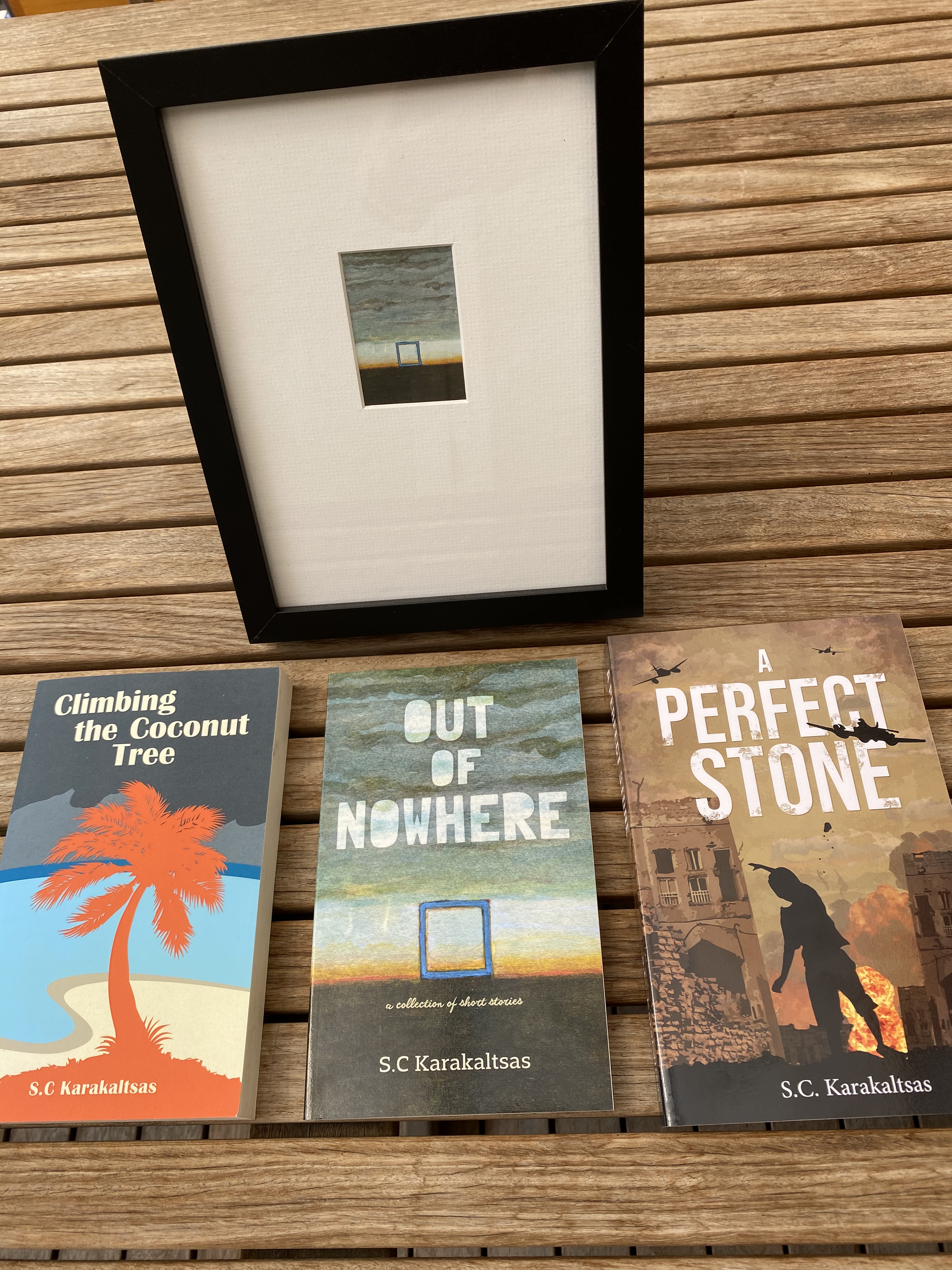
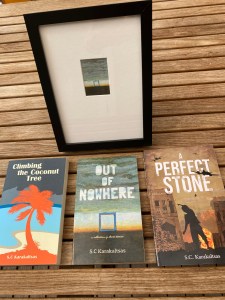
I have offered up signed copies of my three books and am throwing in a framed original drawing used for the cover of Out of Nowhere.
https://authorsforfireys.wixsite.com/website
Book of the Year 2019

I’ve read thirty-four books this year, many of which I’ve loved. Is it because I’ve been selective? Or is it just that there are so many fantastic books around? Perhaps I’ll never know.
But what I do know is that I’ve decided on my most favourite and claim it as my Book of the Year for 2019. Before I reveal the title, I’ll run through what I actually read. Have you read any of the same.

  1. The Clockmakers Daughter by Kate Morton (Aus)
  2. The Trauma Cleaner by Sarah Krasnostein (Aus)
  3. Bridge of Clay by Marcus Zusak (Aus) *****
  4. The Stars in the Night by Clare Rhoden (Aus) *****
  5. Orhphan Train by Cristina Baker-Kline
  6. Beartown by Frederick Backman
  7. The Mars Room by Rachel Kushner
  8. The Corset by Laura Purcell
  9. Any Ordinary Day by Leigh Sales (Aus)
  10. Homegoing by Yaa Gyasi
  11. See What I Have Done by Sarah Schmidt (Aus)
  12. The Hollow Bones by Leah Kaminksy (Aus)
  13. The Scholar by Dervla McTiernan
  14. The Arsonist by Chloe Hooper (Aus)
  15. Where the Crawdads Sing by Delia Owens *****
  16. Manhattan Beach by Jennifer Egan
  17. The Ruin by Dervla McTiernan *****
  18. Islands by Peggy Frew (Aus) *****
  19. Troll Hunting by Ginger Gorman (Aus) *****
  20. Growing Up Aboriginal In Australia by Anita Heiss (Aus)
  21. The Power by Naomi Alderman
  22. Unsheltered by Barbara Kingsolver *****
  23. Washington Black by Esi Edugyan *****
  24. Academic Curveball by James J Cudney
  25. The Erratics by Vicki Leveau-Harvie (Aus) *****
  26. Reunion by Andrea Goldsmith (Aus)
  27. The Fragments by Toni Jordan (Aus) *****
  28. Wolfe Island by Lucy Treloar (Aus) *****
  29. Stone Girl by Eleni Hale (Aus) *****
  30. Daisy Jones and the Six by Taylor Jenkins-Reid *****
  31. The Spy and the Traitor by Ben McIntyre *****
  32. The Mother-in-Law by Sally Hepworth (Aus)
  33. Normal People by Sally Rooney
  34. The Island of Sea Women by Lisa See

More than half were by Australians which is natural given that I live and write in Australia and there is a strong writing community. I notice that most of the books were written by women and  that wasn’t meant to be intentional but it just so happens that there’s an amazing number of great women writers. I rated fourteen books with five stars which is why it’s so hard to narrow down my book of the year.

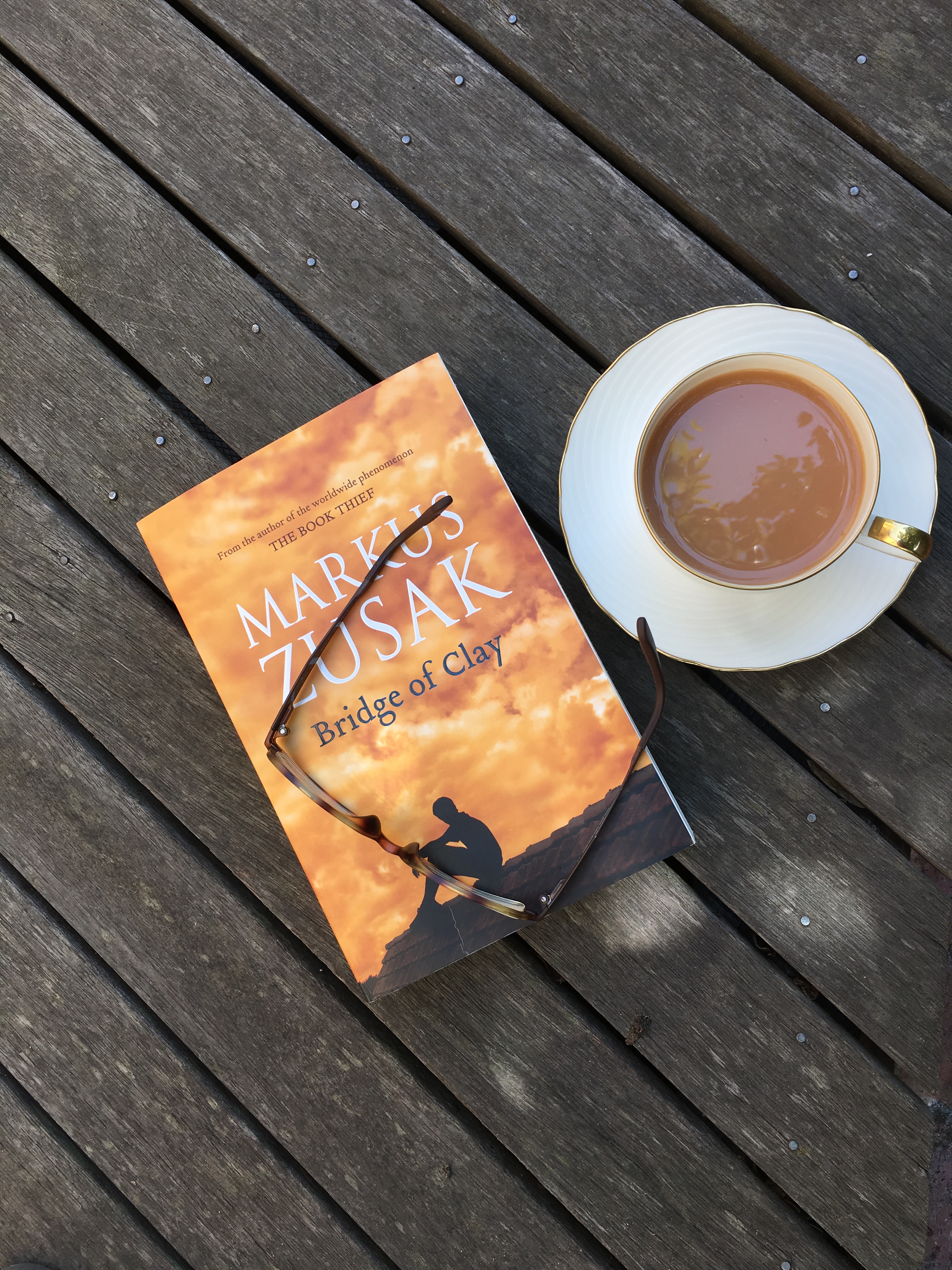
However, the book which stays with me the most was : Bridge of Clay by Marcus Zusak. It had every element just right, great writing, humour, tragedy, sorrow and drama. Check out my review https://sckarakaltsas.com/2019/02/15/book-review-bridge-of-clay-by-markus-zusak/

Happy New Year everyone.


Book Review: The Mother-in-Law by Sally Hepworth


46251368

It’s an ordinary day for Lucy. The kids are arguing over a television program, her husband Ollie is cooking burgers on the barbecue, and the house is a mess. When police knock on the door, Lucy knows what it will be about.

“I close my eyes because I already know what she is going to say. My mother-in-law, (Diana) is dead.”

A suicide note is found next to Diana but things don’t add up. She was an upstanding member of the community with high standards. She also happens to be very wealthy and questions begin piling up. When Ollie and his sister, Nettie both desperate for money, find out that the will was changed only weeks earlier, things really begin to get interesting.

The story is told mostly from two points of view, Lucy and Diana. We get inside the heads of both women, feeling their pain as their secrets unfold. When Lucy met Diana, she hoped for a  mother figure to replace her own long dead mother but is disappointed by her mother-in-law’s coldness.

I liked the intricacies of the relationships between every member of the family and secrets are revealed nicely so that the reader understands why they behave the way they do. Diana’s harsh upbringing and the way she treats her children makes sense when you find out what happened to her as a teenager. Her husband Tom is a saint keeping the peace between his children and his wife.

It’s an intricate story weaving back and forth between the main characters. In fact, each character is well drawn and the changing relationship particularly between Lucy and Diana is very well done.

This is another great book by a Melbourne author who also happens to be a New York Times best seller.  If you’re looking for something fantastic to read during the holiday season or a great gift, then grab this one.

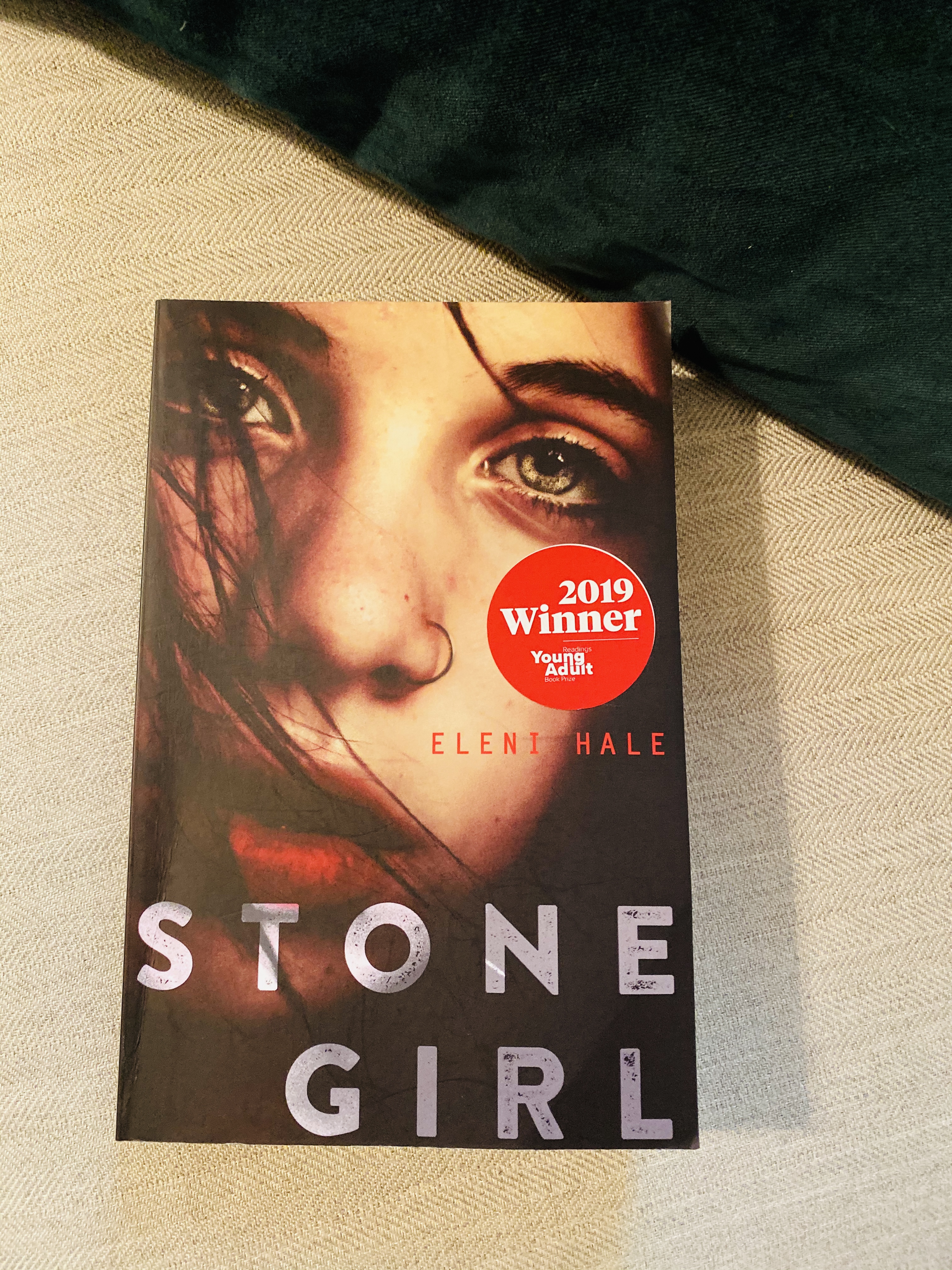
Book Review: Stone Girl by Eleni Hale

I’ve been reading some amazing books lately and here is another.

Stone Girl is Eleni Hale’s debut novel set in Melbourne, Australia during the nineties. It opens with twelve-year-old Sophie at the police station with blood on her clothes holding a backpack full of her treasures. She’s been found in a flat with her dead mother and is clearly traumatised. With her father living in Greece and no other relatives, she becomes a ward of the state shunted from one place to another, living in despair without hope and learning the ways of the world from other children who’ve been removed from parents. When she meets Gwen, Matty, and Spiral, she finally feels she belongs.

To say this is an eye-opener is an understatement. Nothing is held back as the reader is taken on a ride with Sophie. We hope that someone will care enough about her and then despair when it doesn’t. We follow her journey through her teenage years which is dictated by a system that can’t give her what she needs, let alone what she and any other child in her situation deserve.

The fact that the author knows firsthand about what it’s like to be a ward of state gives this book more of a punch. Although it’s a work of fiction, it’s not make-believe. Children in the system aren’t vote-catchers so resources aren’t a priority. They’re akin to refugees within our own society and that’s horrific. That’s not to say that youth workers, social workers and the like aren’t doing their job, they are, but in stretched circumstances. Is it really acceptable to house half a dozen broken children in one place with an adult who is on shift, without time and energy to develop relationships with those in their care? Is it any wonder that most of these children end up on the streets, on drugs with a pathway to jail or even worse a short life span? Surely there is nothing worse than to lose your home and your loved ones. Yet this happens with children who are the most vulnerable, time and time again.

I felt so much for Sophie and was annoyed at the uselessness of the adults around her who let her down, time and again. To watch her spiral out of control was heartbreaking. The climax had me reading until the end and closing the last page left me thinking about every kid who ever needed a home, love and respect and those who aren’t lucky enough to get it.

This is classified as Young Adult and has begun winning awards. The writing is authentic and rich. The characters are like no-one you probably know if you live in a middle-class world. It’s a powerful book that needs to read by adults of all walks of life especially by those who make policy as well as those who allow children to slip from their grasp.

Read this one. It’s important.

https://www.penguin.com.au/books/stone-girl-9780143785613