Tag Archives: australian authors

Book Review: A Disappearance in Fiji by Nilima Rao

A novel set in Fiji in 1914 about a missing indentured Indian woman was bound to be intriguing. This debut historical fiction by Australian author Nilima Rao was a page-turner, enlightening the reader about the conditions of Indian Indentured workers early last century.

A young Sikh policeman, Akal Singh is posted from Hong Kong to Fiji in disgrace.  He is sent to a distant cane plantation to find a missing indentured Indian woman. The plantation owner declares she has run off with the overseer with whom she has been having an affair. A parish priest challenges that by saying she’s been kidnapped.  When Singh arrives at the plantation, he finds that not all is what it seems and he is shocked by the work conditions of his fellow countrymen.

There are several themes in this book, the colonial system, racism as well as the class divide not just between the races but even within the Indian community. Of course, sexism is explored and the way women are treated, where questions of justice and morals contradict the system of exploitation by the colonial system. The brutality and squalor of the indentured system was well portrayed.

 I liked the comradery between Akal and the white doctor who is pleasingly on the side of justice. There are times where I yearned for Akal to look a little wider, his investigation slow at first but becomes more energetic as his confidence grows.

 It makes for a very compelling story with a nice twist at the end. Yet it still lends itself to a sequel. I’ll look out for that one.

Book Review: Bruny by Heather Rose

Books about Tasmania by Tasmanians rarely seem to put a foot wrong for me lately and Bruny is no exception.

It is a fantastical story of a time in the future when a bridge costing two billion dollars is constructed to Bruny Island a short distance from Hobart. For those who know Tasmania and in particular, Bruny Island, the place is not highly populated nor would it warrant a six-lane bridge. Understandably an explosion which collapses part of the bridge brings Astrid Coleman, a UN negotiator home from the USA to help her brother, the premier get the bridge repaired before the next election.

While central to the book is the bridge, there are many other issues the author freely explores. One is the destruction of the environment, both sea and land. It is well known that the waters around this particular area have been polluted by fish farming and this is spelled out again with the advent of a bridge and tourists. The author doesn’t hold back on the political aspects and I enjoyed this immensely as she foresees into the future pinpointing Chinese influence and economic colonialization. She also throws a jab at the AFL and considering that Tasmania has just been allocated a team in the recent month she was remarkably accurate in her forecast back when she wrote this prior to 2019.

The author is passionate about what Tasmania has and what is stands to lose, forecasting the consequences of the climate crisis. The future may not be that unrealistic.

There is also a love story and one of family together with loyalty and the challenge of allegiance. But more importantly, it is a story of being home and finding the joy of the land we’ve grown up on and where we really belong.

There are many issues in this book which will have you nodding your head in agreement as you turn the page not wanting to put this down.

It’s well written, easy to read and highly topical. It makes me want to head back to Bruny Island again to see it while it still is pristine.

Put this one on your list.

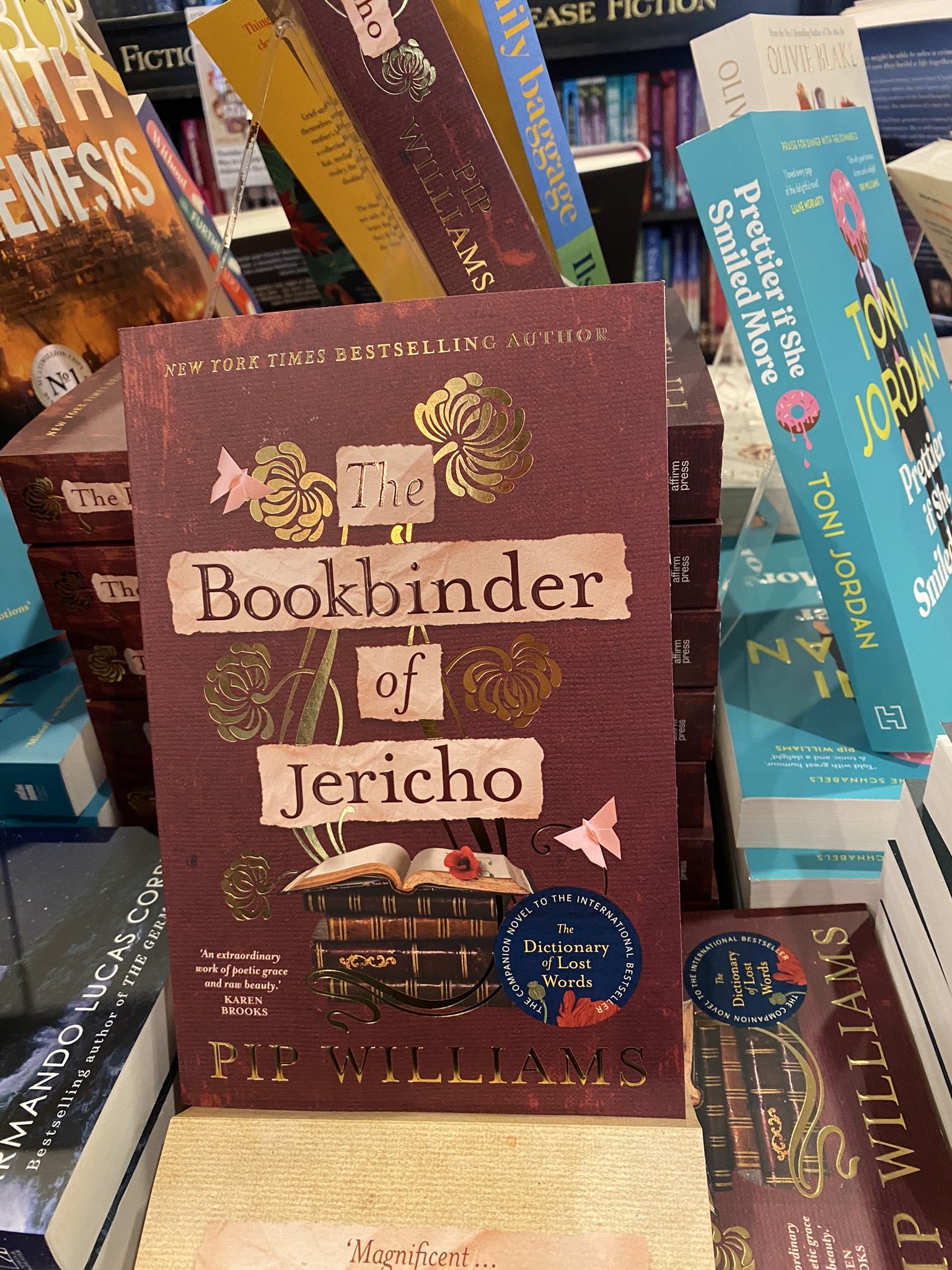
Book Review: The Bookbinder of Jericho by Pip Williams

From the author of the best-selling novel, The Dictionary of Lost Words, comes The Bookbinder of Jericho, another wonderful story set in Oxford but this time about a female bookbinder.

Peggy and her twin sister, Maude follow in their recently dead mother’s footsteps to work at  Clarendon Press as bookbinders. It’s the beginning of the First World War when the press begins to lose the male employees as they join the  ranks of war recruits. The story follows Peggy as she yearns to read the words on the pages she binds, the difficulties of the war, her relationship with Maude who needs looking after too.

It begins slowly and I admit to being a little impatient as I was forced to learn, in intricate detail the mechanics of book binding. I was glad I did and was soon taken in with the characters, difficulties of life and the pace of the war and its consequences until it consumed me to turn page after magnificently written page.

“There is satisfaction in sewing the parts of a book together. Binding one idea to the next, one word to another, reuniting sentences with their beginnings and ends. The process of stitching can become an act of reverence, and when there are more sections on the frame than on the bench, you begin to anticipate the moment the parts become a whole.”

The class system is magnified with injustice as is the role of women used to assist the war effort in every position normally occupied by men. But more importantly Williams shines a light on the significance of education for women portrayed by Peggy’s love for learning yet denied because of her class as well as her circumstance.

“Your job is to bind books, not read them.”

Williams immerses the reader in the everyday of Peggy’s life, beautifully giving us her observations, her frustration, vulnerability, and her insecurities, all while navigating us through the history. Tilda, a character from Williams earlier book, is a VAD (Voluntary Aid Detachment) sent to assist the wounded in France. Through her letters, Williams cleverly reveals the horrors of the injured and dying, the difficulties of the health workers as well as educating us about little known Australian painter, Isobel Rae.

The tenderness between the sisters is poignant, their relationship tested as the women forge different paths away from interdependence. “Maude didn’t find it easy to compose an original sentence, but she chose what to repeat. She understood, I think, that most of what people said was meaningless.”

This is a novel for booklovers, historical readers and for anyone who just loves a moving story.  A must read.

The Month that was…May 2023

What I’m watching…

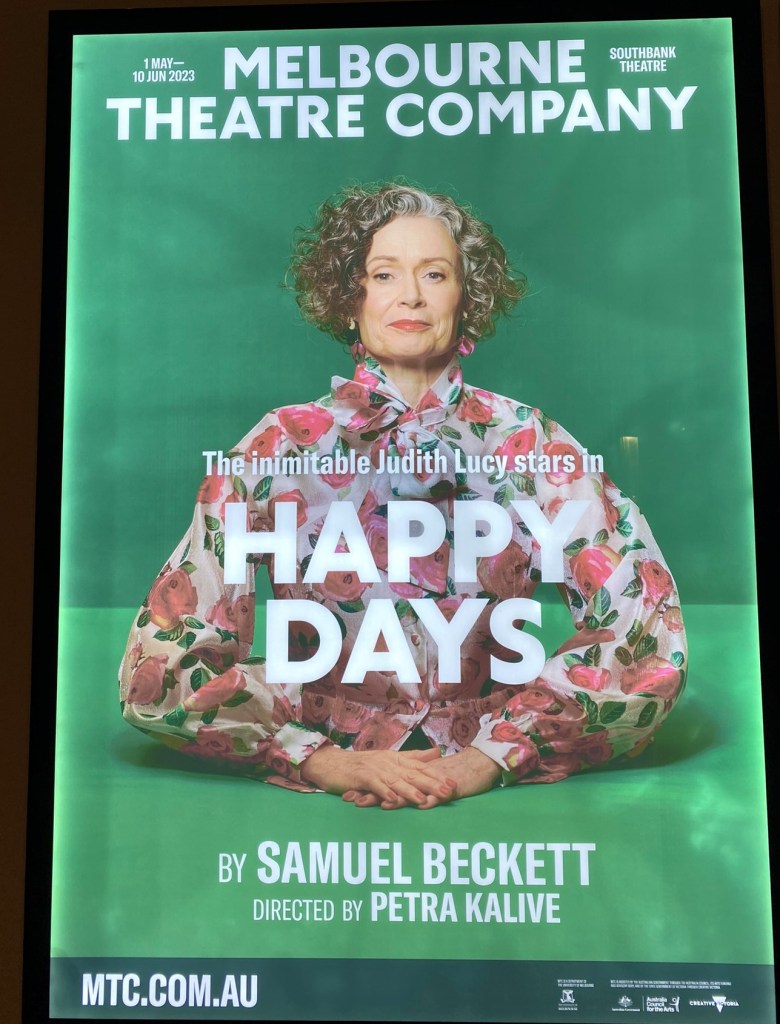
A month at home enjoying the last of the falling autumn leaves and summer’s heat. But I did manage to take in a play, Samuel Beckett’s Happy Days starring the incredible Judith Lucy. Ms Lucy, best known for her comedic abilities, shone in this virtually one woman show. The play itself left me scratching my head and required a lot of thought and analysis which enlightened with reflection. It’s on in Melbourne until June 10th.

We also took in the Monet & Friends at The Lume, Melbourne where the digital screen of art comes alive one walls and floors. It truly is an immersive and magical experience Highly recommended but hurry as I believe it ends in early June.

What I’m reading…

Watch out for my upcoming reviews but here are the ones for The Fancies and The Sea of Tranquility

Until next month…

Book Review: The Fancies by Kim Lock

I read Kim Lock’s earlier novel, The Other Side of Beautiful and loved it. I was very excited to hear that her latest had just been published and I was not disappointed.

This is a story about small towns and the characters who live there. Abigail Fancy is the daughter of Young Dick Fancy and Nell Fancy who are town’s mover and shakers. Abigail  returns home after a stint in jail despite the fact that she’d sworn she’d never return to the town which drove her out. But after twenty-four years it’s time to face her enemies and her demons.

This is a novel about characters and Lock has delightfully teased out many likeable and unlikable ones. Some are quirky, some inquisitive, some gossipy while others are tough and caring and full of self-importance. At the heart is a down to earth story filled with Australian vernacular laced liberally with humour and wisdom diving deep into misogynistic world where there is little justice.

“Word of Abigail’s return spread fast.

After the barbeque at Young Dick’s, Col Morton, starry-eyed, headed straight downhill to the pub and told the publican, Larry Dinwiddle. Larry told his wife Beverley, the postmistress, who then told Sheila Rocket, who was the first through the post office doors the next morning. ‘

The setting is a small fishing town on the coast of South Australia and Lock paints a great picture of community, the crayfishing industry and landscape.

The story of what happened twenty-four years ago unfolds slowly and the climax towards the end is delightful. Old Dick, the grandfather is dying and has dementia earning his own alternate short chapters when he applies moments of lucidity and brutal honesty and the town’s secrets begin to unravel despite Young Dick’s best efforts to keep a lid on everything.

How many times do I have to tell him? I’m not gonna be here tomorrow, let alone next bloody Christmas. I’m carking it, I say. Dropping off the perch. Taking a dirt nap. Shuffling off this mortal coil. Dying, I tell him. Are you thick in the head?”

I just loved this book. It’s funny, sad and cleverly constructed with characters you want to spend time with. It would be a great movie and it reminds me of the quirkiness of The Dressmaker. Let’s hope this one makes it to the big screen. In the meantime buy this one and read it.

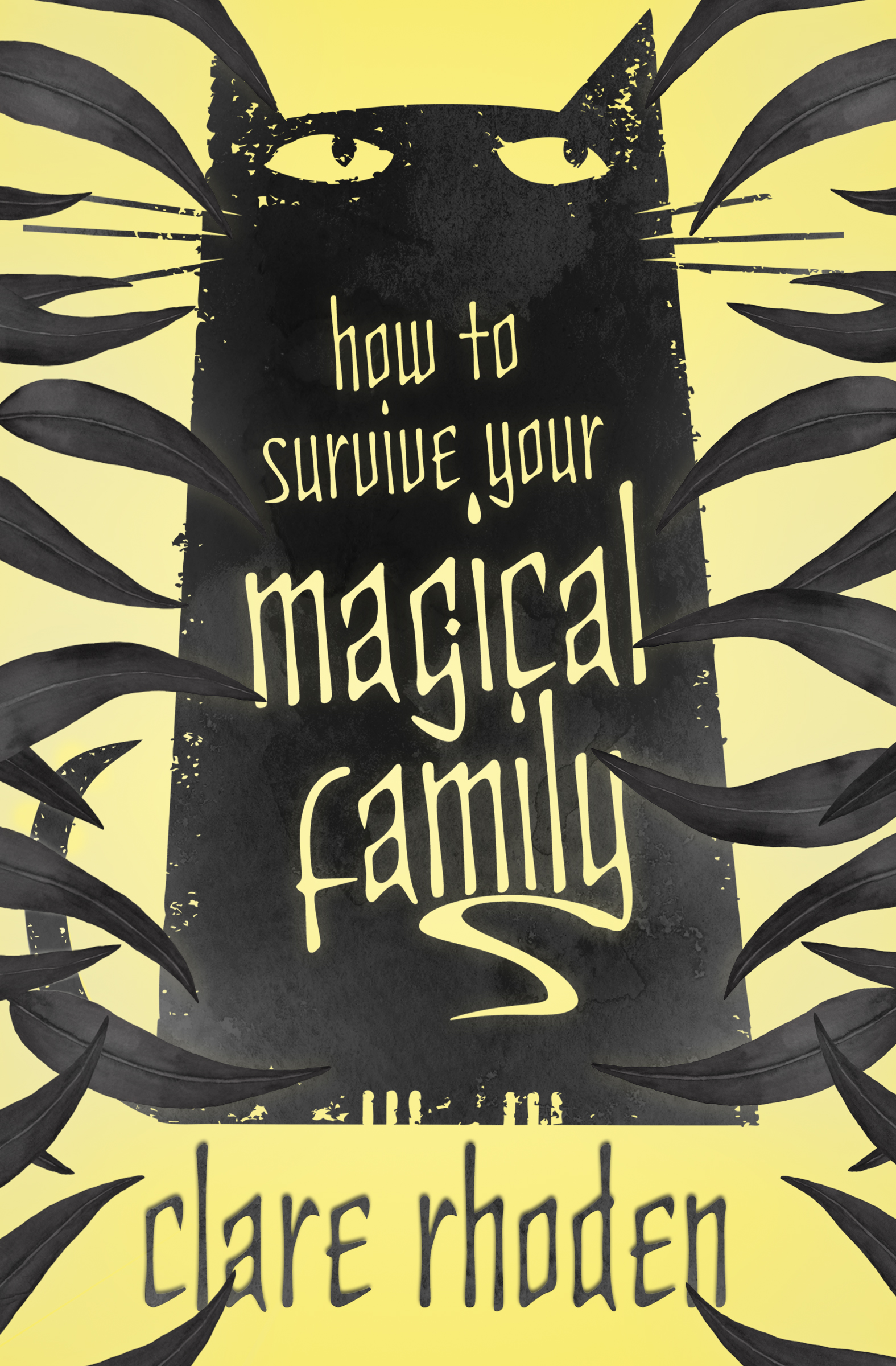
Book Review: How to Survive your Magical Family by Clare Rhoden

I don’t read too many young adult fantasy novels but I’m glad I read this one.

Who could resist a magic family who live in a home filled with magical cats?

It begins with fourteen-year-old Toby who lives with his older sister, Helen, and his dad. Poor Toby is the only one in the family who does not seem to have any magical power beyond understanding cats. One night he and his sister find a cat and her litter of kittens. Toby also finds a silver bracelet. What he finds is not ordinary, as a mature cat called Katkin springs out ostensibly from the bracelet she’s been caught in for many years.

And so starts a series of events involving Toby’s kidnapping and the unfolding of secrets his family has kept from him. Stepping in is another character, Toby’s next-door neighbour, Mia who witnesses Toby’s kidnapping and gives chase.

The kidnapper, Orsa is pure evil as you’d expect but the crows and the cats are on the side of good as they help to try to free Toby. The big question is why has he been targeted.

The story is told from Toby’s as well as Mia’s points of view. It moves fast keeping the reader engaged wanting to turn the page to know more.  Both of these characters were likeable but the one I loved the most was Katkin. Her story and her personality was quite endearing.

It’s also a coming of age story as Toby realises the importance of his place in his family and the power he truly has. It’s a delightful book. Could there be a sequel? With the ending, I suspect there might be.

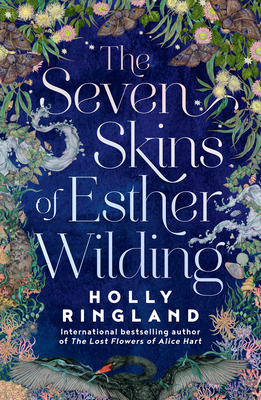
Book Review: The Seven Skins of Esther Wilding by Holly Ringland

I have mixed feelings about this book which is about love, sisters, daughters, sorrow and grief mixed with fairytales and women’s voices.

Sound like a lot? It is and it’s quite a long read.

The story opens with Esther. A swan crashes into her ute from above and she thinks it’s her missing sisters spirit. Her sister Aura last seen walking along the beach disappeared twelve months earlier and Esther has been called home for a memorial service. She has a fractious relationship with her tattooist mother Freya but together with her therapist father, Esther is asked to go to Denmark. Why? Because her sister had lived there for three years before returning home  broken and deeply sad and they believe Esther should go and find out what happened.

The plot slowly unfolds as we discover stories surrounding tattooing and how women’s stories can be told on their skin. We discover that Aura has a childhood diary where her teenage ramblings stop when she’s about to turn sixteen. It picks up again when she’s in Denmark when her studies into folklore and fairy tales brings her to write about the seven skins, lines and passages she also has tattooed on her body the meaning of which remains a mystery.

I enjoyed the imagery and the arc of Esther’s character even though she wasn’t a particularly likeable character but that wasn’t the point. Her grief and the trauma of losing her older sister, the relationships around her and her self-discovery was touching and quite moving. The other characters weren’t terribly engaging either serving little purpose than to tiptoe around Esther.

Mostly the novel centres on Esther’s point of view with occasional drifts to others and this I found to be unfulfilling because it failed to move the story along. I also found long chunks of information about each skin, her flashbacks about her sister and the fairy tale reference to be quite repetitive. Even her one night stand with Tom was repeated a few times. There was a lot of detail and description which was nice when it deserved a place but many times, I found it merely slowed the story down. Perhaps that was the intention for this slow boil of a novel but it didn’t suit me.

A minor plot issue, but given that Freya came from Denmark herself, why she as a mother would not hop on a plane to find out what happened to her own daughter did lose me a bit. I didn’t really buy her reasons but took the leap of faith and accepted it.

Having said that, there was lots about this novel I did enjoy. The idea that grief can paralyse a person, the bonds of sisters, especially an older sister’s impact on her younger sister ( I must remember that, as I am an older sister). It is beautifully written and quite lyrical but overall it didn’t quite work for me.