Tag Archives: Book reviews

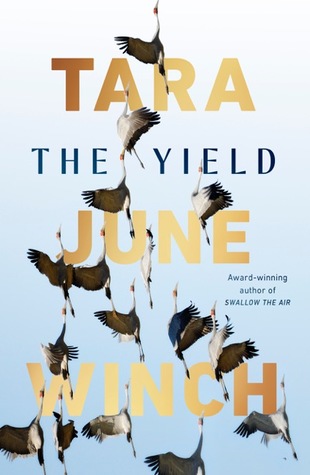
Book Review: The Yield by Tara June Winch

This highly awarded book is an evocative and eye-opening read from Australian (Wiradjuri) author Tara June Winch.

There are actually three stories all cleverly constructed to relate to each other:

Pop (Albert Goondiwindi) composes a dictionary of Wiradjuri words. He peppers the meanings with stories of his family, his past and his culture in the hope that none of it will be lost. He passes away before completing it.

The second story is from his granddaughter’s point of view. August flies home from England for Pop’s funeral and faces the family she ran from many years earlier.  She’s embraced by her grandmother and aunties and must confront the reasons for running away.

The third is a series of letters from Reverend Greenleaf of German background who set up a Mission for Aborigines in the late 1800’s.

This is a remarkably clever reconstruction of a history largely forgotten and untold in Australia. The dictionary was genius giving us a real sense of the Wiradjuri language including pronunciation. The focus on intergenerational trauma as well as the strength of connection to land and culture was inspiring.

Look at it this way – when people travel overseas the first thing, they do is learn a handful of words, learn the local language – please and thank you and hello and goodbye, maybe even where is the supermarket? People do it because it makes life easier but they also do it out of respect…

And then we’re all migrants here, even those first-fleet descendants, we forget we’re all in someone else’s country.”

Reading The Yield gave me all sorts of feelings. The anguish and anger of what happened to our indigenous people was detailed in the letters written by the Reverend. His seemingly good intentions to set up a mission under the guise of removing a long-established culture to impose another was incredibly misguided. But this is what he and most missionaries around the world have done. Even so, his so-called protection was never enough.

Then there was the sorrow about the loss and trauma experienced by August: her missing sister, not knowing what happened and the affect it had on her for years afterward, her emptiness and lack of belonging to the land or to her people.

The disgust about how we treat the fifty-thousand-year-old indigenous history. If we dug up a Roman building, we’d revere it yet that history is new in comparison to what exists in Australia. Who can forget Rio Tinto blowing up a 46-thousand-year-old sacred site only last year? And the novel’s story parallels this when the land that Pop had lived on and loved was sold off for a tin mine.

This is another great novel for all Australians to read. These stories help us to understand. Please check this one out.
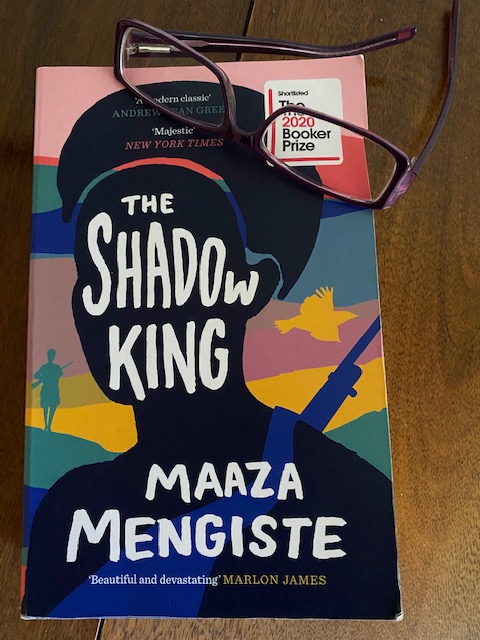
Book Review: The Shadow King by Maaza Mengiste

Short listed for the Booker Prize in 2020, this is a fascinating and insightful epic about the Italian invasion of Ethiopia in 1935.

It opens with Hirut, an older Ethiopian woman travelling on a bus in 1974 through a troubled Addis Ababa. She’s on her way to take a box of photos to Ettore, a man who’d once been her jailer after her capture by Mussolini’s army.

The story takes us back to just before the Italian invasion when as an orphan, Hirut is taken in as a reluctant servant to Kidane and his wife Aster. When Kidane, an officer in the army mobilises troupes to fight, strong-willed Aster galvanises all the women in the district to help and Hirut transforms from servant to fierce warrior.

 The Emperor, Haile Selassie flees the country and when all hope appears lost, Hirut suggests disguising a peasant as the emperor to fool the Italians and inspire the Ethiopian army to continue the fight. Hirut is eventually captured and embroiled in her own personal war against her captors, one of which is Ettore.

It’s an incredibly written and lyrical novel on a brutal and horrific subject. Mengiste’s descriptions are poetic and I’d suggest you ignore the absence of some punctuation and enjoy the writing.

“She is close enough to see him racing across the spine of the mountain, his heels flying, that chest a swell of bony ribs and heavy air. In the ebbing night, he comes first as sound: the snap of a branch, a scrape of foot on stone. A hiss curving against the soft orange light. He is a fleeting mirage speeding over rough hills, shallow gasps stalling in thick breeze.”

The history is rich giving us insight into both sides of this little-known war of which I was totally ignorant. The author explores the bravery and sheer persistence by the Ethiopians in particular the power of their female soldiers. Mostly told from Hirut’s point of view, we are also given insight into other characters such as Ettore and Selassie who are rich and complex. The themes are numerous: trauma, survival, forced marriage, and colonisation to name some. Interestingly, Mengiste’s own great-grandmother had been a soldier and presumably provided her inspiration.

It’s a wonderfully enlightening and moving account of war fought by strong courageous women. Check it out.

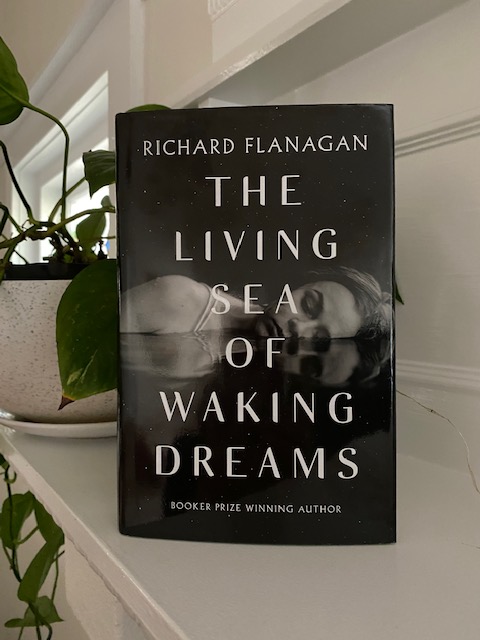
Book Review: The Living Sea of Waking Dreams by Richard Flanagan

The Living Sea of Waking Dreams is ideal for a book club as there’s so much in it to discuss.

Thoughtful, as it is thought provoking, Flanagan challenges the reader to think, to feel and to pay attention. What about? Death not just our own, but others, of the planet and our way of life. And the themes are wrapped around aging, displacement, child and elder abuse, trauma and environmental destruction. It’s not a happy book nor is it meant to be.

Flanagan cleverly uses the slow and excruciating demise of Francie, the mother of Anna, Terzi and Tommy. Terzi in particular, and Anna decide that it’s not time for their mother to die and do everything they can to keep her alive, against the wishes of Tommy her carer, as well as Francie. Their brutal decisions have a background story for their motivation.

‘They saved her from death, but only, thought Anna, by infinitely prolonging her dying. ‘

Many of us are facing the dilemma of aging parents and what might be best for them. At the core of this, is listening and respecting our parents’ wishes and not impaling them with our own controlling ideas. Flanagan explores the family dynamics beautifully to bring about a strong emotional and sometimes, uncomfortable response for the reader.

Anna finds parts of herself vanishing starting with her finger and nobody notices. Perhaps a metaphor for the fact that no-one notices the disappearance of animal species and habitat across our planet?  Told from Anna’s point of view we feel her dismay, her displacement and her own disappearing. I wondered whether like so many middle-aged women she also felt ignored, irrelevant and dismissed as if her voice no longer matters.

And there’s the issue of what social media is doing to us. When Anna is confronted by difficulties, she escapes into an alternative life of social media, to ignore and hide from herself, her family and what’s happening around her.

 “Instagram, blessed Novocaine of the soul! Foodholidayssmilinggroupsshopping. She had to get off. She knew it. She had to get off.”

Alongside this story is a commentary of what’s happening in the world from the extinction of the orange- bellied parrot to the destruction of swathes of habitat. Fires raged in Australia destroying more than a million animals. I well recall the devastation, the smoke, the fear last year, and Flanagan brought it all back, making us pay attention to our uncertain future and the fact that we are sitting atop a climate emergency yet no-one is truly taking notice.  

Flanagan has got a lot to say in this book and certainly his words pack a punch in an interesting way. The ending was profound, moving and powerful with a glimmer of hope and goodness inspiring us all to each do our bit. It’s not an easy read but it’s an important one leaving its mark on you.

Book Review: Disappearing Earth by Julia Phillips.

The novel opens with two young sisters enticed into a car by a man from the beach on the Kamchatka Peninsula on the north eastern part of Russia.  That first chapter was incredibly difficult to read as I implored the girls over and over in my head, not to get into the car.

Subsequent chapters thereafter, take the reader into the lives of various characters who have each been affected in some way by the disappearance and have some small connection with each other. Like a series of short stories, the central characters are women of various ages, ethnicity, wealth and background. They each have their own struggles, hope and dreams.

Each chapter moves along in the subsequent month since the disappearance through a harsh winter to emerge at the end a year later with no leads by the police. It’s very cleverly structured so that the reader immerses themselves in each character’s story revealing the cultural divide between white and native Russians, the Kamchatka Peninsula and its isolation from mainland Russia. More fascinating was the glimpse of the new Russia compared to the old and the yearning from some of the older generations for a time where there was no crime and children didn’t disappear. And where attitudes can still be provincial filled with conservatism, racism and misogyny.

The unwed mother fleeing from her boyfriend only to live with her disapproving parents. The twice widowed woman left in a state of grief, and the new mother suffocating at home. The college student with a controlling boyfriend, the young girl who is rejected by her best friend, the mother of another missing girl who disappearance was never taken seriously.

And then there’s the young woman who tells her friend that she’s broken up with her girlfriend. She didn’t understand what happened these days to girls as innocent as she and Lada had been. They were destroyed for it. Any girl would be. The Golosovskaysa sisters, who, walking alone made themselves vulnerable – that one mistake cost them their lives.

If you aren’t doing what you’re supposed to, if you let your guard down, they will come for you.

And the mother of the girls, Marina, “tallied the results of this last year; her girls abducted. Her home empty. Her simple job, chosen for the ease with which she could care for her family around it, now pointless, and her top desk drawer stocked with tranquilising tablets.

Disappearing Earth is structured like a puzzle where the reader works to tie the characters together, remembering where and how they fit in. Fortunately, there is a page outlining all the principal characters, although I forgot to refer to it until the end but it’s useful although not essential. What ties all the characters together is the disappearance of the world they live in.

And then there is the last two chapters which propel the reader, heart racing to a climactic ending. This is quite a remarkable book beautifully written and entirely atmospheric, cast in a backdrop of a thrilling mystery.

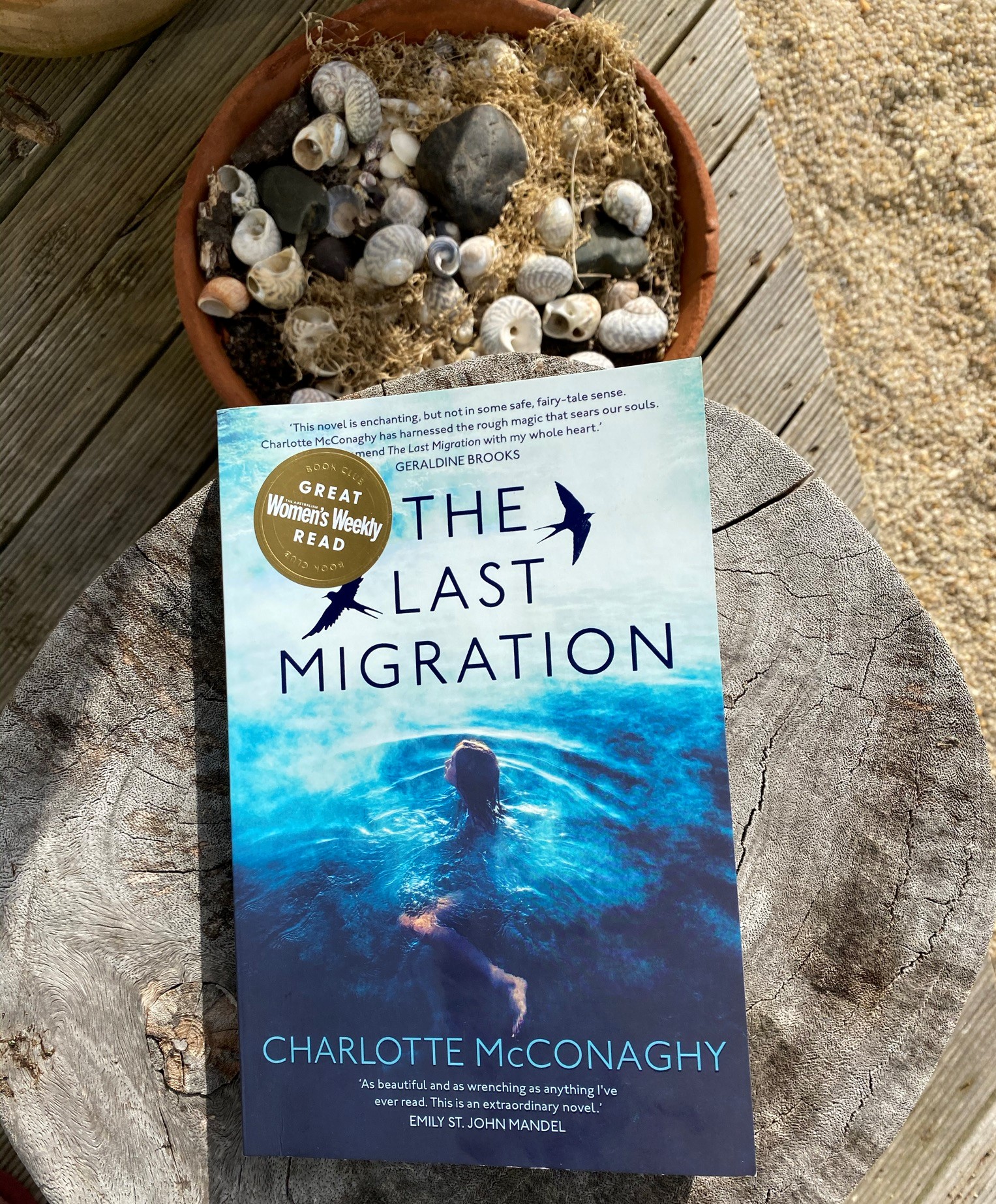
Book Review: The Last Migration by Charlotte McConaghy


The Last Migration is an incredibly moving novel.

The world’s animal species have plummeted dramatically and Franny, a young woman is intent on tracking the last of the Artic Terns from the Arctic to the Antarctica, possibly the last of the birds’ harrowing migration. Along the way, Franny convinces a gnarly fishing Captain with promises of fish if he takes her along to follow the bird. Fishing has all but died and fishermen will do anything to keep their livelihood going despite the fact that most of the sea has been fished out. The journey is tough and Franny’s own search for a missing mother and the unfolding story of her life is emotional and touching.

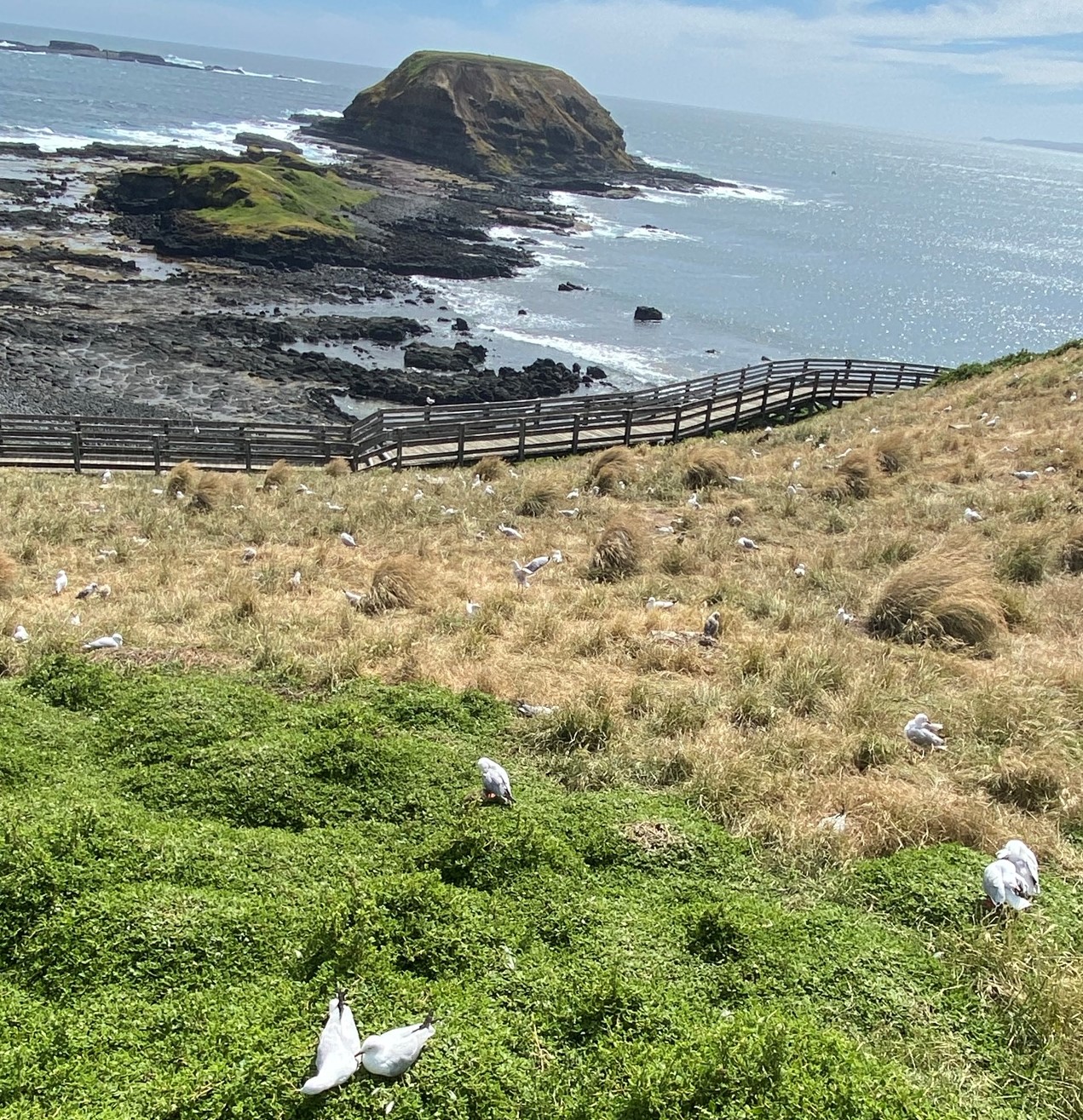
The journey of the Artic tern said to be the longest migration of any species in the world was made the more fascinating when I took a trip myself. Imagine my surprise when I visited a wildlife reserve on Phillip Island, an hour and half south of Melbourne and saw a sign telling me about the breeding grounds of Artic Terns. There were none there when I visited so I guess, they’re still on the homeward stretch although there were plenty of other birds. And somehow this book seemed extra special to me after seeing where their journey will end.


I’m not sure when I first started dreaming of the passage, or when it became as much a part of me as the instinct for breath. I haven’t cultivated it myself; it swallowed me whole. At first an impossible, foolish fantasy: the notion of securing a place on a fishing vessel and having its captain carry me as far south as he is able; the idea of following the migration of a bird, the longest natural migration of any living creature. But a will is a powerful thing, and mine has been called terrible.

And while the bird’s migration and the world which the author has foreseen is fascinating, the story of Franny, her mother, her loss, her husband and how she dealt with trauma was so incredibly well done. The water, the cold, the desolation was beautifully depicted. Each character, including each crew member of the boat was well drawn but Franny a complex character was the one who I was with the whole way.

I asked Niall once what he thought happened to us after we die, and he said nothing, only decomposition, only evaporation. I asked him what he thought it meant for our lives, for how we spend them, for what they mean. He said our lives mean nothing except as a cycle of regeneration, that we are incomprehensively brief sparks, just as the animals are, that we are no more important that they are, no more worthy of life than any living creature. That in our self-importance, in our search for meaning, we have forgotten how to share the planet that gave us life.

Themes of love, loss, survival and hope are compelling and bit by bit a moving yet gripping story slowly emerges to climax with an incredible ending.

Yes! This one I really, really loved. I think you might too.

Book Review: The Paris Time Capsule by Ella Carey

24858102. sy475

Cat Jordan inherits an apartment in Paris from someone she doesn’t know. She leaves New York to find out why. When she arrives and visits the apartment, she’s shocked to find it has been untouched since 1940. What happened to the owner, who is the person who left her the apartment? And so, the novel uncovers the mystery of what happened and why?

Complicating things is a handsome Frenchman, Loic who has a possible claim to the apartment and Cat’s controlling merchant banker fiancé, Christian who wants her to come home to New York for her engagement party. The inheritance forces Cat to review what she wants for herself rather than what others want for her.

This is an intriguing story and was inspired by the real-life story of a woman who fled her apartment as the Nazi’s marched into Paris. She never returned. It wasn’t until her death in 2010 that the untouched apartment was discovered.

What a wonderful premise for a story and I was very quickly hooked, impatient to find out why Cat had inherited the apartment and the owners history. I was drawn into the French countryside and the history of Paris in the 1930’s which was fascinating and well described.

However, there were times where the story slowed down, when Cat was distracted by Loic and his family or by a bit of sightseeing or her fiancé who was not particularly likeable. Cat was bewildered and Loic was – well he’s a Frenchman – what more can I say. The twists and turns in the story made me so impatient for answers I read this one very quickly.

It’s an easy read and despite my impatience, I was very satisfied with the end. Give this one a go for a light, holiday read.

Book Review: Too Much Lip by Melissa Lucashenko


This is an incredible book written with confidence, opening up many confronting themes for the reader to think about and to be challenged by.

Kerry Salter is a mouthy woman living on the edge avoiding prison and her family. On her stolen Harley, she heads home because her Pa is dying and she figures all she needs is twenty-four hours and then she can leave. She soon finds that her family and sense of country aren’t easy to escape. Old wounds burst open and when a developer tries to take their river, she’s drawn into the fight.

The trauma of living as an indigenous woman is not sugar coated and the commentary of what the consequences of white settlement in Australia have been for indigenous families covers many things including racism, land rights, the stolen generation and corruption. The author puts us deep into Kerry’s family, the dynamics, the struggles and we see clearly what intergenerational trauma can do.

It might seem that it’s heavy handed but it’s not. The story is sad, and tragic while poking fun in a good-natured way and that’s the talent of the writing by Lucashenko. No wonder she’s won a raft of awards.

The scene around the imagined discussion by the crows is hilarious. And the animals in the story are their own characters. ‘The noise of the Harley didn’t worry Elvis one bit. A small cunning mutt of no discernible heritage, he raged at the bike from the top of the stairs, finding it a worthy adversary. When he recognised Kerry, Elvis leaped off the veranda and beat his half-a-tail wildly in greeting, all the while conspiring to get past her and piss on the bike’s front wheel.

The language is at times brutal, yet powerful as it can be in dialogue with her family. This is a very well written book where the language is evocative describing the landscape, the heat and the mood of a fictional Australian country town. There are words which will throw you but after a while you’ll get their meaning as you immerse yourself into the book.

The characters are well drawn and just their nicknames will make you smile, from Pretty Mary, Kerry’s mother, Black Superman, her younger brother, Dr No, one of her nephews. Yet there is also menace and an undercurrent from Kenny, her older brother ‘who had long held the monopoly on anger in the Salter family. Kerry didn’t give a rat’s. She couldn’t see Ken busting her up today.’ The family, immediate and extended become important to Kerry as the secrets of past and present unfold to give her new understanding of them and herself.

It’s a very clever story told with gusto giving us an insight and respect for our First Nation’s people. This one is a must read.