Tag Archives: books by women

Reading Rap Up of Results for 2018


I’ve previously written a couple of posts about the reading challenge I set for 2018. (https://sckarakaltsas.com/2018/09/14/my-2018-reading-progress/)

My goal was 24 books for 2018 and managed to read 36 so I’m pretty happy about that. What made the difference for me? It was the ability to track my books by using Goodreads which is a great place for readers (and authors too). I love to be able to look back at the list. Since joining Goodreads more than five years ago I’ve been astounded at what I have read.  It might sound a lot to some but compared to others, the amount is a mere morsel. I’ve seen others who read over one hundred. Perhaps I’m a slow reader. Maybe I’ve been busy writing. That’s right, I did just publish my third book, A Perfect Stone.

So for a summary of 2018 I list some stats below.

Books: 36 (27 for 2017)

Pages: 11999 (8901 for 2017)

Books by Women: 21 (17 by Australian women)

Books by Men: 15 (8 by Australian men)

Book of the Year: A Gentleman in Moscow by Amor Towles

Other books which were strong contenders for Book of the Year were: Eleanor Oliphant is Completely Fine by Gail Honeyman and Boy Swallows Universe by Trent Dalton

Now to sort out my challenge for 2019. Any suggestions?
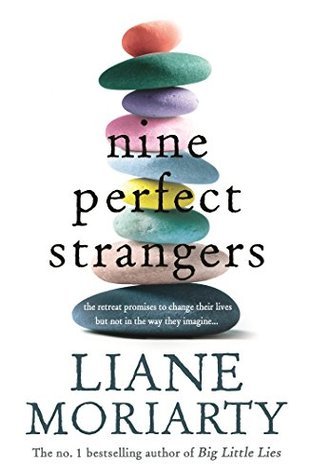
 

Book Review: Nine Perfect Strangers by Liane Moriarty

Courtesy of Goodreads

I’ve always wanted to read one of Liane Moriarty’s books but never have. I feel as though she’s an author who’s been read by everyone and it’s taken me this long to take the plunge. So instead of starting from her first, I’ve started with her latest, Nine Perfect Strangers.

The title more or less gives it away – it’s about nine individuals who have come together in a health retreat hoping to get well. They get much more than they bargained for – a true transformation which will change their lives forever.

I’ve actually never been to a health retreat. The descriptions of the health spa were intoxicating and I almost felt like I was there luxuriating in the massages, gentle walks, Tai Chai and delicious food and I was just about ready to book myself into one. Half way through the story though things got interesting as the challenges each of the nine faced was ramped up a notch or two.

The characters, and there are at least eleven, are largely white and middle class and I didn’t find them particularly likeable. I could forgive that I didn’t feel too much for the characters – just like when you go to a party or a conference, you get to know people but don’t have to actually like them – that is kind of what I felt about them all. The switch between their point of view meant that we stayed with them just enough. There was however, a bit too much repetition about their backstories which I found a little tedious. For example, we’re told on numerous occasions that Carmel has four children and thinks she’s fat even though she isn’t. I didn’t find her particularly engaging as a character and the change in her came a little too late for me. Like Carmel, none of them really developed the way I’d hoped. Frances was the one character who we grew to know a bit more than the others and although a bit wacky, I didn’t warm much to her either.

When the owner of the resort, Masha goes rogue, I unconsciously rolled my eyes. Masha, a supposedly strong, determined yet narcissistic woman has demons which begin to play out in weird ways. The story twists into an almost unbelievable farce which I found a little hard to swallow. There’s quite a bit of commentary about body image and the author does tackle mental health issues particularly suicide which all seemed at odds to the bizarre turn of events. Perhaps this story didn’t go far enough. I won’t give away spoilers but it takes an almost comic and predictable turn nicely tied up neatly at the end, which funnily enough, was exactly what I wanted.

This is an easy and quick read and although not a literary masterpiece would be an ideal, very light, holiday read. Have I booked a health retreat yet? Nah, somehow I don’t think it’s me. Would I try another book from this author? Yep, probably just to compare it this one.

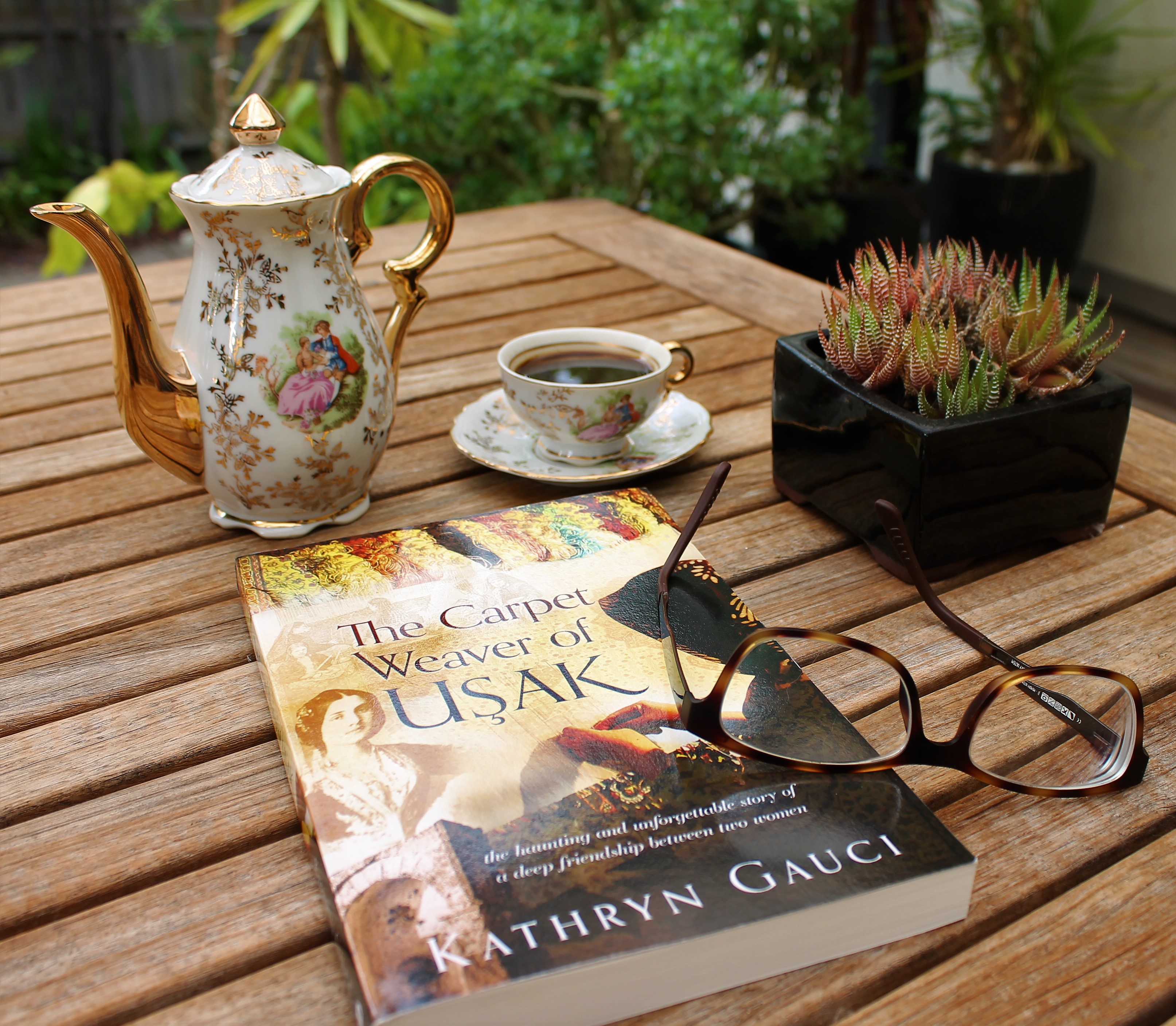
Book Review: The Carpet Weaver of Usak by Kathryn Gauci


Set in a village called Stavrodomi not far from the town of Usak, Anatolia, a Greek couple, Christophorous and his young bride, Aspasia live an idyllic life, side by side with their Turkish neighbours who call their half of the village, Pinarbasi. Christophorous works for the Anatolian Carpet Manufacturers Ltd as a carpet manager and Aspasia is a carpet weaver who weaves the most sought after pieces with her long time Turkish friend, Saniye. The demand for quality carpets is high and life is good in early 1914.

But their bliss is shattered with the onset of World War 1 when the men of the village are forced to fight in horrific conditions for a cause they don’t understand. Not long after the end of the war, another conflict starts up when Greece invades in 1919. The two nationalities are pitted against each other and as the war progresses the Greek population are sent back to Greece despite the fact that they and their ancestors had lived there for generations. The two wars are particularly pivotal in shaping modern day Turkey and Greece, despite some testing years since.

It’s a fascinating time and is a particularly enlightening read. The description of the carpet weaving is a lesson in how it was done and reminded me of my visit to Turkey a few years ago when I witnessed first-hand, the intricacies of weaving. Indeed, weaving and spinning was one of the few skilled occupations dominated by women giving their families a solid and reliable income. It’s not surprising that the detail is so fascinating as the author herself worked in Greece for a number of years as a carpet designer.

Throughout the story, the reader is immersed in the daily lives of the three main characters, particularly the women and we learn how they live – their fears, their loves and their superstitions. Indeed, the description of  food so very central in their lives, was mouth-watering – lamb koftes, stuffed aubergines, goats cheese and black olives ‘… she threaded pieces of meat that had been marinating in olive oil, lemon and herbs onto skewers and place them over the coals.’

The atrocities of war and its toll on Christophorous and Aspasia is heartbreaking but out of war comes hope and strength as ordinary people who care for each other stand up in support of what they know is right. It’s a beautiful story of love and adversity and the power and sacrifice for friendship.

The Carpet Weaver of Usak is the third book where Kathryn Gauci writes about Greece and Turkey. For more check out her webpage

Copy was provided courtesy of the author with thanks.


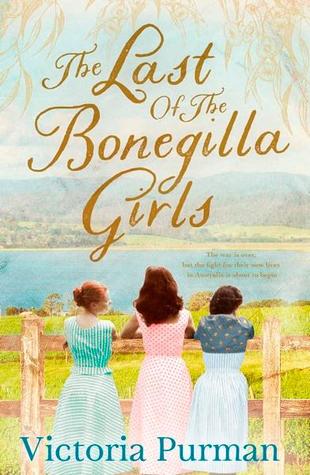
Book Review: The Last of the Bonegilla Girls by Victoria Purman


Can you picture being in a camp cramped with thousands of migrants hoping for a new life after living through the worst hardship and mayhem in your own country? Bonegilla Migrant Camp near Albury, Australia was one such place which temporarily housed thousands of migrants from all walks of life from Europe and Britain. Each of these migrants came to Australia for a new start in life – for a better life.

Put four sixteen-year-old girls together from different racial backgrounds and a life-long friendship develops. There is Elizabeta from Hungary, Vasiliki from Greece, Iliana from Italy and Frances, the Australian girl whose father is the Camp director. The reader is taken through an epic journey learning about each girl and their families through their eyes. While there are many characters, which could be overwhelming, it isn’t because the author gives us enough time with each one.

The girls grapple with their own problems not just because they’re migrants, but because they’re women in a conservative 1950’s Australia. Purman shines a light on a society where teenage pregnancies and hidden love because of racial, class or religious differences aren’t tolerated and where indiscretions are kept secret because the consequences are too traumatic.

The difficulties they face are many and in particular, the story of Elizabeta and her family is gut-wrenching. The exploration of mental health issues for migrants is explored in just enough detail for the reader to appreciate the generational impact. The racism of being a “New Australian” is very real, and this book provides an understanding of what being new to a country is like, serving as a reminder for tolerance and empathy for today’s new migrants.

This was a big undertaking for the author as we’re taken into the sixties, seventies and eighties. The reunions with the girls as grown women with their own families provides a picture of what’s happened to them. The last part of the book skips years from 1994- 2018 and I yearned to know more. Does Frances finally get her happy ever after? We’re left to join the dots. But isn’t the job of the author to leave us with our imagination? Reaching the end, I was glad the story of each girl wasn’t wrapped up in a bow with a Hollywood ending because life really isn’t like that.

This is an enjoyable and well-written historical novel with tragedy, love and friendship in a harsh landscape where the only option is hard work and survival. According to the author, “One in twenty Australians have links to Bonegilla”, so you too might have a connection. Who knows?

My 2018 Reading Progress


In a post earlier this year (https://sckarakaltsas.com/2018/01/05/my-reading-list-for-2018/) , I listed 18 books I wanted to read by the end 2018. I’ve read ten from my original list so far, but somehow seem to have added many more along the way . Check out the list below of the additional books I’ve read so far.

I joined the Goodreads Challenge for the first time this year and what a difference adding a target has made to my reading. I set myself a challenge of 24 books which was conservative as I’d read 27 in 2017. I’m up to 28 now and will now doubt crash through the 30 barrier. It might seem a lot to read but I’ve been astounded that the average Goodreads Challenger has pledged to read 55 books and I’m a long way from that.

I’ve also tried to review most of the books I read although it hasn’t been possible for each one. When looking at my list so far, I was startled to see so many books by Australian authors (fourteen) but then, it’s hardly surprising as Australian authors are producing incredible work. If you don’t believe me check some out for yourself.

  1. The Sister’s Song by Louise Allan (Aus)
  2. What Was Left by Eleanor Limprecht (Aus)
  3. Castle of Dreams by Elise McCune (Aus)
  4. The Tattooist of Auschwitz by Heather Morris (Aus)
  5. The Handmaid’s Tale by Margaret Attwood
  6. The Rules of Backyard Croquet by Sunni Overend (Aus)
  7. Movemind by Robert New (Aus)
  8. The Passengers by Eleanor Limprecht (Aus)
  9. The Lost Flowers of Alice Hart by Holly Ringland (Aus)
  10. The Jade Lily by Kirsty Manning (Aus)
  11. Watching Glass Shatter by James J Cudney
  12. Resurrection Bay by Emma Viskic (Aus)
  13. The Unfortunate Pilgrim by Mario Puzo
  14. The Lion by Saroo Brierley (Aus)
  15. The Bridge by Enza Gandolfo (Aus)
  16. Eleanor Oliphant is Completely Fine by Gail Honeyman
  17. First Person by Richard Flanagan (Aus)
  18. The Last of the Bonegilla Girls by Victoria Purman (Aus)

Do you have any you’d like to recommend?

COVER REVEAL: NEW RELEASE

Announcing New Release: A Perfect Stone by S.C. Karakaltsas

I am so excited to let you know that my novel, A Perfect Stone will be ready for release October 10, 2018. The cover is done, the proof has been examined from front to back and the format double-checked. There is nothing like holding your new book in your hands for the first time.

It might seem as though I’ve churned out another novel in a short time but believe me, this has been a project of more than two years in the making and at times a laborious undertaking. But it’s also been a labour of love and passion as I researched the heartbreaking tale of what happened to children who were forcibly removed from their homes during the Greek Civil War in 1948.

A dual timeline story taking the reader on a journey through the snow-covered mountains of Northern Greece, to Czechoslovakia, Macedonia and Australia, I hope you’ll like reading it as much as I loved writing it.

How do you find a place to belong when there’s nowhere else to go?

Living alone, eighty-year-old Jim Philips potters in his garden feeding his magpies. He doesn’t think much of his nosy neighbours or telemarketers. All he wants to do is live in peace.

Cleaning out a box belonging to his late wife, he finds something which triggers the memories of a childhood he’s hidden, not just from his overprotective middle-aged daughter, Helen, but from himself. When Jim has a stroke and begins speaking another language, Helen is shocked to find out her father is not who she thinks he is.

Jim’s suppressed memories surface in the most unimaginable way when he finally confronts what happened when, as a ten-year-old, he was forced at gunpoint to leave his family and trek barefoot through the mountains to escape the Greek Civil War in 1948.

A Perfect Stone is a sweeping tale of survival, loss and love.

Now available https://www.amazon.com.au/Perfect-Stone-S-C-Karakaltsas/dp/0994503261/ref=tmm_pap_swatch_0?_encoding=UTF8&qid=1538698782&sr=1-1

Book Review: The Bridge by Enza Gandolfo


This well written book is full of emotion and heartbreak as we are confronted with the question of what happens when people face tragedy and loss. Indeed, all of us face tragedy in some form or another in a personal way or just by being bystanders as we scroll the news. A bridge collapsed in Italy a mere week or two ago, accidents happen regularly and we read and gasp and comment on the tragedy and feel sorry for those affected.

The Bridge draws on events surrounding the collapse of the Westgate Bridge in Melbourne in 1970 and although I was a child living in another state, I remember it. Living in Melbourne, I’ve travelled over it too many times to even count. I know the suburbs of Yarraville and Footscray and the streets in Melbourne which are all beautifully described to make this book even more real for me.

I hadn’t bothered to read the blurb and thought the book was entirely about the bridge collapse and was absorbed in the characters of Antonello and Paolina – their young lives changed by the collapse of the bridge when Antonello, a rigger, narrowly escapes. When the author made me take the leap to 2009 and introduced me to the new characters of teenagers Jo and Ash, I began to baulk. I wanted to know more about the bridge collapse and the lives who had been touched. I wanted more on the bridge itself. I didn’t wait long as the author skilfully intertwined the story of Jo and Ash as well as Sarah around the bridge whose impact is much more than the collapse itself.

The relationships between mothers and daughters is heartfelt and moving. Jo’s mother’s dilemma toward her child and Ash’s mother’s reactions were skilfully portrayed. Each character in the book is well drawn.

What happens to people whose actions cause the death of someone and how do they survive and move on? This question is deeply and intimately explored and there were times when tears filled my eyes grappling with the dilemma of responsibility and grief as if I was there. Some people make mistakes and get away with it and others just have bad luck. Some take responsibility and live with it their whole lives and others don’t. And the questions roll out for all tragedies and that is, ‘What if…?”

It’s not a happy story but it is a moving one and I’d recommend it.