Tag Archives: books by women

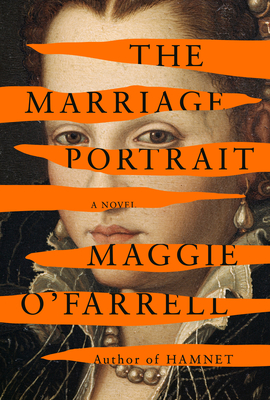
Book Review: The Marriage Portrait by Maggie O’Farrell

My first encounter with this author was reading her novel, Hamnet. In my opinion, The Marriage Portrait is even better.

O’Farrell was inspired by the real life story of fifteen-year-old Lucrezia di Cosimo de’Medici who, in 1560 married the Duke of Ferrara, Alfonso II d’Este. A year later Lucrezia died officially from a ‘putrid fever’. However, rumours circulated that she was indeed murdered by her husband.

And so O’Farrell begins her story on the day when Lucrezia’s realizes she is in danger. O’Farrell then weaves the story back and forth between that day and through Lucrezia’s life. We learn about her childhood as the middle child of a large and powerful noble family, her betrothal and eventual marriage.

We are immediately transported into Lucrezia’s life, inhabiting her thoughts, observations, and intelligence. She has great talents and had she been a male would likely have made a great ruler. But alas, the bindings of being a woman mean that she is cast into a role she does not want, that of a wife and breeder of children. And that of course is in keeping with the time and for years since. In our present day it nevertheless is galling as we cheer on her struggles for recognition and rights.

The structure of the story is clever as the two timelines converge towards a tense crescendo so much so that you cannot put it down.

There is a lot of description and sometimes I find in some stories that it can serve to slow the story down. Not the case for The Marriage Portrait as each detail puts us in Lucrezia’s point of view understanding her surroundings and her acute observations of people which serves to paint a complete picture of her world.

It is a masterpiece of writing, the characters so detailed that we know and fear for them.

This is definitely one to read. Don’t miss out.

Book Review: A Disappearance in Fiji by Nilima Rao

A novel set in Fiji in 1914 about a missing indentured Indian woman was bound to be intriguing. This debut historical fiction by Australian author Nilima Rao was a page-turner, enlightening the reader about the conditions of Indian Indentured workers early last century.

A young Sikh policeman, Akal Singh is posted from Hong Kong to Fiji in disgrace.  He is sent to a distant cane plantation to find a missing indentured Indian woman. The plantation owner declares she has run off with the overseer with whom she has been having an affair. A parish priest challenges that by saying she’s been kidnapped.  When Singh arrives at the plantation, he finds that not all is what it seems and he is shocked by the work conditions of his fellow countrymen.

There are several themes in this book, the colonial system, racism as well as the class divide not just between the races but even within the Indian community. Of course, sexism is explored and the way women are treated, where questions of justice and morals contradict the system of exploitation by the colonial system. The brutality and squalor of the indentured system was well portrayed.

 I liked the comradery between Akal and the white doctor who is pleasingly on the side of justice. There are times where I yearned for Akal to look a little wider, his investigation slow at first but becomes more energetic as his confidence grows.

 It makes for a very compelling story with a nice twist at the end. Yet it still lends itself to a sequel. I’ll look out for that one.

Book Review: Bruny by Heather Rose

Books about Tasmania by Tasmanians rarely seem to put a foot wrong for me lately and Bruny is no exception.

It is a fantastical story of a time in the future when a bridge costing two billion dollars is constructed to Bruny Island a short distance from Hobart. For those who know Tasmania and in particular, Bruny Island, the place is not highly populated nor would it warrant a six-lane bridge. Understandably an explosion which collapses part of the bridge brings Astrid Coleman, a UN negotiator home from the USA to help her brother, the premier get the bridge repaired before the next election.

While central to the book is the bridge, there are many other issues the author freely explores. One is the destruction of the environment, both sea and land. It is well known that the waters around this particular area have been polluted by fish farming and this is spelled out again with the advent of a bridge and tourists. The author doesn’t hold back on the political aspects and I enjoyed this immensely as she foresees into the future pinpointing Chinese influence and economic colonialization. She also throws a jab at the AFL and considering that Tasmania has just been allocated a team in the recent month she was remarkably accurate in her forecast back when she wrote this prior to 2019.

The author is passionate about what Tasmania has and what is stands to lose, forecasting the consequences of the climate crisis. The future may not be that unrealistic.

There is also a love story and one of family together with loyalty and the challenge of allegiance. But more importantly, it is a story of being home and finding the joy of the land we’ve grown up on and where we really belong.

There are many issues in this book which will have you nodding your head in agreement as you turn the page not wanting to put this down.

It’s well written, easy to read and highly topical. It makes me want to head back to Bruny Island again to see it while it still is pristine.

Put this one on your list.

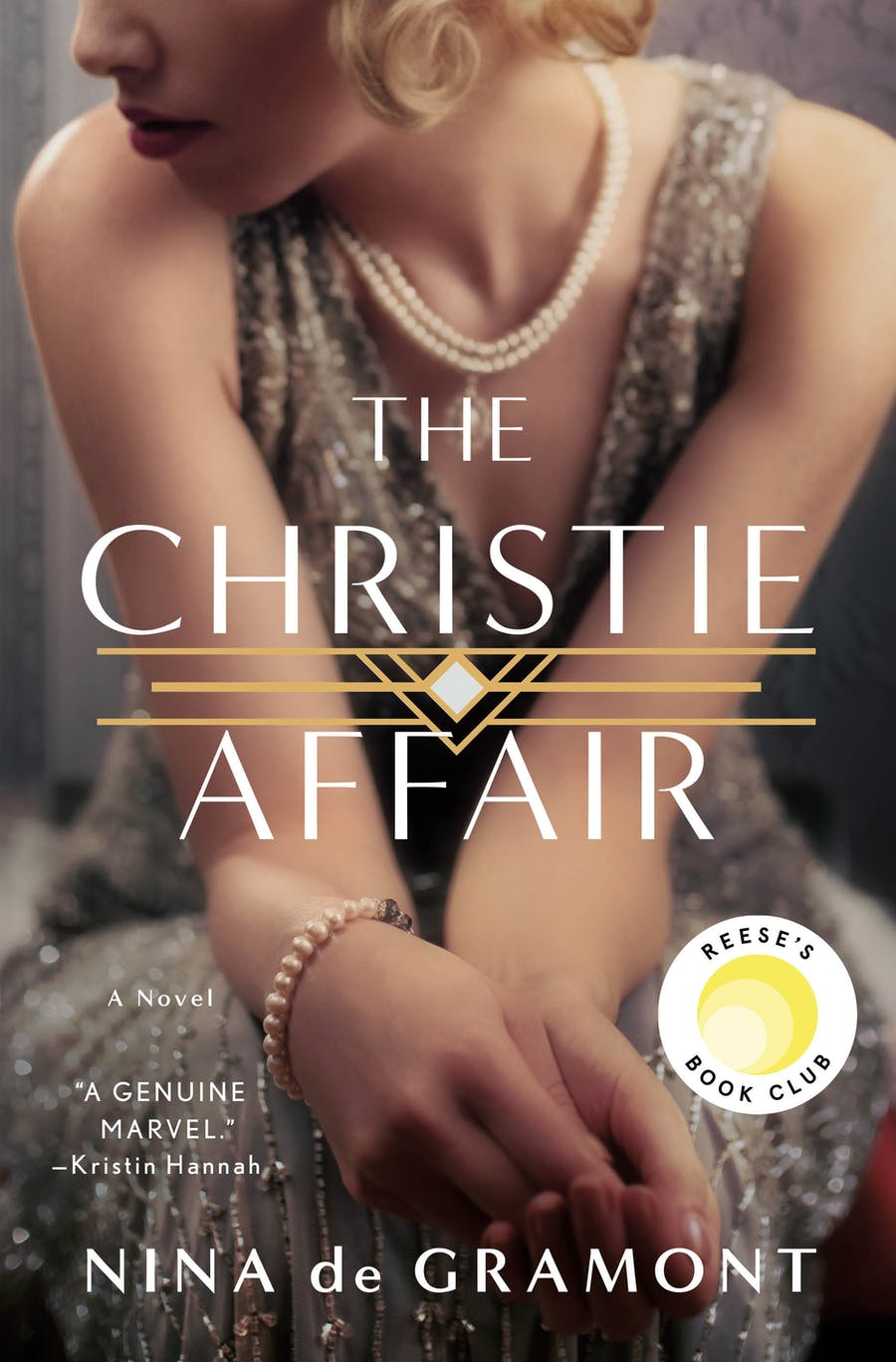
Book Review: The Christie Affair by Nina de Gramont

I picked up this novel because I’d seen a documentary about Agatha Christie’s life and was particularly intrigued about the eleven days in 1926 when Agatha disappeared. Her explanation at the time was that she had no memory of what happened.

Agatha was known for her detective novels but her fame was minor until her disappearance, when her car was found abandoned, her fur coat and case still in it. Where did she go? What happened?  De Gramont reimagines the events of those eleven days which makes for a very compelling and twisted tale.

For a start the story is from the point of view of Nan O’Dea who is the lover of Agatha’s husband. Her story, tragic and traumatic made for some very difficult reading yet it was so compelling. I enjoyed the way Nan and Agatha’s story intersected and when Nan’s motivation is finally revealed our sympathy for her certainly escalates.

De Gramont highlights the class divide beautifully and the plight of single pregnant women, the Catholic church, abuse and the role of women in their ‘proper’ place as wives to look after their husbands.

We are given various points of view, though mainly it is told by Nan. At times, it almost seemed a little far-fetched as a double murder occurs reminiscent of one of Agatha’s own stories, until the twist towards the end reveals a plausible  connection to her.

This one was definitely a page-turner and quite well-written. How close it is to any semblance of truth? We will never know.

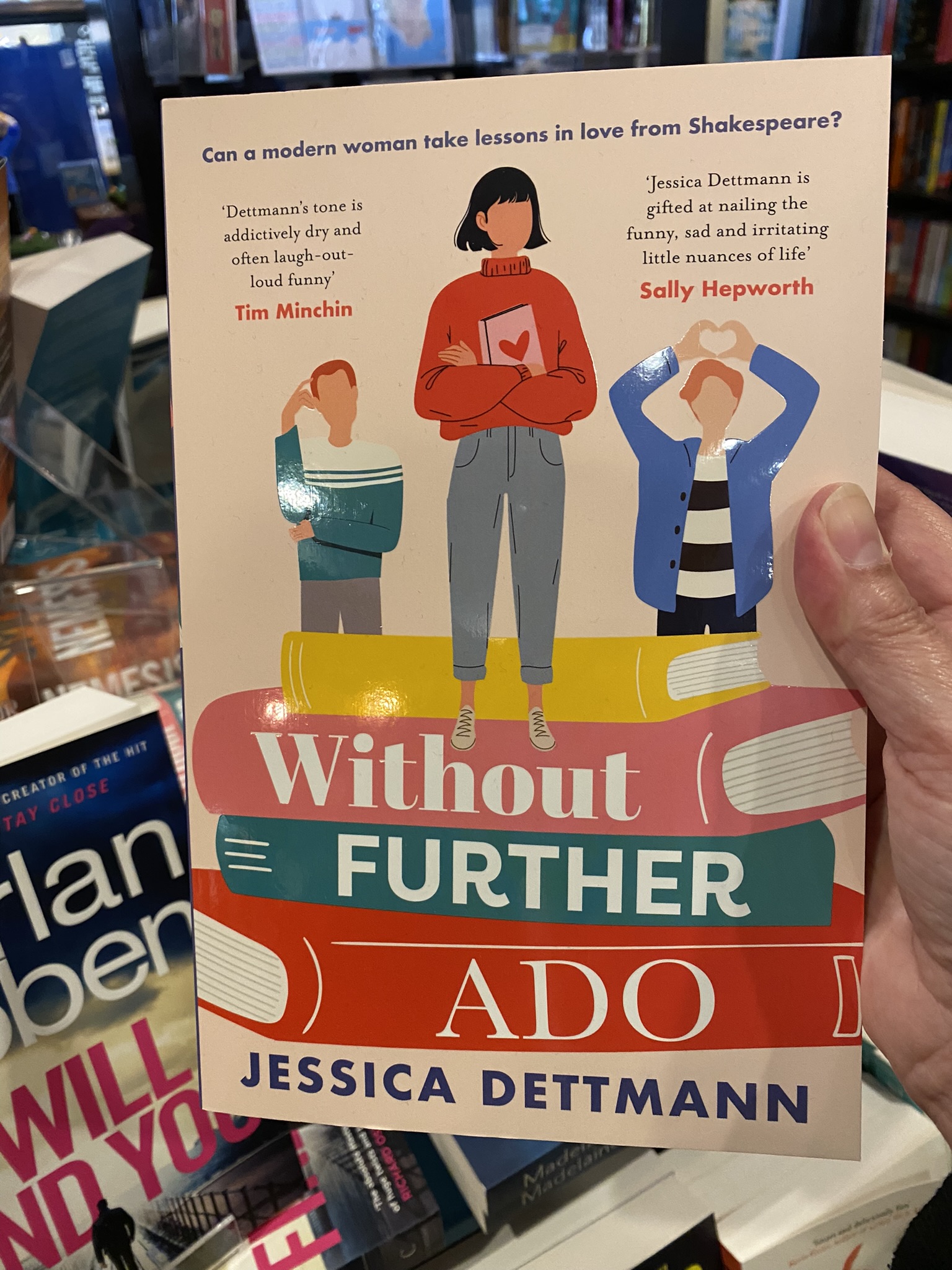
Book Review: Without Further Ado by Jessica Dettmann

This is a story about love but it’s much more than that.

Willa, a thirty-six-year-old woman with a series of relationships behind her is a romantic. Her great love is her work as a romance publisher where the movie, Much Ado about Nothing rules her decisions about the choice of book to publish as well as her own life.

The movie, watched when she was a sixteen-year-old made such an impact on her, that it unknowingly confined her actions and thoughts within her own limited expectations. On top of this she works for a publishing company whose CEO is the father of four other employees, brothers Dougal, Ewen, and twins Angus and Alistair. Besides the romance novels, they publish pamphlets but have the lifestyle of wealth and privilege. The only other employee is Willa’s cousin, Imogen who falls for Alistair and as we all know office relationships can either work or not.

The novel is full of humorous lines, particularly the dialogue and amusing scenes as the first half sets up the setting in Sydney and the characters particularly, Willa. Not a lot happens until half way through though. The story takes a turn I’d not expected and Willa is forced to make decisions and take charge in a toxic situation with unexpected consequences which begin to mirror the very revered Much Ado about Nothing.

Don’t worry too much if you don’t know this play because the plot is well and truly explained, probably a little more than needed for my liking, as it became a little bit repetitive.

While the second half of the novel was more interesting for me, there was too much internal dialogue of overthinking by Willa which began to become a little tedious and in part repetitive, slowing the story down. I found myself quite disinterested in Willa as she lamented her woes over and over.

Apart from that, I didn’t mind this light-hearted novel by a writer I’d not read before. It’s an easy read and would be perfect for a holiday or travel.

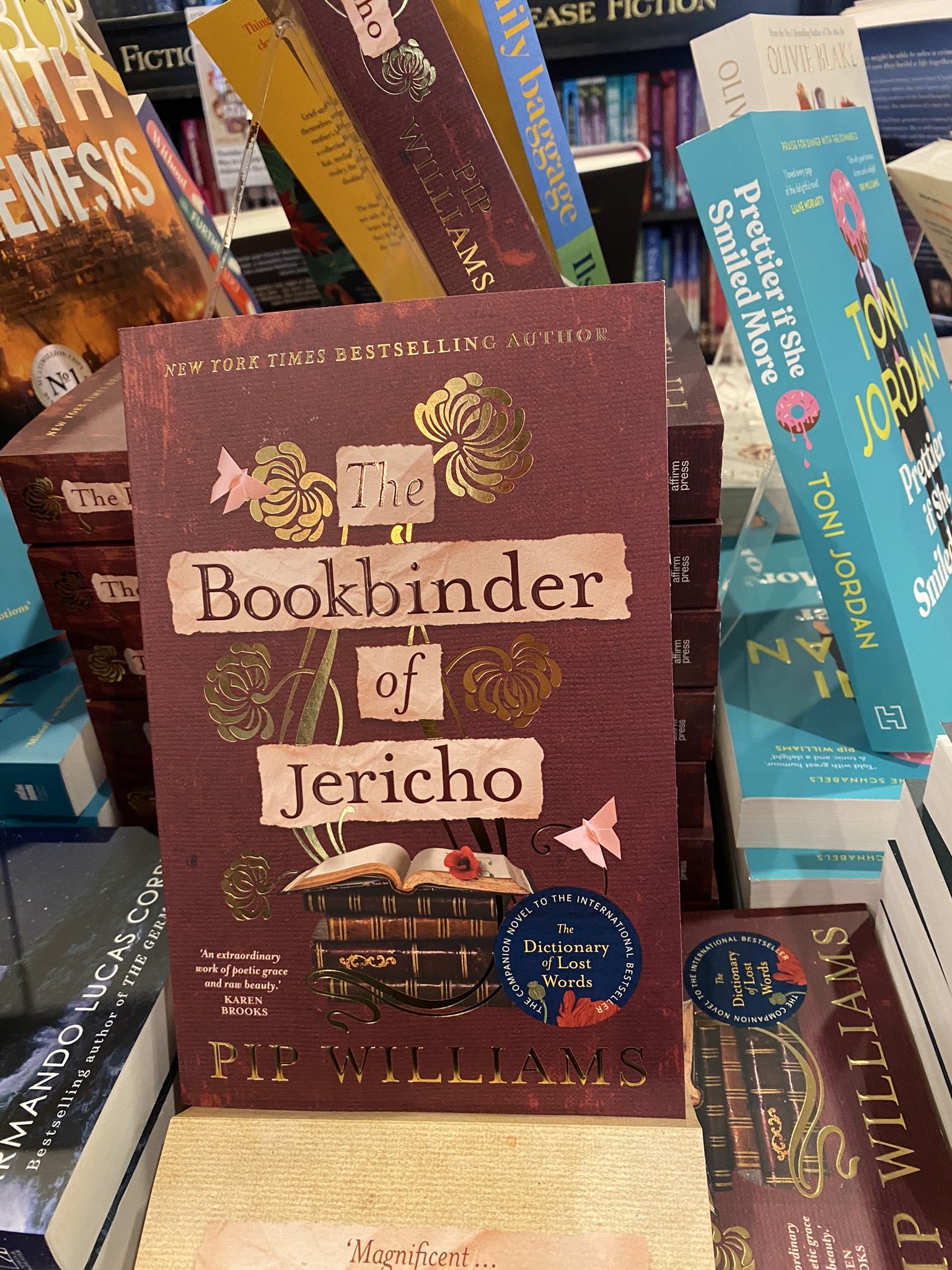
Book Review: The Bookbinder of Jericho by Pip Williams

From the author of the best-selling novel, The Dictionary of Lost Words, comes The Bookbinder of Jericho, another wonderful story set in Oxford but this time about a female bookbinder.

Peggy and her twin sister, Maude follow in their recently dead mother’s footsteps to work at  Clarendon Press as bookbinders. It’s the beginning of the First World War when the press begins to lose the male employees as they join the  ranks of war recruits. The story follows Peggy as she yearns to read the words on the pages she binds, the difficulties of the war, her relationship with Maude who needs looking after too.

It begins slowly and I admit to being a little impatient as I was forced to learn, in intricate detail the mechanics of book binding. I was glad I did and was soon taken in with the characters, difficulties of life and the pace of the war and its consequences until it consumed me to turn page after magnificently written page.

“There is satisfaction in sewing the parts of a book together. Binding one idea to the next, one word to another, reuniting sentences with their beginnings and ends. The process of stitching can become an act of reverence, and when there are more sections on the frame than on the bench, you begin to anticipate the moment the parts become a whole.”

The class system is magnified with injustice as is the role of women used to assist the war effort in every position normally occupied by men. But more importantly Williams shines a light on the significance of education for women portrayed by Peggy’s love for learning yet denied because of her class as well as her circumstance.

“Your job is to bind books, not read them.”

Williams immerses the reader in the everyday of Peggy’s life, beautifully giving us her observations, her frustration, vulnerability, and her insecurities, all while navigating us through the history. Tilda, a character from Williams earlier book, is a VAD (Voluntary Aid Detachment) sent to assist the wounded in France. Through her letters, Williams cleverly reveals the horrors of the injured and dying, the difficulties of the health workers as well as educating us about little known Australian painter, Isobel Rae.

The tenderness between the sisters is poignant, their relationship tested as the women forge different paths away from interdependence. “Maude didn’t find it easy to compose an original sentence, but she chose what to repeat. She understood, I think, that most of what people said was meaningless.”

This is a novel for booklovers, historical readers and for anyone who just loves a moving story.  A must read.

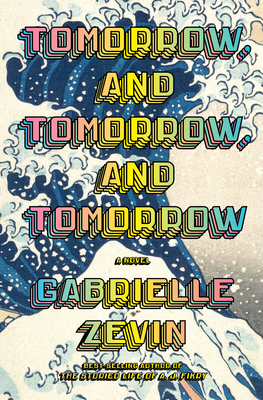
Book Review: Tomorrow and Tomorrow and Tomorrow by Gabrielle Zevin

I was curious about this book which has been receiving rave reviews world-wide.

It’s about two children who meet in a hospital. Sam is recovering from surgery to his smashed foot and the other, Sadie is visiting her sister who has cancer. They meet in a games room and soon develop a friendship over their mutual love of gaming.

Fast forward several years they bump into each other in a subway, each at university and each still in love with gaming. Together they make a game and with their mutual friend, Marx their game becomes a smash in the world of gaming.

At first glance, you might not consider reading this one. While it is about gaming, we are taken into the lives of Sadie and Sam and their evolving complicated relationship of friendship and how that is tested as their success grows.

Zevin gives an insight into gaming and its power over its audience, but more than that she shows us the history of the technology and its influence into everyday gaming lives. Yet, she didn’t delve deeper into the lives of gamers where the downside can be devastating for those addicted day and night. Nevertheless, this novel is so much more than gaming. It is about relationships and Zevin’s treatment of the friendship is tender yet complicated as she deep dives into their motivations, their personality and their treatment of each other.

I also liked the diversity of the characters, Sadie is Jewish, Sam is half Korean and Marx is half Japanese and the cultural mix was enlightening without singularly drawing attention to itself.  It’s an enjoyable journey to follow the lives of these two characters. Sometimes, they aren’t that likeable although Sam probably wins the most sympathy of the two. The supporting cast of Marx and Sam’s grandparents are stars while Dov is unlikeable.

It’s a long book and there were a couple of occasions where it dragged a little, but not for long. The writing is great, the story compelling and very readable. And now I might just have to see what the fuss is about and play a game. Give this one a go.