Tag Archives: Reading

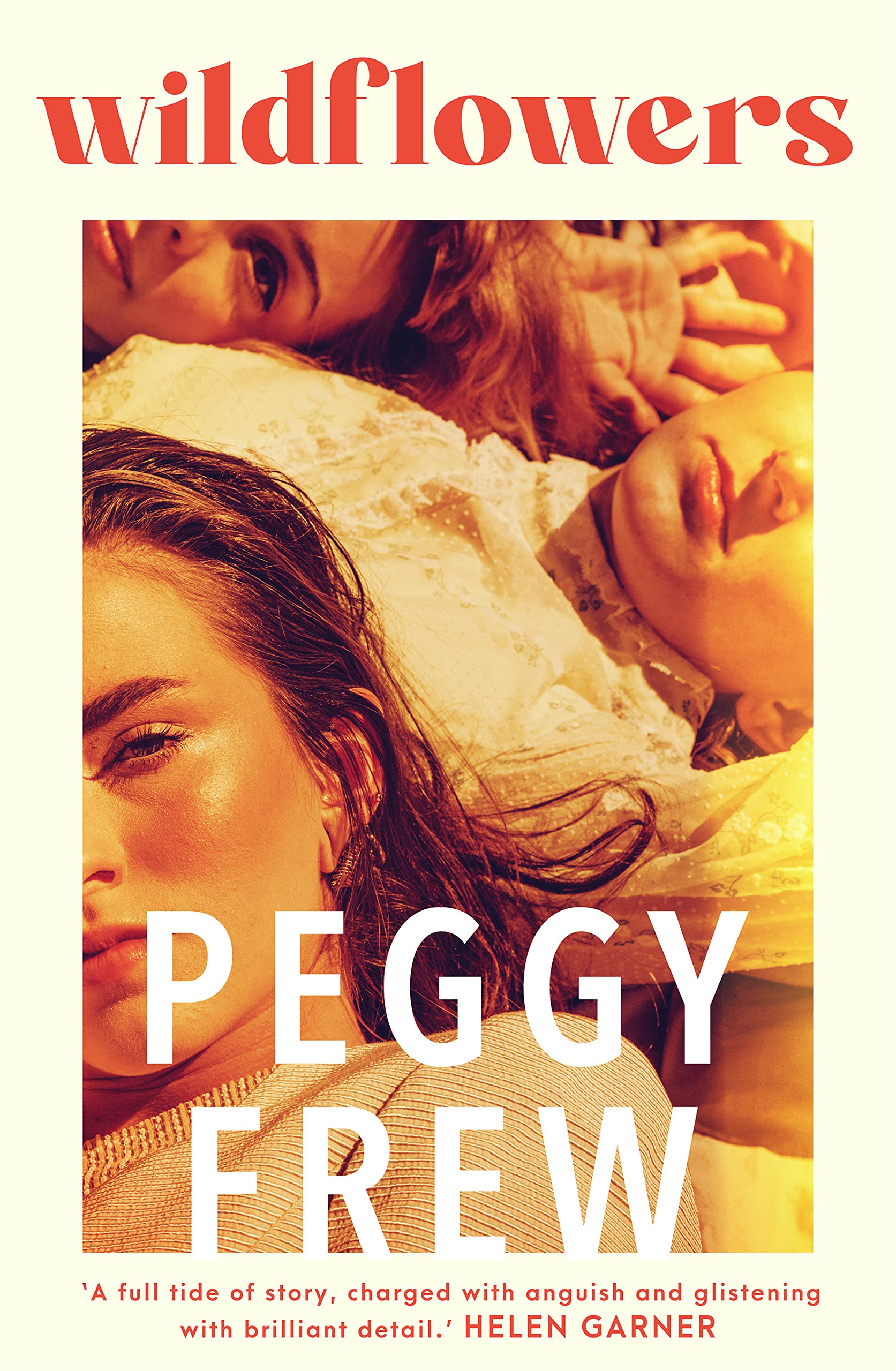
Book Review: Wildflowers by Peggy Frew

I have really loved Frew’s last two books, Hope Farm and Islands so I knew I just had to get Wildflowers.

Like the others, Wildflowers is  a story of family and in this case, the relationship and challenges of three sisters. Meg is the oldest, followed a year later by Nina and then four years after is Amber.

The story is largely centred around Nina and the affect on her by Amber, with her addiction and Meg who has an overwhelming need to fix and nurture Amber. When Meg decides that she and Nina need to perform an intervention on Amber, they whisk her younger sister away to a remote far north Queensland house. It’s here that good intentions slide and their relationship is tested.

Told from Nina’s point of view, its her gaze at her sisters and her largely ineffectual parents that gives us perspective.  From the opening, it’s clear that Nina who has packed up her belongings in boxes, not showering, or eating properly, is in the one who is really in trouble.

Nina reflects on her own life, her sexual life of disappointments, her inability to voice her thoughts  or even her ability to function. As her state of mind deteriorates before and after the intervention she slides into a space where no-one notices her crisis.

The sisters all perform and live in their assigned roles from childhood. “Meg, ten, is the Good One, and Nina, nine is the Forgetful One, and Amber, little Bam, only five is the Wild One, a puppy, a seal cub.” Often labelling children with their designated role means they wear it for life. Frew explores the roles of the sisters each fractured within the family.

Nina is a dislocated observer trying to make some meaning of her life as well as of her her family and her sisters as she reflects on what happened in QLD five years earlier. She is struck with an inertia and apathy yet unable to vocalise and stop Meg who is hellbent on fixing Amber. Nina struggles with the morals of what is going on but her weakness paralyses her from taking any action. She comes face to face with understanding who her sisters actually are. As is so often the case, Frew explores the question of how well we really know our siblings and our actions dependant on our designated role. It’s an interesting idea and one that is explored well.

Beyond the family, Nina reflects on her list of sexual partners, none of whom create a meaningful relationship. Tarnished by her experiences she slowly realises that it is not what she wants and without any real action she drifts away from these men.

But we never truly get a deep understanding of Nina and her motivations, nor do we learn much more about Amber or Meg. Yet the relationships between them change and evolve as they weave in and out of each other’s lives as siblings do.

It’s not a happy novel and reminds me a little of Sorrow and Bliss without the wit. But the writing is descriptive, the rainforest, the party house and the landmarks in Melbourne to name a few. It’s also emotive and confronting and in the end hopeful.

Wildflowers is unsettling and at times, confronting. From the first few pages, I was invested but this may not be a novel for everyone.

Book Review: The Good Wife of Bath by Karen Brooks

Geoffrey Chaucer is famous for the collection of stories he wrote known as The Canterbury Tales. One of the stories, The Wife of Bath inspired author Karen Brooks to gleefully and expertly give the character, Eleanor the opportunity to give her side of the story.

Set in 1364, Eleanor is married off to the first of five husbands at the age of twelve. By eighteen she is a widow. The book takes us on a journey through her life, in and out of poverty and love and injustice. Geoffrey Chaucer himself is introduced as a character who plays a major role throughout her life as a distant cousin. She is not a woman who bows to social norms and with the support of her closest friend and ally Alison, she fights to protect her loved ones from the brutalities of those medieval times.

Life for women was particularly difficult. They were considered inferior, health care was scant and a woman’s success was tied to the wealth of the man she married. Even then it didn’t guarantee her a happy and fulfilled life. Indeed men’s attitude towards their wives was at best tolerant and at worst, they were treated like slaves and blamed for everything because of their sex. The author immerses us into a world of a plague uncanny in its comparison to our present day pandemic.

I simply adored this novel. I loved the character of Eleanor and was on her side the entire time, wanting a better life for her and dismayed at the injustices that she faced as a woman. And I wondered what she would think in 2023. Would she be amazed or disgusted that there hasn’t been the progress she might have expected?

The theme running throughout the novel is injustice for women and the following sums it up nicely.

“The older of the men, a Master le Brune, looked me up and down, a sneer forming. “Women weren’t put on this earth to conduct business, madam,’ he said haughtily, ‘but to help men with their work. As the good books say, ‘suffer not a woman to teach, nor to use authority over the man: but to be in silence.”

Eleanor railed against a culture where a woman was not permitted to conduct a business by herself, where her only respectability was as a married woman and her role defined as wife and mother.

I cheered for her successes, mourned her losses and there was a lot, was horrified on one page and laughed at the next of this page-turning novel.

It is a long book so be prepared to invest a lot of time to read it. You’ll be rewarded by not wanting it to ever finish. It’s a meticulously researched book vivid in description, humour, and tragedy with powerful characters. Get this one. You won’t be sorry.

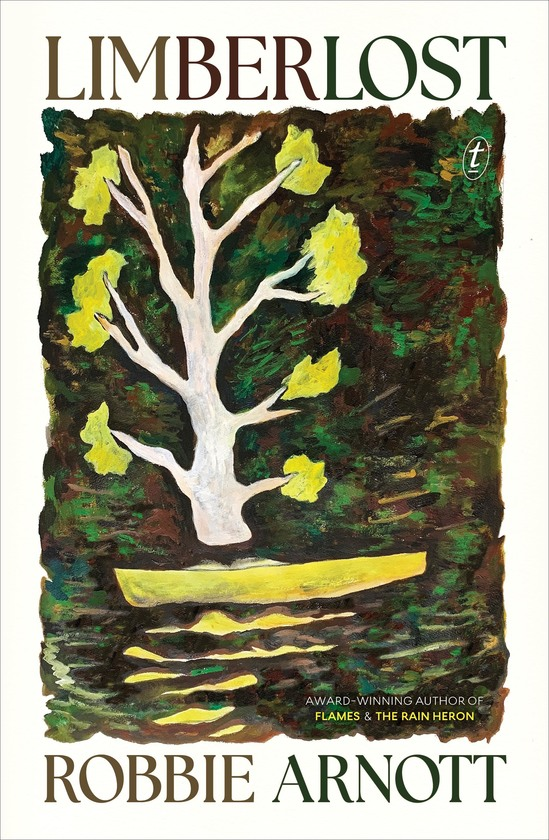
Book Review: Limberlost by Robbie Arnott

Arnott is a Tasmanian author and certainly one to watch. Limberlost is his third novel and the first I’ve read of his work.

This is a coming-of-age novel about fifteen-year-old Ned who lives with his father and sister on their apple orchard in the Tamar Valley. It’s 1943 and his two older brothers away at war, leave a pall of anxiety over the household. Ned keeps himself busy during the summer school holidays with chores and trapping rabbits to sell as skins for hats for the soldiers. Ned is anxious about killing the animals but has a dream to use the money to buy a boat. It’s wartime so he questions his motives and wonders about his selfish dream. With his friend Jackbird, he finds time to fish and swim in the nearby river and lose himself to the imagination of a legendary whale at the mouth of the river. The narrative flips intermittently to Ned as a man who is forever reminded of what happened that summer of ’43.

Firstly, the writing is sublime, and although it’s not a long book (226 pages) each sentence is carefully considered, evoking beauty and feeling for the characters and the landscape. ‘The wind warmed, then died. The sun bit and clawed. Mud hardened into dirt, before falling apart as dust. Sweat crusted onto skin as soon as it leaked free. With no freshness to feed on, the rabbits disappeared.’

Ned is a boy and then a man of few words, lacking confidence to voice what is truly bothering him, always trying to do the right thing hoping for approval from his father, his sister and eventually his absent brothers. ‘He avoided thinking about anything that brought on the sting. The war. The school year that awaited him. The mare. His father. How his father, after he’d read Toby’s letter, had asked Ned if anything had come from Bill. The blank fissure in the old man’s face when Ned had shaken his head.’

Ned is also deeply conflicted by his obsessions and secrets, as his dreams collide with the reality of the failing farm and the absence of his brothers. But it is so beautifully juxtaposed with Ned as an adult bringing joy as he matures to be a caring, loving family man.

This truly is a magical story, beautifully written digging Ned into you, making you care and want the best for him. I predict this one will win a few awards, so go out and buy this new release.

Book Review: The Tilt by Chris Hammer

I was unaware that this novel is the second in a series, but it mattered little. It really was suitable as a standalone.

The tension begins from the first page when a woman plans to blow up a regulator wall, while a man runs frantically through a forest dodging shooters. Three months later a skeleton belonging to a man missing since 1943 is found. Detective Constable Nell Buchanan is assigned to investigate, returning to her home town where her family still lives. She’s has a difficult relationship with her family which peaks our curiosity. Then another body turns up.

This is not your classical rural crime novel as it has many layers flipping back and forwards in timeline, often without warning. There are also many characters to keep you on your toes as you, the reader try to piece the family and community ties both past and present.

The writing is brilliant, descriptive as it is beautiful, placing us in the Australian landscape of forest, river and small country town. ‘The lack of wind meant there was nothing to mitigate the oppression that enveloped the weatherboard house on the plain above the Cadell Tilt. It baked and it sweated and it cowered, its iron roof shimmering like a skillet.’

The locals are cringe-worthy. ‘He has a face like a slab of marble, white and veined with pink, topped with a strawberry-blond mullet so thickly woven it could be a doormat.’ And they are suspicious, curious and not always friendly.

Tension grows from the shadowy presence of preppers, cookers and twitchers as we’re never really sure who they are.  Nell becomes embroiled in an old family feud as things get personal and old grudges emerge the more she digs deeper into the mystery.

Nell herself gives little away and at times I wondered if she really had grown up in the area as she seemed quite disconnected. She certainly didn’t head down memory lane to give us much insight into anything more than her family background. But then that was the point as the family tree came together like a piece out of ancestory.com. As I read I was kind of wishing I had the chart to refer to but when I saw it mapped out at the end, I realised that advanced knowledge would give away some of the twists. And there are a lot of twists much like the Murray River so well featured in the family saga.

I really loved this novel, the first I’ve read by Hammer and I’ll be searching for the rest.

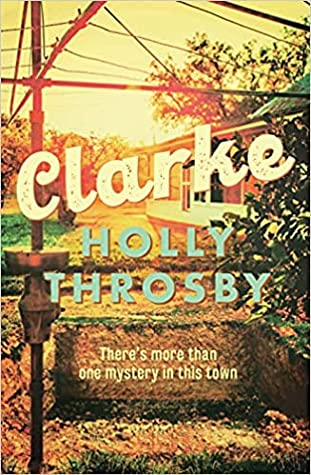
Book Review: Clarke by Holly Throsby

This is about the mysterious disappearance of a woman. Or is it?

Set in 1991, police arrive at Barney’s rental house to dig up the backyard looking for Ginny Lawson who has been missing for six years. Next door lives Leonie who was a close friend of Ginny’s and who eagerly awaits justice for her friend. She’d never liked Ginny’s brute of a husband who has already sold up and moved away and is married to someone else in QLD. Barney and Leonie as well as a number of neighbours are keenly watching proceedings hoping for a resolution.

This novel is much more than about the disappearance of Ginny. It’s also a study of people, their relationships and central to that is loss and grief.

Alternating between Barney’s and Leonie’s point of view, Throsby gently draws out their characters revealing who these two people are. Leonie cares for four-year old Joe who keeps asking for his mother. Barney parks outside of McDonalds to glimpse his estranged son who works there. Leonie was a good friend to Ginny lamenting how the police had ignored her initial concerns about her friend’s disappearance and Ginny’s brutish husband.

Throsby goads us into making assumptions about these two characters nudging us to think one thing then slowly revealing their backstories. I did however guess the connection quite early between the two.

It’s a slow-moving story, gently threading the everyday mundane of surviving loss, dealing with grief and attempting to move on. Much like unwrapping a many layered parcel wrapped, each one makes you love and feel for the characters understanding them until we are left with nothing but hope at the end.

“Leonie rinsed her tea mug and set it on the drying rack. She went back to the table and collected Joe’s milky bowl, ‘Uptown Girl’ was coming softly out of the radio.

‘I want to see my mum.’

‘Sweetheart,’ said Leonie, holding the bowl.”

The town of Clarke, populated with 13000 people is just big enough to have all the usual amenities, even a shopping plaza, the description of which is so well portrayed that I could visualise the bleakness of the 1991 recession.

The end is very neatly tied together, perhaps a little too coincidental, but this one is an engaging read and I loved the characters more than anything else. Beautifully written, it’s a very compelling read. Pick this one up when you can.

2022 Reading Wrap and Book of the Year

As I say goodbye to 2022, I’ve reflected on all the books I’ve read. Thank goodness for Goodreads which helps me track what I’ve read and when. I swear the books I read last year were read years ago which goes to show that a year actually is a long time.

Check out my reading list below. Perhaps you’ve read some of them too. But it is hard to pick a favourite as I had a few five stars in there. But I couldn’t go past Labyrinth by Amanda Lohrey as winning my book of the year. Beautifully written, a tale told well, I really enjoyed it.

What’s your book of the year?

The Lincoln Highway by Amor Towles

Lucky by Marissa Stapley
The Swift and the Harrier by Minette Walters
Child of Fear and Fire by G.R. Thomas
All That He Is by Jill Staunton
The Man Who Died Twice by Richard Osman
Warlight by Michael Ondaatje
Shuggie Bain by Douglas   Stuart
Devotion by Hannah Kent
Loveland by Robert Lukins
The Labyrinth by Amanda Lohrey

it was amazing

Snow Country by Sebastian Faulks
The Kiss by Santa Montefiore
Beautiful World, Where Are You by Sally Rooney
The Midnight Library by Matt Haig
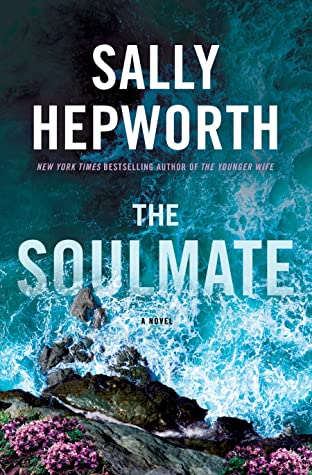
The Younger Wife by Sally Hepworth
The Good Mother by Rae Cairns
Crossroads by Jonathan Franzen
French Braid by Anne Tyler
Still Life by Sarah Winman
Band-Aid for a Broken Leg by Damien Brown
The Mother by Jane Caro
Penny Wong, Passion and Principle by Margaret Simons
Denizen by James McKenzie Watson

it was amazing

Once There Were Wolves by Charlotte McConaghy
Cold Enough For Snow by Jessica Au
Oh William! by Elizabeth Strout

Bodies of Light by Jennifer Down
Infinite Splendours by Sofie Laguna
The Promise by Damon Galgut
Stone Town by Margaret Hickey
Sorrow and Bliss by Meg Mason
Red, White & Royal Blue by Casey McQuiston
Clarke by Holly Throsby

The Promise by Damon Galgut


The Month that was December 2022

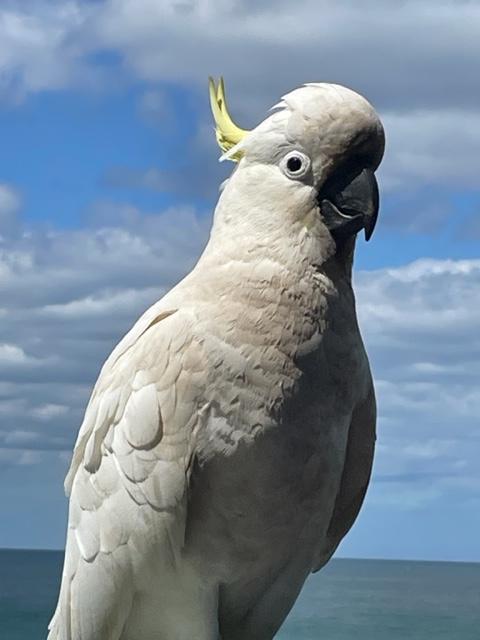
December was as it is for most people, a busy time although we did have a sneaky trip down to the beach at Lorne, two and bit hours south west from Melbourne. The weather? Well, that was cold but nice and sunny as you can see from the photos. The birds were out and about too. The water was flowing at Erskine Falls after all the rain we’ve had. The weather now has only just begun to warm up with a hot New Years Eve. Still, I can’t complain.

Christmas and the New Year period was spent with family and friends and I admit to losing track of the days. But who doesn’t?

Reading

My reading for December was solid enough so watch out for my reviews.

Check out my review for Red, White and Royal Blue

Writing

I’ve been sitting on my latest novel, The Palace Hotel and have begun planning another short story collection which weaves around a central incident.  But it’s slow going as my head is still in holiday mode.

Happy New Year.

Until next month…