Tag Archives: writing

Aren’t Book Groups Great?

IMG_0913 (2)

Last night, nine ladies came together on a cold rainy night to discuss my novel, “Climbing the Coconut Tree”. As the author, I accepted the invitation to attend. I stood tentatively on the threshold of the house in Carnegie wondering what response I would get; if they had liked it; what sort of questions they might ask or even if they had read the book. Then I heard their animated chatter and laughter – it reminded me of my own book group of which I have been a member for almost twenty years. We meet every month and read books that we might never have chosen ourselves. There’s nothing better than talking about a book with others.

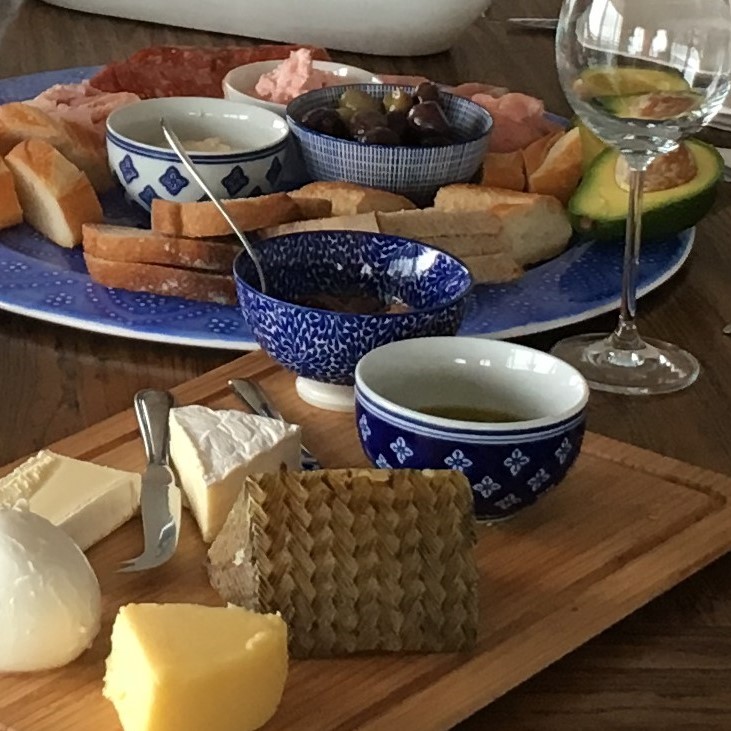
I was warmly welcomed and introductions were made. Penelope told me that she knew Jody a mutual friend and the ice was broken. The coffee table was covered with wine glasses, and a generous cheese and biscuit platter. The host, Lynnie had thoughtfully scattered bowls of coconut M&Ms (who knew they existed) and Bounties to provide a thematic background for the novel. Her only regret was she was unable to serve an appropriate cocktail like Pina Colada. But she made amends with a generous serve of hummingbird cake covered with cream cheese icing – delicious.

After glasses were filled and nibbles munched, the catch up chatter quickly turned to what we were all there for. Most had finished the book and were armed with great questions. Thankfully, I could answer them all. Here are sample few-:

Q. What is phosphate used for?
A. It is used as a component in fertiliser and after the second world war, demand by Australian and New Zealand farmers was high.
Q. Who lives on Ocean Island now?
A. Ocean Island is now known as Banaba and apart from a couple of hundred indigenous Banabans, it lies abandoned. It belongs to Kiribati which is the poorest nation in the world and itself  suffers from rising sea levels creating ecological refugees for parts of their population. They are a two-day boat trip away from the capital of Kiribati, Tarawa and since there is only one supply boat a year they must be self-reliant.
Q. When did the mining stop and what happened to the infrastructure on the island?
A. Mining stopped in 1979 and the roads and buildings now lay in ruin. Many buildings contained asbestos so this now adds to the ecological problems of the island.
Q. Do you think that the person accused of the murder was rightly convicted?
A. Initially I had my doubts but after reading the murder file and examining the evidence, I was satisfied they caught the right person.
Q. What drove you to write this story?
A. After reading my father’s letters recounting his life there, I realised that this was a part of Australia’s untold history. But I was even more compelled when I discovered a letter written by one of the murder victims. It was almost as if the victim was reaching out to me from the grave to tell this story.
Q. Will you write another novel?
A. Yes. I am still continuing to learn the craft of writing and am presently working on a collection of short stories. I am also conducting research on another historic novel.

I asked for feedback and we discussed the characters, life for women in 1948, mental health; the racial and industrial issues and so much more. Thankfully they had all enjoyed the book. Of course there were many more questions and the evening flew by.

Just after ten o’clock, Melinda announced that she had to go – a tap was leaking and a flood crisis needed to be averted. Dates were agreed for the next get together and farewells and thanks were made. Then I ducked out into the rain.
Book Reviews

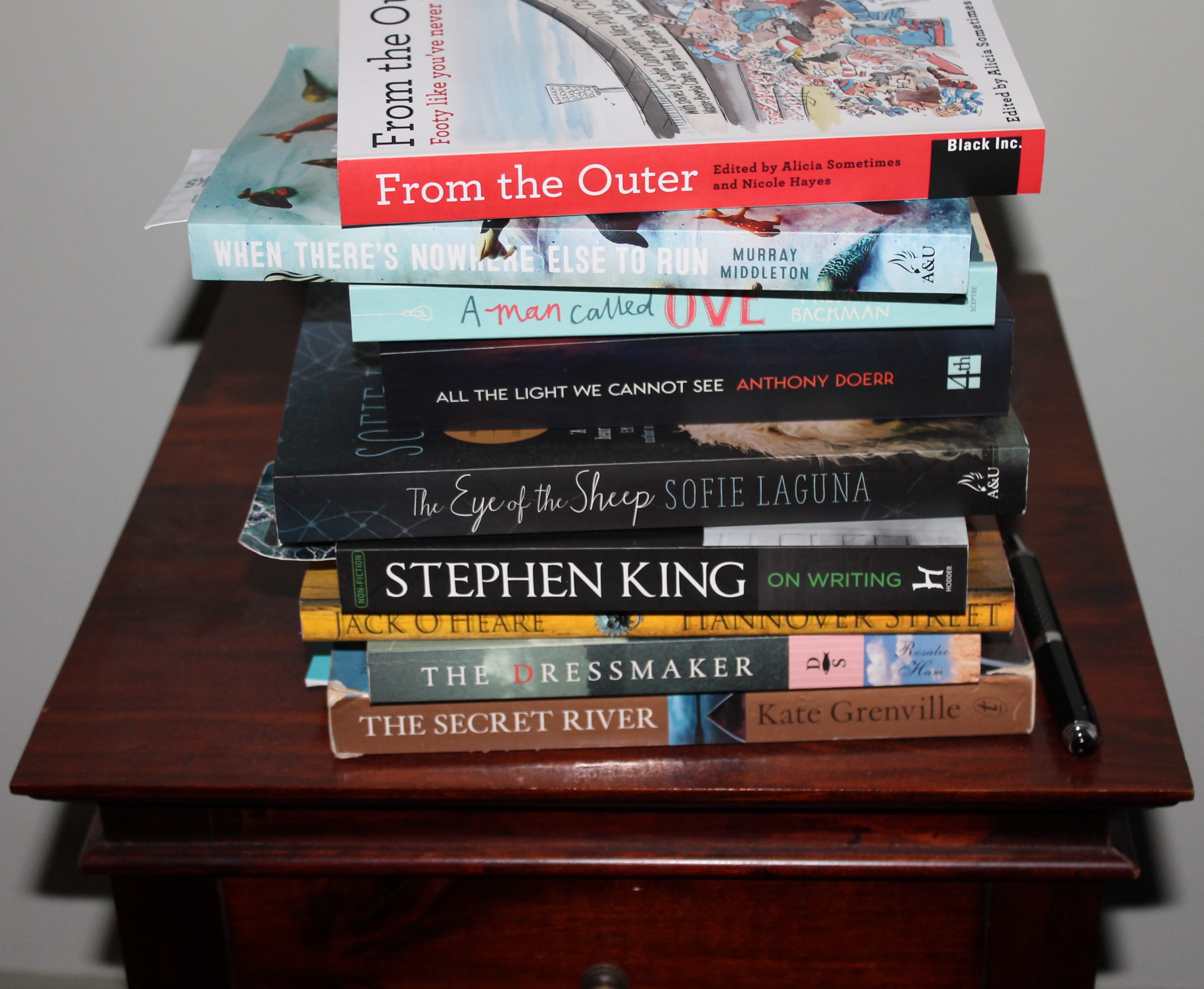
Pile of books

I love to read books and couldn’t tell you how many I’ve read over my lifetime. My book shelves are overflowing as is my bedside table. My IPad contains many eBooks, so that I can read on the plane or in dim light.

 I’ve been a member of a book group for at least sixteen years so I talk about books too. But until a year or so ago, I had never been in the habit of sharing my thoughts anywhere else.

So I looked at Goodreads and Amazon. I was astounded how many people take the time and effort to review books.

The easy part is to decide on a star rating. The hard bit is to articulate a constructive response that adds value to anyone contemplating reading the book. This is not a quick and easy thing to do. But I discovered that even a few words can still help the reader and the writer. I notice that sometimes reviewers go into depth to describe the synopsis before they add their own opinions. That’s not really my style. If I love it, then I say it.

Is it naughty to look at reviews while you’re still reading the book? I confess! I’ve had a sneak peak if I’m struggling with the book and this helps me to persist to the end.

So what have been some of my favourite books? In no particular order – People of the Books ( Geraldine Brooks); Burial Rites (Hanna Kent) ; The Strays ( Emily Bitto); The Guernsey Literary and Potato Peel Pie Society ( Mary Ann Shaffer); The Light Between Oceans ( M.L Stedman); All the Birds Singing (Evie Wyld); Lost and Found ( Brooke Davis); Eyrie ( Tim Winton). I could go on, but is it any coincidence that my list contains so many Australian authors? Many of them have inspired me with my own writing.

So now I try to take the time to write a review. I think it helps everyone.

My Book is Actually Published.

It was quite accidental really. After uploading my book into Createspace umpteen times, fixing format, spell checking and staring at the same errors over and over, I finally pressed the approve button.

Then the message popped up, “Congratulations. You are now published.”  Oops! I hadn’t meant for it to be out there so soon.

You see I ‘d decided to present my book at a formal book launch with supportive friends and family, but somehow it made its own way to the  Amazon book store. Then  within a few days the book was purchased not by one but three customers. I was very nervous as well as excited. Of course, the launch is still being readied.

I just can’t quite believe it, but now I’m a published author.

But a word of warning – go back and check the instructions before you press that approval button.

If you’re curious, feel free to check  out my novel “Climbing the Coconut Tree”  at the link below.

What’s in a Cover

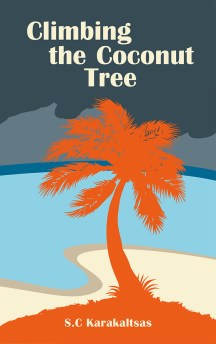
How your book is dressed entices the reader to look inside. Never judge a book by it’s cover? Rubbish! We all know that’s simply not true. It’s the greatest marketing tool to have. So how do you decide what the cover should look like? It’s a big question and a hard one to answer.

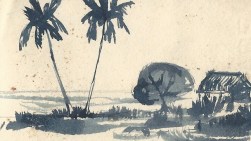
My book is historical fiction so I knew that I wanted a vintage feel. My book is titled “Climbing the Coconut Tree” so a coconut tree might be a good idea somewhere on the front. I had a working cover photo of an original ink picture that someone had drawn by hand of a coconut tree and native huts. It was on a Christmas card sent by my father in 1948. I was never able to find out who the original artist was. It is beautifully drawn in black and white and I although loved it, I knew it wasn’t strong enough.

Original front cover

Strolling across the internet there are lots of economical do-it-yourself covers. Createspace and Smashwords provide templates. But the problem for me was there was nothing that really grabbed me. Finally, I decided to seek help and found a graphic designer Anthony Guardabascio from http://www.continue.com.au. He designed my perfect cover which is below. I really love it and I hope you do to.

Print


The Publishing Merry-go-Round

I had restructured, edited and rewritten my whole book. Spent nights and days thinking about nothing else.

It was time to send it out to traditional publishers.

I researched how to write a pitch or query letter. There are plenty of great ones on line.  I carefully read the submission requirements for each publisher. I tested the waters and sent the first three chapters off to three or four publishers.  Then sent another three or four and so on. So then the waiting began. Most tell you that if they want to read more they’ll get back to you. You may never hear back and, if three months has passed then you know that you will never get a response. That’s just the way it is. It’s nothing personal – it’s just business.

One afternoon I received a phone call from Adam. He rang to let me know that my submission had been received- a nice touch instead of the obligatory email, I thought. He had read my query letter and asked me a few questions about the book. Like a job interview, I answered his questions and well, perhaps earbashed him with my enthusiastic response. He told me that he would refer it to the team for them to read. I hung up the phone in disbelief and excitement. But I think, in truth, I was feeling anxious. Was I truly ready for someone else to read my work? Did I want to hand over my baby to others?

A month later, I received some rejection letters from other big name publishers. Thanks but it’s not what we’re looking for … and so on. It was as I expected.

Then Adam called. “We’re interested,” he said, “but we need to get an evaluation report externally to determine the books saleability. We might need to change the title or structure.” He went on to say that I would need to make an investment to meet the cost of the evaluation feedback. Warning bells rang in my head. Traditional publishers never ask for money. Was Adam a vanity publisher? That is, one who’ll publish your book for a substantial fee. His web page indicated otherwise.

It was my turn to interview him. My years in business enabled me to get some answers. And I wasn’t very satisfied. The whole reason why a traditional publisher is sought after, is for their distribution network. They can get your books into book stores. Yet Adam’s distribution network was very small and mostly in schools. Then, I heard a podcast, warning writers about unscrupulous publishers stinging writers for tens of thousands of dollars. Adam’s company was one of them. I realised that he was not the publisher for me. Which is why it’s so important to research publishers.

It is indeed a hard slog for writers to get a book published by a traditional publisher. It is after all a business for book sellers, distributors, agents and publishers who together must make a living – often taking 90-95% of the takings from a book sale. The author gets the rest.

It was time for me to take stock and consider my options.

****

So you think you’ve finished your book


editor pic

I was smugly satisfied that my book was done. But was it?

There were nuances in my writing that my beta readers had pointed out; words in my dialogue such as ‘well’ at the beginning of a sentence was one example. I knew I needed help with punctuation – who doesn’t?

I read a lot about editing – copy editing, line editing, developmental editing – these terms were all confusing to me. I’d also heard that a writer should be their own editor. That an editor can change and interfere with the integrity of your story. Ok then, all I needed to do was critically edit my own work and organised for someone to proof read – surely that was enough.

Then I met a lovely lady called Meredith who asked to read my book. Luckily for me she’d been an editor in the past. She gently set me straight and pointed out ways to cut my wordy sentences. Did I really need a whole page to describe something which I’d said earlier in one line? Had I really developed the characters enough? Male dialogue sometimes sounded girly in parts; there were too many adverbs. She opened my eyes to things that only someone with such expertise can do. She could see things that I couldn’t and under her expert guidance I revised and revised. I realised then that I had needed that valuable advice and that my book was far from finished.

After the rewrites I found another lovely lady, Annie, who did a final edit. Like Meredith, she too gave me advice and feedback which all served to make my book the best that it could be.

When I look back at my first drafts, I just can’t imagine what I must have been thinking. If I’d released my book on the world in that state, I would have regretted it.

Writing is a journey especially for someone who is new to it. Increased skill will only come from practice,great feedback, more practice and more feedback. I don’t think I’ve nailed it and maybe I never will, but I’m motivated to continue on the scary path to improvement with many amazing people helping me along the way. I’m in awe of all the incredible editors out there and the painstaking work they do. Everyone needs them.


Yes, I lost the plot.

It was as if I’d taken a lover.I’d spent day and night with it. I thought of little else.
Pride, love and energy caressed each page. That was how I felt when I finished and printed my first draft.

Yet doubts haunted me. Was it good enough to show off yet? Filled with trepidation, I approached five people to read the first draft. I chose people who I knew would give me honest and direct feedback. I wasn’t interested in feeding my ego. I wanted to develop my writing.

Like waiting for exam results I was restless to have their feedback. Days and weeks rolled by as busy lives got in the way. Then one by one they came back. There were pencil notes on grammar, punctuation and sentence structure. Some pointed out flaws that I’d not seen before; changes in point of view; over explaining a point in two or three ways, repeating some of the same words over and over again. These were just a few areas to work on.

Then my good friend Don sat me down and asked, “What do you want your book to be about?” We talked about the plot. What was I writing? Was the plot a series of events pulled together without any cohesion? Yes, I had lost the plot.

I suddenly saw my book in a different light – it was clear what I needed to do. My book and I needed time apart. Fortunately, it was Christmas and the holiday season  made it easier to deal with any seperation anxiety.

Eight weeks later, I opened the file on the computer – there was my book. I’d missed it. I re-read the first chapter, said goodbye and then deleted it. Then, I painstakenly altered, deleted, expanded, tweaked and corrected. Each chapter and every sentence had to earn it’s  place. I had to be ruthless. With that, I changed the whole direction of the book.

You can’t do that to a lover.