Category Archives: Book reviews

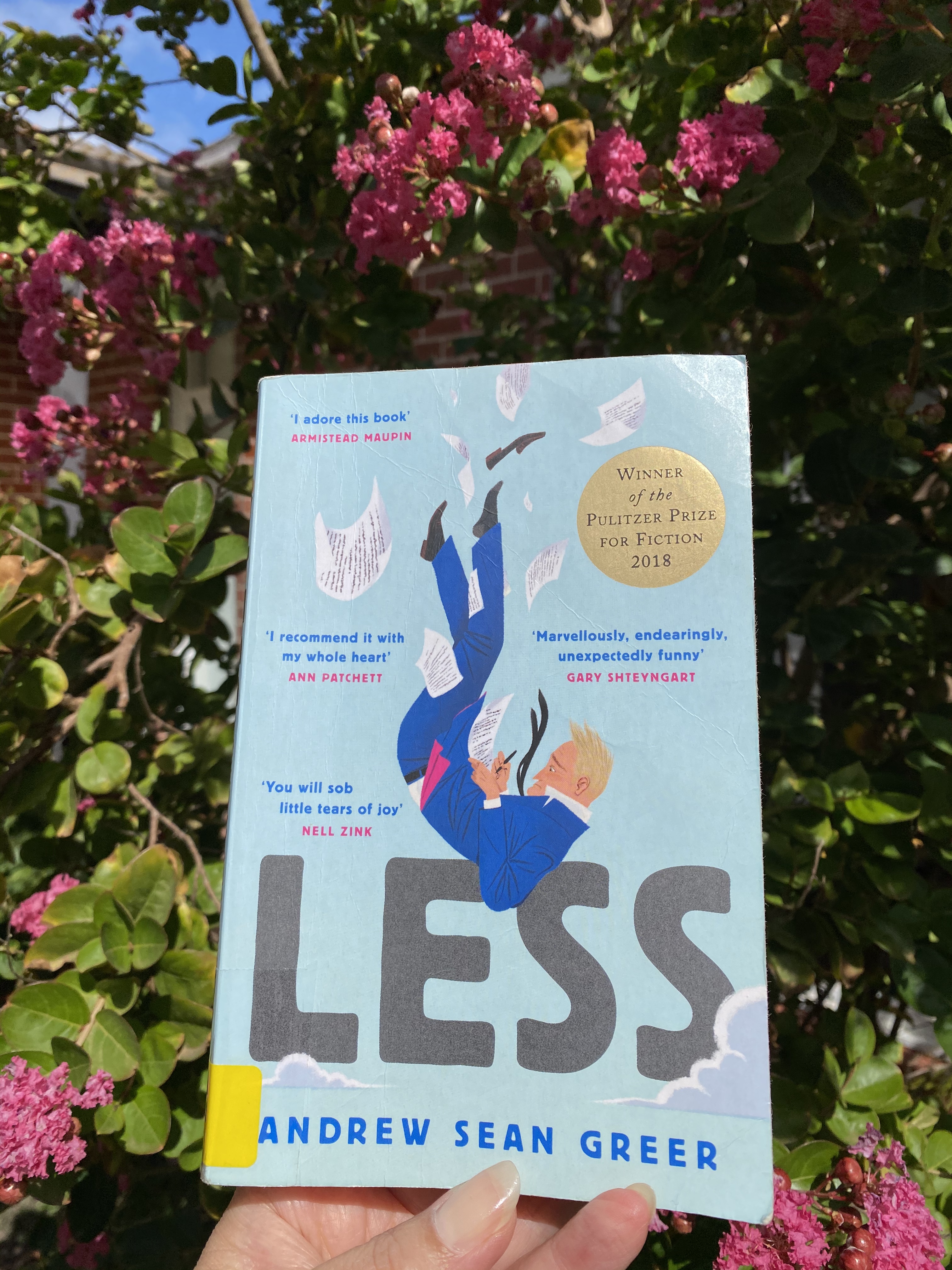
Book Review: Less by Andrew Sean Greer


This Pulitzer prize winning book for 2018 was quite a surprise.

It’s about a failed writer called Arthur Less who receives a wedding invitation from his ex-lover, Freddy. To add to his woes, he’s about to turn fifty, lamenting his old age and the way his life has turned out. Instead of facing his problems, he runs away by travelling the world. Along the way he picks up an award in Italy, teaches in Berlin, rewrites the manuscript his publisher turned down and enjoys a fling or two.

Some failed writer was my immediate thought!

Poor old Arthur Less is a bit hopeless in the love department, a bit clueless about life and how he fits into the world. It makes for some amusing times, although for me, it’s not laugh- out loud funny, yet for others it may be.

“Perhaps Less, alone, is kidding. Here, looking at his clothes – black jeans for New York, khaki for Mexico, blue suit for Italy, down for Germany, linen for India – costume after costume. Each one is a joke, and the joke is on him: Less the gentleman, Less the author, Less the tourist, Less the hipster, Less the colonialist. Where is the real Less? Less the young man terrified of love? The dead-serious Less of twenty-five years ago? Well, he had not packed him at all. After all these years, Less doesn’t even know where he’s stored.”

The writing is magnificent with descriptions of place so intricate and long in sentence that you feel you’re right there in the thick of it.

“It’s nothing like he expected, the sun flirting with him among the trees and houses; the driver speeding along a crumbling road alongside which trash was piled as if washed there; the endless series of shops, as if made from one continuous concrete barrier, painted at intervals with different signs advertising chickens and medicine, coffins and telephones, pet fish and cigarettes, hot tea and ‘homely’ food, …”

I confess to feeling a bit ho hum about this book at first and it seemed like a travel log reminiscent of Eat, Pray, Love – gasp – except the themes of self-doubt, lost love and age are central. I wondered where it was going and as I continued on my reading journey, Arthur Less grew on me, bit by bit. The end brought it all together, the twist, revelation, call it what you will, was fantastic and filled me with love for this book.

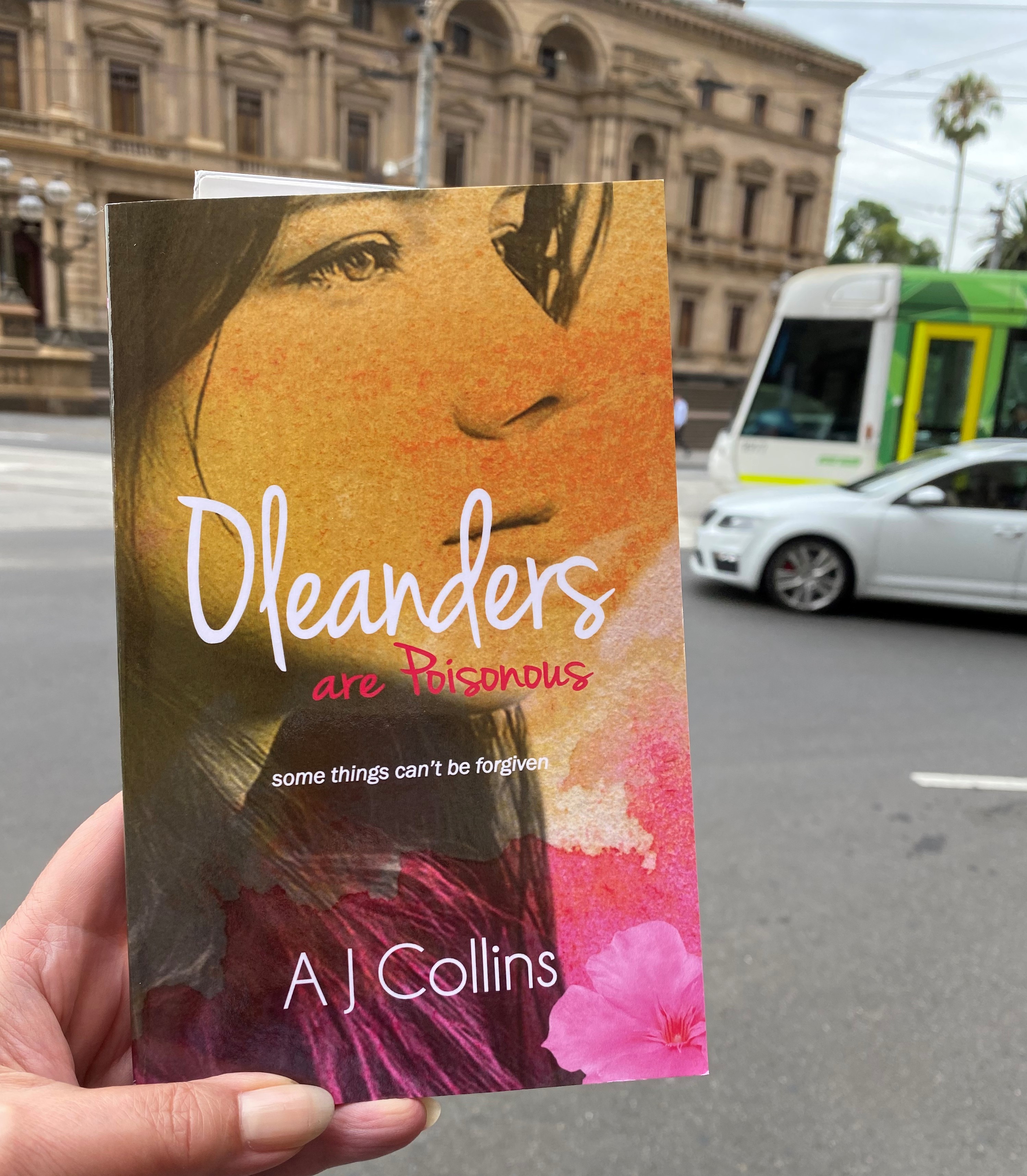
Book Review: Oleanders are Poisonous by A J Collins


I don’t normally read a lot of young adult fiction but what I have read is usually quite suitable for adults. Oleanders are Poisonous is one such book.


Lauren, is a young teenage girl who lives in a small country town. She has a close mate, Harry whom she’s known for years. Singing with him takes her mind off her home life where her mother is deteriorating from a debilitating illness. Lauren and her step-father, Samuel struggle to cope until one night on Lauren’s sixteenth birthday, when everything dramatically changes.


This is the first book out of a series of two. Being short, I read it in a few hours and found I couldn’t put it down: reading it on the train, on the escalator and in the dentist waiting room hoping he was running late – he was.


I was hopelessly hooked into this coming of age story, immediately caring so much about Lauren and what was happening to her. How she navigates her feelings and her way in the world had me cheering for her all the way. Collin’s writing is superb and fast-pace. Oleanders are Poisonous is an easy and quick read. 


Now for the sequel, Magnolia’s don’t Die.

Book Review: The Weekend by Charlotte Wood

This book is a difficult one to review as I have mixed feelings about it. I’d read The Natural Way of Things which won the Stella Prize and was blown away by it.

The Weekend is absolutely nothing like it. The story is about three seventy-something- year- old women who come together over Christmas to clear out the house of their dead friend. The relationship of the women is complex, as it is long, having known each other for more than forty years. Jude is an accomplished restaurant manager, Wendy, a published academic who owns a very old dog, called Finn and Adele is an ageing and out of work actress. Sylvie, the dead friend is the connection for the four and we are taken on a journey tackling their losses, loves, friendship, grief and betrayal.

It’s well-written and the setting on the north coast of N.S.W. is divine. Yet I struggled to find any real connection to any of the women. They didn’t seem like good friends, instead they each came across as needy and selfish, barely tolerant of each other. I didn’t understand why they were indeed friends. Jude was an odd character. Confident, well organised, supposedly self-reliant earning her own money yet she’d been a kept mistress for twenty years. The dog, Finn dominated the story a lot in an almost repetitive way. Wendy, seemed a bit dithering and Adele was narcissistic and self-absorbed, more like a teenager than a mature woman and that was a challenge for me to accept.

Yet, I was compelled along as it was an easy read. The second half of the book was almost like watching a dramatic play and I could easily visualise it. Perhaps this was intentional, perhaps not. In the end, I didn’t love it but I didn’t mind it.

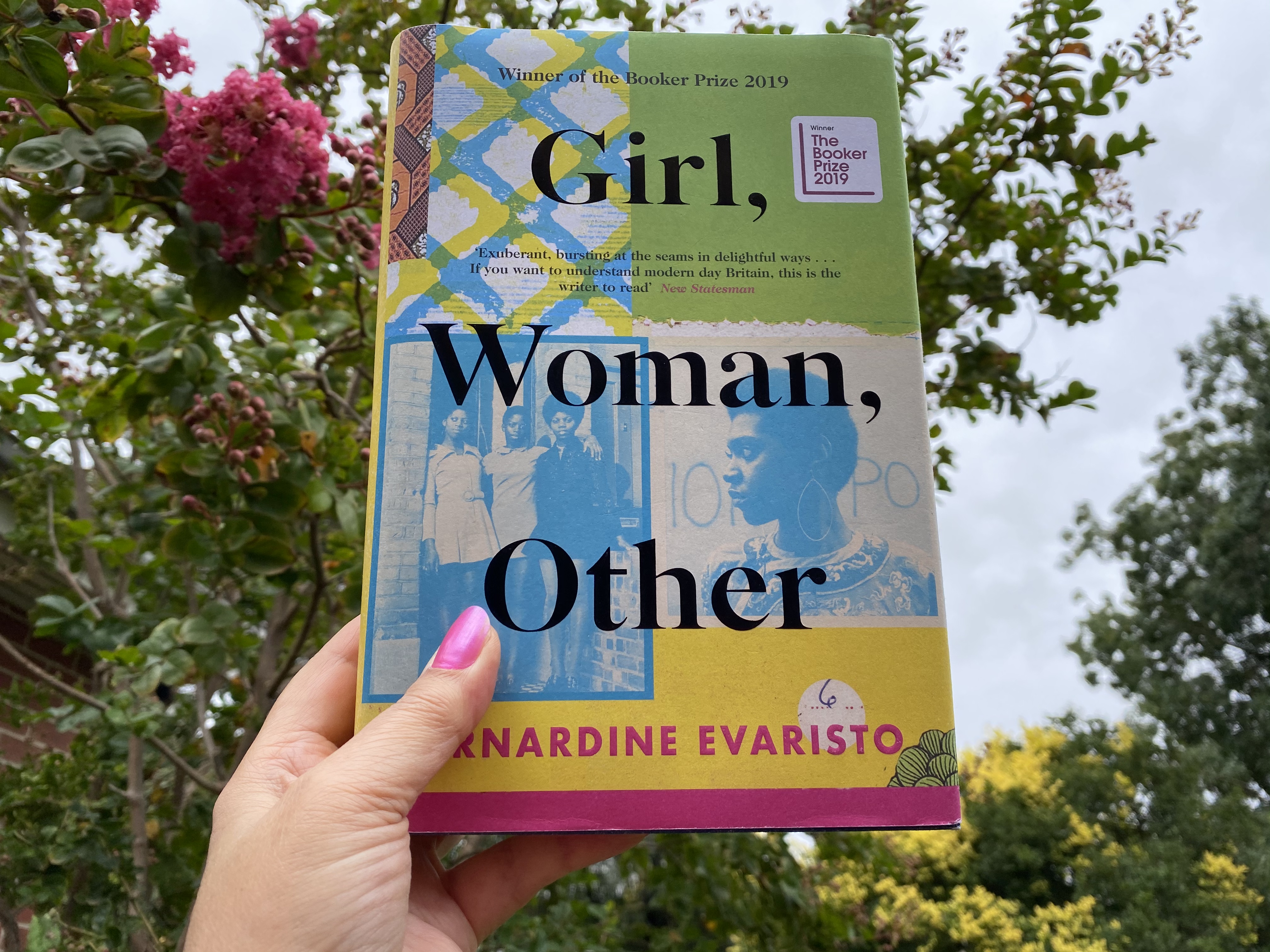
Book Review: Girl, Woman, Other by Bernadine Evaristo

It’s taken a few weeks to find the words to describe how powerful this book is. And even so I probably won’t do it full justice.

Girl, Woman, Other written by Bernadine Evaristo, together with The Testaments by Margaret Attwood, won the Booker Prize in 2019.

This book, set mostly in Britain contains twelve different stories in various timelines about a group of diverse women, most of whom are black. The reader is taken on a journey with each of the women and we learn about them and their lives with an almost brutal honesty.  This book is a social commentary of what it means to be black and a woman in modern Britain and predictably it’s not always pretty.

There’s Grace in 1905 an orphan, Winsome in 1953, a migrant from Barbados, Amma is 1980 who sets up a feminist theatre. Then there’s Carole, the high flyer in 2008 who turns her back on her Nigerian heritage, and Morgan, once known as Megan in 2017 navigating her way to independence.

These are almost stand-alone short stories except that there is a connection which comes together with an incredible last chapter via Penelope who bears the brunt of family secrets in a calamitous way.

The characters grow on the reader quickly because the writing is succinct, poetic yet direct. The absence of regular punctuation such as full stops and capital letters to start sentences doesn’t call attention to itself as the reader gets very used to the easy to read style within a few short pages.

Amma misses her daughter now she’s away at university

not the spiteful snake that slithers out of her tongue to hurt her mother, because in Yazz’s world young people are the only ones with feelings

but she misses the Yazz who stomps about the place

who rushes in as if a hurricane’s just blown into her room –


A word of warning: The connection between the many characters can be confusing and a map would have helped on occasion to prompt the memory. But if you read the book quickly, it shouldn’t worry you too much. And it is very easy to read. But my advice is to take it slowly and saviour it as each word earns its place.

This one is an important book to read, enlightening us all about the history of the black women’s experience in Britain.

I simply loved it.


Book Review: The Lost Man by Jane Harper

I’ve read every book written by Jane Harper and her latest, The Lost Man, certainly did not disappoint.

Cameron and Bub are brothers who have arranged to meet each other on the border of their large cattle property located in outback Queensland. Cameron doesn’t turn up and after a search, is found dead at a legendary stockman’s grave in the middle of nowhere. What’s puzzling is his car is found nine kilometres away. The car hasn’t broken down and is fully stocked with water and food and the driver’s door left ajar.

Cameron lived in the old family homestead with his wife, two daughters, his younger brother Bub and his mother.  Nathan, the older of the three brothers, who hadn’t seen his family in months has his sixteen-year-old son Xander staying with him when he gets the call about Cameron. It’s through his eyes that the reader is taken on a journey of family mystery and intrigue.

Cameron had been agitated in the months leading up to his death and with one policeman to cover hundreds of kilometres of remote area, it’s concluded that with no sign of violence or tampering with his car that he deliberately walked to his death. Nathan is not convinced.

The characters are very well drawn and the layers of the family’s history are cleverly peeled away revealing multiple secrets. The landscape, red dust and suffocating heat was beautifully descriptive of how harsh life is in the outback.

“He adjusted his mirrors as the sun’s reflection rose, blinding red behind them. They were heading west, towards the desert, and the sky loomed huge above the perfect flat horizon. By the time they hit the edge and turned north, they would be able to see the dunes; huge sandy peaks running north to south for hundreds of kilometres.”

Indeed, the central theme around mental health issues in the outback is well covered, the lack of resources and the isolation for both women and men is all too real.

“He had lain there, anxious and unsettled, as it dawned on him. He was entirely alone. No staff. Nothing but static on the radio… There was not a single other person near him for hours in every direction. He had been cast fully and completely adrift.”

There is such a lot in this book and like The Dry, I was guessing what happened right up until the end and was certainly surprised. I’m still trying to the digest the motivation and can’t say I’m fully convinced. Saying anymore would be to divulge the spoilers and that wouldn’t be fair. So, I guess that’s a good enough reason to read it yourself. It’s certainly a page turner and a perfect summer read and I’ll let you judge if you think the ending was right.

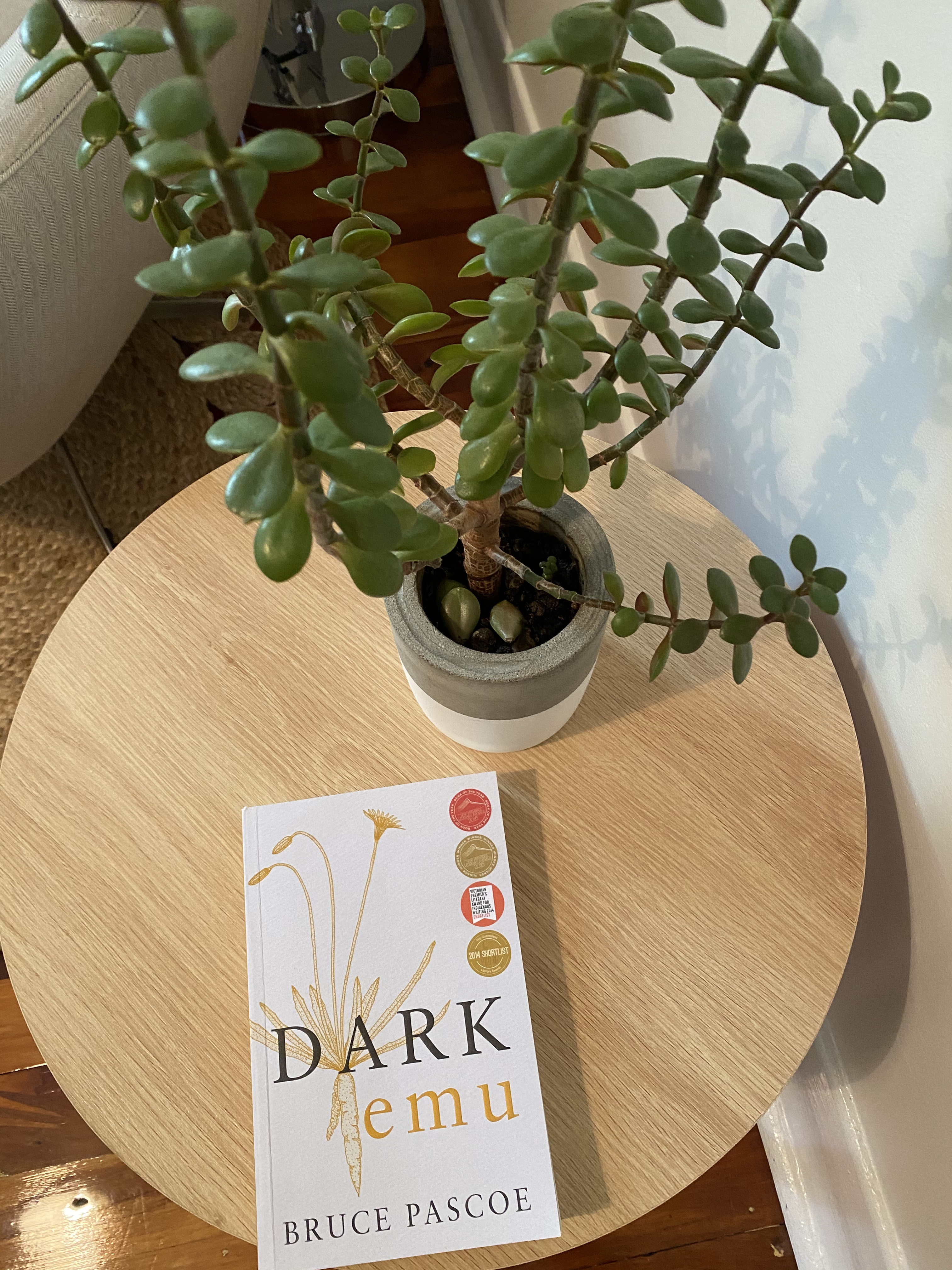
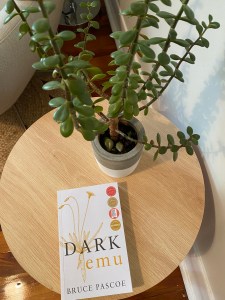
Book Review: Dark Emu by Bruce Pascoe

Bruce Pascoe, in Dark Emu has conducted a thorough research into the evidence by a host of sources to refute what was taught to me in school and what most Australians believed. And that is, we were under the impression that Aboriginal people were nomadic hunter gatherers. Pascoe turns this on its head to explain that Aboriginal people had their own villages with well-constructed huts, dams and water traps, toiled the land, grew crops and enjoyed a fair political system. Not only that, Pascoe convincingly argues that Aboriginal history is rich and is all around us, if we only care to look for it.

 “We’ve been taught that Aboriginal peoples arrived in Australia after crossing land bridges from Indonesia. … it was assumed that this happened 10000 years before sea levels began to rise – after the Ice Age. After the introduction of carbon dating, that figure ballooned to 40000 years and, after further research using more modern dating techniques, to 60000 years.”

Each chapter produces a raft of research and evidence to challenge the colonialist way of thinking of what happened before. Of course, the argument that Aboriginals were nomadic suited the colonialists as it gave them the opportunity to acquire the land – after all, in their minds, no-one else had ties to it.

Pascoe gives us evidence of advanced aqua cultural practices from sophisticated eel traps to sustainable fisheries. A few months ago, I went with friends to the Budj Bim National Park half way between Hamilton and Port Fairy in Victoria and was awestruck by the historic significance of the eel traps. What many Australians may not know is that Budj Bim is now on the UNESCO World Heritage List and features the earliest living example of aquaculture in the world. Simply astounding. In Australia there has been very little fanfare about this significant announcement. The Roman empire ruins across Europe has nothing on aboriginal culture.

The chapter around Fire was particularly enlightening as more than one hundred and fifty fires rage across Australia at the time of writing, causing untold damage to houses, people and millions of animals and plant life. I wonder if we had listened and to our Indigenous citizens whether we could have managed to ease the current disaster in any way.

“The Aboriginal approach to fire worked on five principles. One, the majority of the agricultural lands were fired on a rotating mosaic, which controlled intensity, and allowed plants and animals to survive in refuges. Two, the time of the year when fires were lit depended on the type of country to be burnt and the condition of the bush at the time. Three, the prevailing weather was crucial to the timing of the burn. Four, neighbouring clans were advised of all fire activity. Five, the growing season of particular plants was avoided at all costs.”

In fact, this has been discussed many times over the last few years yet action and further investigation has been slow. https://www.abc.net.au/news/2019-11-14/traditional-owners-predicted-bushfire-disaster/11700320

It’s natural to look for a scapegoat in the current bush-fire disaster which sees little end in sight until rain begins to fall. Climate change, land mismanagement, lack of funding, lack of leadership by our paid politicians, the drought, all have a part to play. But if what we learn takes into account a respectful dialogue with our Aboriginal elders then we may actually fix up our mistakes and change our thinking for a better future.

“If we could reform our view of how Aboriginal people were managing the national economy prior to colonisation, it might lead us to inform the ways we currently use resources and care for the land. Imagine turning our focus to the exploitation of meat-producing animals indigenous to this country. Imagine freeing ourselves from the overuse of superphosphates, herbicides and drenches. Envisage freeing ourselves from the need of fences, and instead experimenting with grazing indigenous animals and growing indigenous crops.”

Yes! My imagination is wild with possibilities and ideas. And so, this book serves as a timely message to all of us and as I peer around my own garden, I’ve started to question why the hell I have a water-sucking English style garden of roses, lawn and hedges and ponder about what was here before.

Dark Emu is sobering to read yet provides a hopeful argument for each of us to change our thinking. This is an important one  for all Australians to read.

NOTE: Bush Fire Fundraiser 

I’m participating in a fundraising effort for our firefighters. It’s a twitter auction involving hundreds of Australian authors. Incredible items are being auctioned -from signed books, writing retreats, mentoring, workshops etc. If you’d like to know more head over to the webpage below and if you have a twitter account, type in#authorsforfireys and make a bid.

Get in quick. The twitter auction ends 11pm on 11 January, 2020 (Melbourne/Sydney time)

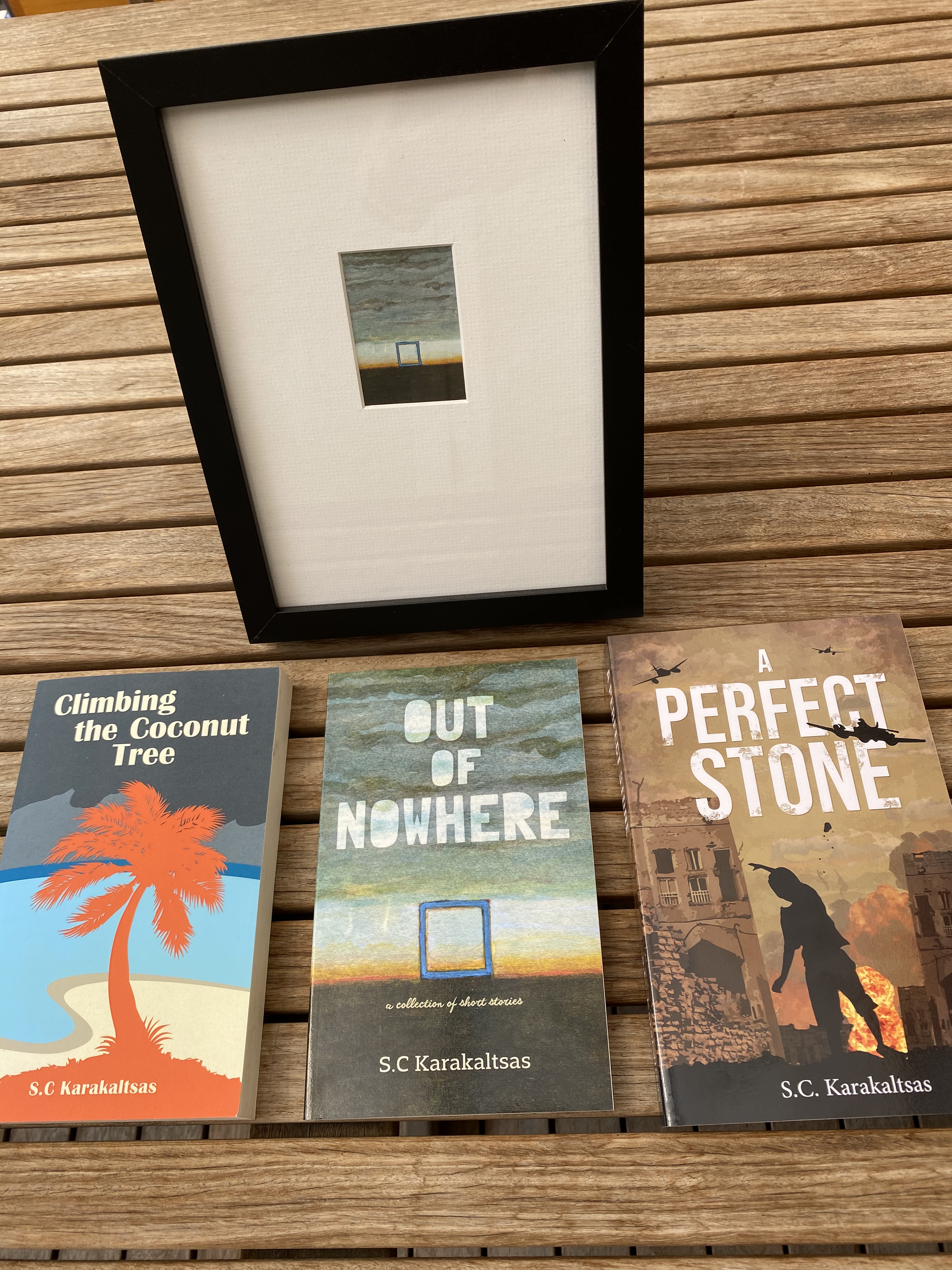
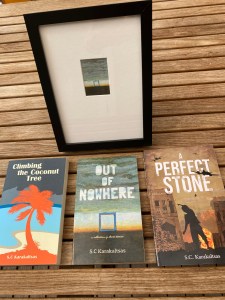
I have offered up signed copies of my three books and am throwing in a framed original drawing used for the cover of Out of Nowhere.
https://authorsforfireys.wixsite.com/website
Book Review: The Island of Sea Women by Lisa See

40538657. sy475

The Island of Sea Women is a fascinating novel of sorrow and grief but more importantly it’s also a novel of friendship, spirituality and the strength of women in an unusual matriarchal society.

Set on the  Korean Island of Jeju, the friendship of two women Young-sook and Mi-ja stretches across time from the occupation by the Japanese until 2008. From different backgrounds, they join the Haenyeo, a collective of women, who traditionally for centuries dive and harvest sea creatures to not only feed themselves, but for sale. The men traditionally stay home and look after the children while the women come together and dive. The island is known for their Haenyeo traditions where women dive even in freezing conditions and worship a female god to protect them when they go out. At the age of fifty-five they retire and nuture baby dives in their teen years.

I thought the book started slowly as we learnt about how the friendship began and all about the matriarchy of the collective and the diving. I have to be honest, while I didn’t warm to the characters at first, I persisted and I’m so glad I did. The next two thirds was a dynamite of action, tragedy and heartbreak. The story flipped into and out of 2008 but not too often.

It’s a fascinating history and the author has done a mountain of work on her research, not just about the Haenyeo, the ancient practice of worshipping female Gods but of Korea’s past and lead up to the War. I’d never heard of this particular Island and when I finished the novel, I found myself reading more about it.

I’d recommend it thoroughly.