Tag Archives: australian authors

Book Review: What the Light Reveals by Mick McCoy

Military secrets, spying for the Russians, fear and discrimination for your beliefs – this is an intriguing tale about what a communist’s life was like in fifties Melbourne. Conrad and Ruby, members of the communist party with one adopted son and another on the way are treated as outcasts after Conrad is falsely accused of spying for the Russians. Watched by ASIO, unemployed and their reputation in tatters they are forced to flee Australia to live in Russia.

The story diverges into not just about life in Russia but what happens to a family with secrets who never feel they belong in their adopted country and where every movement is under scrutiny. But this book is so much more than that. The characters are well developed as we are privy to the points of view from Conrad, Ruby, Alex, (the elder and adopted son) and Peter, the biological son.

Fast forward to Russia in the early seventies and this is where the family almost implodes from secrets and lies and where their very survival is tested. Are the ideals held so closely while living in a Western country destroyed by the reality of living in a communist state?

 “In a sudden breathless cleft between sleep and wakefulness, in darkness, eyes wide, mouth open, she listened for the rumbling of the tanks, the gravel-crunch of soldiers boots, the whispered metallic click of rifles being readied to fire. Nothing. She waited for her heart to settle. Breath by breath she let go. “

They belong to neither country and the only thing they do have is each other. When tragedy strikes, we feel for each of them as they’re torn apart by distrust, anger and grief. Alex, whose path was set by his parents is bewildered and his vulnerability is touching as he comes to grips with what his future holds.

This is a wonderfully written novel inspired by the authors own aunt and uncle. He borrows a lot from them to give us an insight into two worlds. It’s not often that a reader gets to meet the author, to hear him speak of what he did over a fourteen-year time span to research, interview, and write a story. It surely is a labour of love.
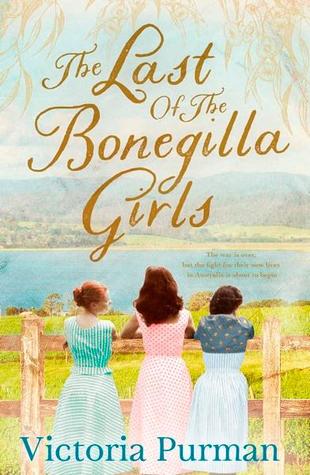
Book Review: The Last of the Bonegilla Girls by Victoria Purman


Can you picture being in a camp cramped with thousands of migrants hoping for a new life after living through the worst hardship and mayhem in your own country? Bonegilla Migrant Camp near Albury, Australia was one such place which temporarily housed thousands of migrants from all walks of life from Europe and Britain. Each of these migrants came to Australia for a new start in life – for a better life.

Put four sixteen-year-old girls together from different racial backgrounds and a life-long friendship develops. There is Elizabeta from Hungary, Vasiliki from Greece, Iliana from Italy and Frances, the Australian girl whose father is the Camp director. The reader is taken through an epic journey learning about each girl and their families through their eyes. While there are many characters, which could be overwhelming, it isn’t because the author gives us enough time with each one.

The girls grapple with their own problems not just because they’re migrants, but because they’re women in a conservative 1950’s Australia. Purman shines a light on a society where teenage pregnancies and hidden love because of racial, class or religious differences aren’t tolerated and where indiscretions are kept secret because the consequences are too traumatic.

The difficulties they face are many and in particular, the story of Elizabeta and her family is gut-wrenching. The exploration of mental health issues for migrants is explored in just enough detail for the reader to appreciate the generational impact. The racism of being a “New Australian” is very real, and this book provides an understanding of what being new to a country is like, serving as a reminder for tolerance and empathy for today’s new migrants.

This was a big undertaking for the author as we’re taken into the sixties, seventies and eighties. The reunions with the girls as grown women with their own families provides a picture of what’s happened to them. The last part of the book skips years from 1994- 2018 and I yearned to know more. Does Frances finally get her happy ever after? We’re left to join the dots. But isn’t the job of the author to leave us with our imagination? Reaching the end, I was glad the story of each girl wasn’t wrapped up in a bow with a Hollywood ending because life really isn’t like that.

This is an enjoyable and well-written historical novel with tragedy, love and friendship in a harsh landscape where the only option is hard work and survival. According to the author, “One in twenty Australians have links to Bonegilla”, so you too might have a connection. Who knows?

My 2018 Reading Progress


In a post earlier this year (https://sckarakaltsas.com/2018/01/05/my-reading-list-for-2018/) , I listed 18 books I wanted to read by the end 2018. I’ve read ten from my original list so far, but somehow seem to have added many more along the way . Check out the list below of the additional books I’ve read so far.

I joined the Goodreads Challenge for the first time this year and what a difference adding a target has made to my reading. I set myself a challenge of 24 books which was conservative as I’d read 27 in 2017. I’m up to 28 now and will now doubt crash through the 30 barrier. It might seem a lot to read but I’ve been astounded that the average Goodreads Challenger has pledged to read 55 books and I’m a long way from that.

I’ve also tried to review most of the books I read although it hasn’t been possible for each one. When looking at my list so far, I was startled to see so many books by Australian authors (fourteen) but then, it’s hardly surprising as Australian authors are producing incredible work. If you don’t believe me check some out for yourself.

  1. The Sister’s Song by Louise Allan (Aus)
  2. What Was Left by Eleanor Limprecht (Aus)
  3. Castle of Dreams by Elise McCune (Aus)
  4. The Tattooist of Auschwitz by Heather Morris (Aus)
  5. The Handmaid’s Tale by Margaret Attwood
  6. The Rules of Backyard Croquet by Sunni Overend (Aus)
  7. Movemind by Robert New (Aus)
  8. The Passengers by Eleanor Limprecht (Aus)
  9. The Lost Flowers of Alice Hart by Holly Ringland (Aus)
  10. The Jade Lily by Kirsty Manning (Aus)
  11. Watching Glass Shatter by James J Cudney
  12. Resurrection Bay by Emma Viskic (Aus)
  13. The Unfortunate Pilgrim by Mario Puzo
  14. The Lion by Saroo Brierley (Aus)
  15. The Bridge by Enza Gandolfo (Aus)
  16. Eleanor Oliphant is Completely Fine by Gail Honeyman
  17. First Person by Richard Flanagan (Aus)
  18. The Last of the Bonegilla Girls by Victoria Purman (Aus)

Do you have any you’d like to recommend?

Book Review: The Bridge by Enza Gandolfo


This well written book is full of emotion and heartbreak as we are confronted with the question of what happens when people face tragedy and loss. Indeed, all of us face tragedy in some form or another in a personal way or just by being bystanders as we scroll the news. A bridge collapsed in Italy a mere week or two ago, accidents happen regularly and we read and gasp and comment on the tragedy and feel sorry for those affected.

The Bridge draws on events surrounding the collapse of the Westgate Bridge in Melbourne in 1970 and although I was a child living in another state, I remember it. Living in Melbourne, I’ve travelled over it too many times to even count. I know the suburbs of Yarraville and Footscray and the streets in Melbourne which are all beautifully described to make this book even more real for me.

I hadn’t bothered to read the blurb and thought the book was entirely about the bridge collapse and was absorbed in the characters of Antonello and Paolina – their young lives changed by the collapse of the bridge when Antonello, a rigger, narrowly escapes. When the author made me take the leap to 2009 and introduced me to the new characters of teenagers Jo and Ash, I began to baulk. I wanted to know more about the bridge collapse and the lives who had been touched. I wanted more on the bridge itself. I didn’t wait long as the author skilfully intertwined the story of Jo and Ash as well as Sarah around the bridge whose impact is much more than the collapse itself.

The relationships between mothers and daughters is heartfelt and moving. Jo’s mother’s dilemma toward her child and Ash’s mother’s reactions were skilfully portrayed. Each character in the book is well drawn.

What happens to people whose actions cause the death of someone and how do they survive and move on? This question is deeply and intimately explored and there were times when tears filled my eyes grappling with the dilemma of responsibility and grief as if I was there. Some people make mistakes and get away with it and others just have bad luck. Some take responsibility and live with it their whole lives and others don’t. And the questions roll out for all tragedies and that is, ‘What if…?”

It’s not a happy story but it is a moving one and I’d recommend it.

Book Review: First Person by Richard Flanagan

Out of work and broke, want-to-be writer Kif Kehlman is offered a contract to ghost write a book about a notorious criminal, Ziggy Heidl. Interestingly, the young Richard Flanagan actually did ghost write for John Friedrich who defrauded Australian banks of more than $300m in the 1980’s. Working in banking at the time, I well remember Friedrich and what he did and so I was very interested to read this book. As a fan of Flanagan’s incredible, The Narrow Road to the Deep North, I had very high expectations.

Kif tries desperately, against a pressing timeline, to get information from Ziggy only to find that his subject is not only close mouthed but when he does say something, it is merely a multitude of lies. How is Kif expected to pull together a memoir of fifty to sixty thousand words?

As you would expect the book is very well written and the prose at times, breathtaking. However, I found it painstakingly slow. By page one hundred, the premise about Kif, his writer’s angst and his struggles with Ziggy, so repetitive it barely kept me interested.

Then things seemed to turn. Kif’s mental state slowly deteriorates as his own violence emerges from the growing struggle about his art which he uses as an excuse for not taking enough responsibility for his family and himself. His growing frustration with the lies and lack of information from Ziggy matched my own discontent as I doggedly hoped for something to happen with this character.

Unlikeable, Kif was self-absorbed and this was probably the point. Ziggy was an oddball and should have had enough charm to entice any trusting person into his web of deceit, yet somehow I didn’t feel this was as convincing as it was meant to be. The development of their relationship seemed unbelievable. Perhaps if Ziggy had been more co-operative as a character, spinning plausible and consistent lies which Kif later uncovers, the relationship toward the end may have worked better. But who am I to recast the story? Perhaps it’s not really fiction after all.

There were moments of humour, frustration and tension. Sorry Richard, I love your books, just not this one.

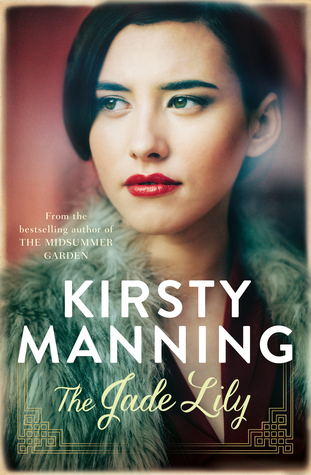
Book Review: The Jade Lily by Kirsty Manning


I was so thoroughly immersed in this story, I had trouble putting it down.

This is another book which has two main characters, Romy and her granddaughter, Alexandra with dual time lines, the present, and the past, set during WW2. We are transported back to a time when Romy as a young Jewish girl escapes Austria in 1938 with her family and finds refuge in Shanghai where she grows up forming close friendships with a Chinese girl, Li and fellow Austrian, Nina. Their world soon changes with the occupation by the Japanese and the consequent liberation by the Americans, forces Romy to take drastic action to survive.

Alexandra is a trader who comes home broken hearted from a love affair in London for the funeral of her grandfather. We learn that Alexandra was brought up by her doting grandparents when her adopted Chinese mother and Australian father were killed in a car accident when she was a toddler. She begins digging into family secrets which Romy has withheld from everyone including her own husband.

I’d read nothing about Shanghai during the war and this was a well-researched and fascinating piece of history. Thousands of refugees escaped Europe and found a life in Shanghai until the Japanese took control. The atrocities by the Nazi’s and the Japanese is brutal but not overdone. The mix of cultures in the melting pot of Shanghai’s diverse population was described brilliantly as was the description of its architecture both in modern and historical contexts. Chinese medicine features strongly giving readers further information about its healing properties, both physical and mental.

The characters are well drawn and strong women in their own right with a love for each other which is heartfelt and touching, particularly toward the climax of the story. The historical details are weaved appropriately using the dual timelines which works really well.

There is something for everyone in this story of love, loss and survival against all odds. It’s a page turner by Australian author Kirsty Manning and you won’t be sorry getting hold of this one.


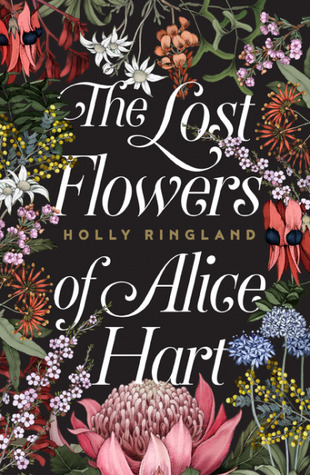
Book Review: The Lost Flowers of Alice Hart by Holly Ringland


The cover is amazing and I knew I was in for something powerful when I read the first line of this book. “In the weatherboard house at the end of the lane, nine-year-old Alice Hart sat at her desk by the window and dreamed of ways to set her father on fire.”

Alice is the daughter of an abusive father. When tragedy strikes, Alice finds herself living with a grandmother she didn’t know she had, on a native flower farm where she grows up loved and protected. Her grandmother, June, a tormented woman with hidden secrets loves Alice with such an intensity that when she betrays her granddaughter to protect her, sets off a course for Alice neither of whom can reverse.

This is an expansive novel covering twenty years with twists and turns as the family secrets unravel and Alice finds out about her tumultuous past. The first hundred or so pages are gripping and I found myself holding my breath. The family violence is harrowing but thankfully short-lived . Then the narrative slows in the second third and meanders almost in a healing way as Alice settles into her new life at the native flower farm. The reader, unlike Alice is led tauntingly into the family secrets. June communicates best through flowers and this is emphasised cleverly when each chapter opens with the name of a native flower reflecting the theme.

Frustration grows as June is unable to tell Alice the truth about her family and for me this was a touch longer than I would have liked. There was some repetition and at times, Alice’s behaviour seemed to be at odds for a child with trauma. The last third, however was a page turner and I was unable to put it down.

I enjoyed the supporting characters, Twig, Lulu, Candy who all offered Alice their strength when needed. June was more complex and I felt little sympathy for her. The settings from the lush tropics to the red outback are wonderfully portrayed as of course are the flowers.

This is a story of loss, love and betrayal, and I now see native flowers in a very different way.