Tag Archives: books by women

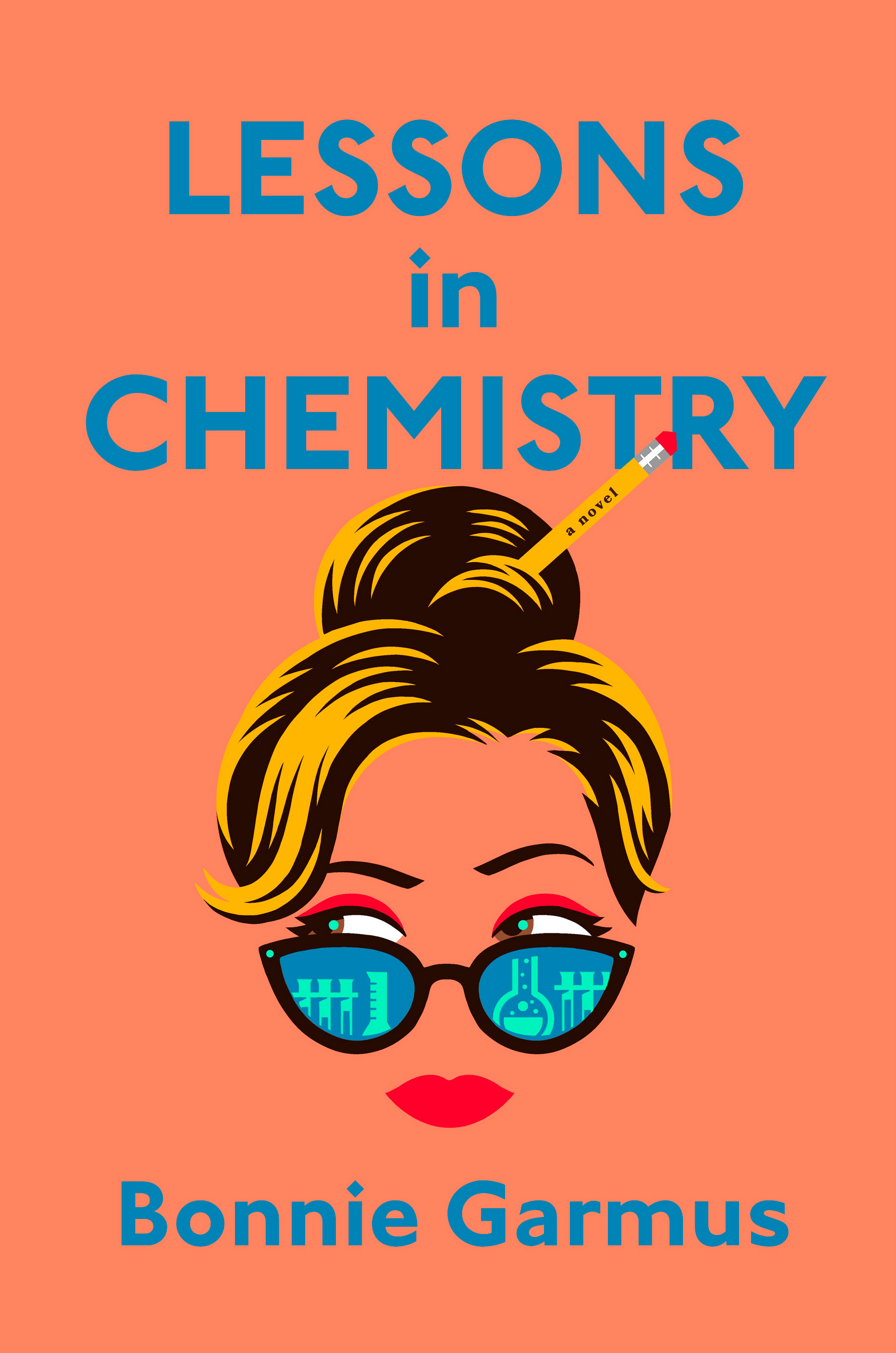
Book Review: Lessons in Chemistry by Bonnie Garmus

Oh, what a read this one was. I could not put it down.

Set in the late 1950’s, this novel is a delightful and empowering story exploring the world of science, love, and motherhood. The main character, Elizabeth Zott, is a brilliant and ambitious young chemist who is determined to make a name for herself in the male-dominated field of science. But when she meets and falls in love with her soulmate, Calvin Evans a brilliant, Nobel Prize nominated chemist, she finds herself torn between her career goals and her heart.

The novel highlights the challenges that women faced in the scientific, television and rowing communities, and the struggle to balance personal and professional aspirations when social mores forced women into conformity. When Elizabeth finds herself a single mother, she fails to see the problems that others see and her character is so engaging that I felt for her the whole way, cheering her along as she inspired others on her journey.

And it is an inspiring story of a woman facing calamitous obstacles but who pushes through regardless.

The characters are endearing from her daughter Madeline to the feisty Harriet who builds up the courage to leave her husband. And of course, who could forget the dog, Six-thirty through whose eyes we were given the privilege of seeing a different world.

The author’s writing style is engaging and fluid, making it easy to get lost in the story and the characters.

The chemistry between Elizabeth and Calvin is endearing and heartfelt as they ignore the social mores of the time.  It’s a perfect blend of science and fiction, providing a unique and captivating reading experience.

There are a few twists, many of which I did not see coming. But this one is also full of hope that the world is changing for women now and into the future. Sigh, if only it was that simple.
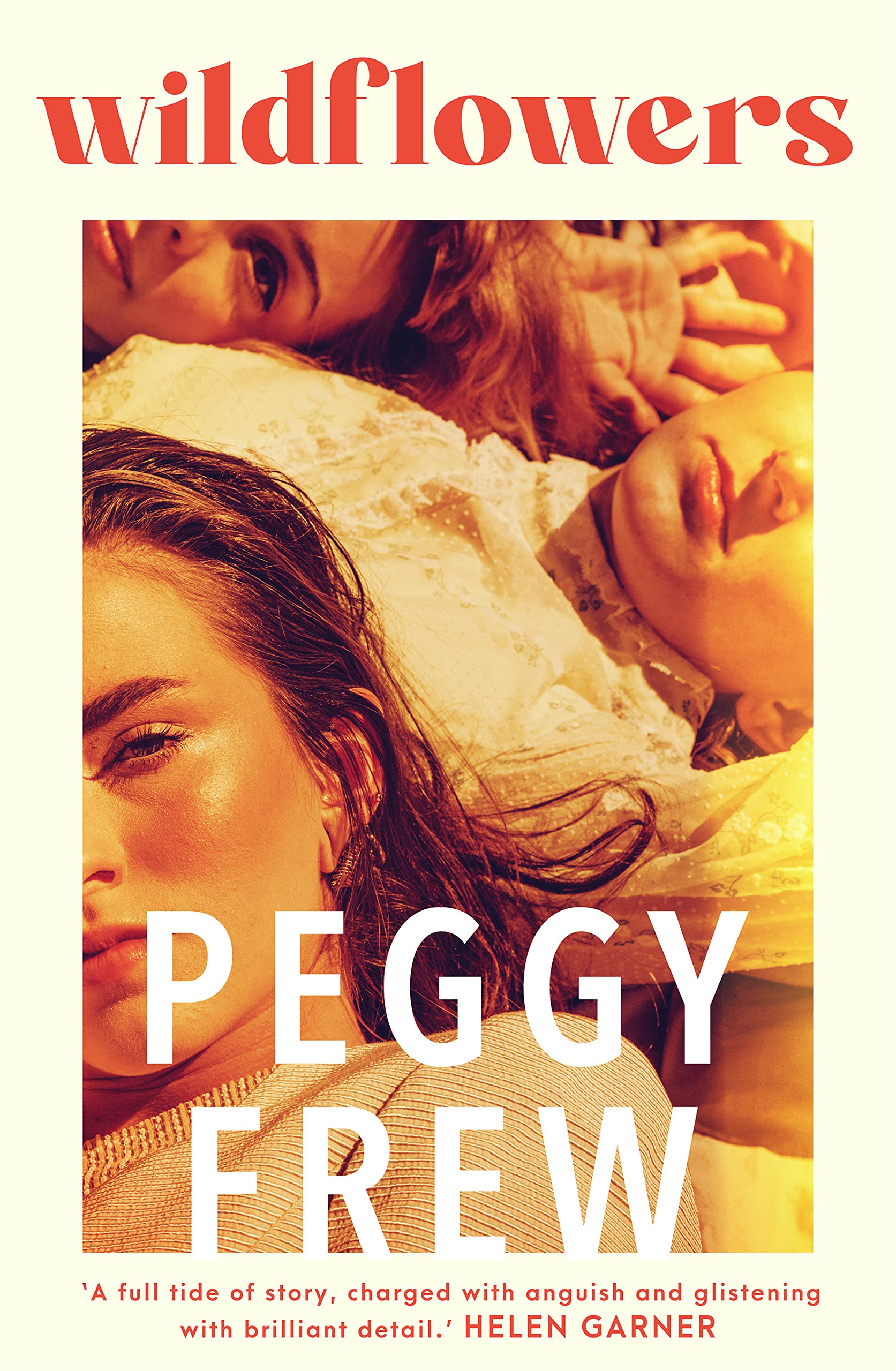
Book Review: Wildflowers by Peggy Frew

I have really loved Frew’s last two books, Hope Farm and Islands so I knew I just had to get Wildflowers.

Like the others, Wildflowers is  a story of family and in this case, the relationship and challenges of three sisters. Meg is the oldest, followed a year later by Nina and then four years after is Amber.

The story is largely centred around Nina and the affect on her by Amber, with her addiction and Meg who has an overwhelming need to fix and nurture Amber. When Meg decides that she and Nina need to perform an intervention on Amber, they whisk her younger sister away to a remote far north Queensland house. It’s here that good intentions slide and their relationship is tested.

Told from Nina’s point of view, its her gaze at her sisters and her largely ineffectual parents that gives us perspective.  From the opening, it’s clear that Nina who has packed up her belongings in boxes, not showering, or eating properly, is in the one who is really in trouble.

Nina reflects on her own life, her sexual life of disappointments, her inability to voice her thoughts  or even her ability to function. As her state of mind deteriorates before and after the intervention she slides into a space where no-one notices her crisis.

The sisters all perform and live in their assigned roles from childhood. “Meg, ten, is the Good One, and Nina, nine is the Forgetful One, and Amber, little Bam, only five is the Wild One, a puppy, a seal cub.” Often labelling children with their designated role means they wear it for life. Frew explores the roles of the sisters each fractured within the family.

Nina is a dislocated observer trying to make some meaning of her life as well as of her her family and her sisters as she reflects on what happened in QLD five years earlier. She is struck with an inertia and apathy yet unable to vocalise and stop Meg who is hellbent on fixing Amber. Nina struggles with the morals of what is going on but her weakness paralyses her from taking any action. She comes face to face with understanding who her sisters actually are. As is so often the case, Frew explores the question of how well we really know our siblings and our actions dependant on our designated role. It’s an interesting idea and one that is explored well.

Beyond the family, Nina reflects on her list of sexual partners, none of whom create a meaningful relationship. Tarnished by her experiences she slowly realises that it is not what she wants and without any real action she drifts away from these men.

But we never truly get a deep understanding of Nina and her motivations, nor do we learn much more about Amber or Meg. Yet the relationships between them change and evolve as they weave in and out of each other’s lives as siblings do.

It’s not a happy novel and reminds me a little of Sorrow and Bliss without the wit. But the writing is descriptive, the rainforest, the party house and the landmarks in Melbourne to name a few. It’s also emotive and confronting and in the end hopeful.

Wildflowers is unsettling and at times, confronting. From the first few pages, I was invested but this may not be a novel for everyone.

Book Review: The Good Wife of Bath by Karen Brooks

Geoffrey Chaucer is famous for the collection of stories he wrote known as The Canterbury Tales. One of the stories, The Wife of Bath inspired author Karen Brooks to gleefully and expertly give the character, Eleanor the opportunity to give her side of the story.

Set in 1364, Eleanor is married off to the first of five husbands at the age of twelve. By eighteen she is a widow. The book takes us on a journey through her life, in and out of poverty and love and injustice. Geoffrey Chaucer himself is introduced as a character who plays a major role throughout her life as a distant cousin. She is not a woman who bows to social norms and with the support of her closest friend and ally Alison, she fights to protect her loved ones from the brutalities of those medieval times.

Life for women was particularly difficult. They were considered inferior, health care was scant and a woman’s success was tied to the wealth of the man she married. Even then it didn’t guarantee her a happy and fulfilled life. Indeed men’s attitude towards their wives was at best tolerant and at worst, they were treated like slaves and blamed for everything because of their sex. The author immerses us into a world of a plague uncanny in its comparison to our present day pandemic.

I simply adored this novel. I loved the character of Eleanor and was on her side the entire time, wanting a better life for her and dismayed at the injustices that she faced as a woman. And I wondered what she would think in 2023. Would she be amazed or disgusted that there hasn’t been the progress she might have expected?

The theme running throughout the novel is injustice for women and the following sums it up nicely.

“The older of the men, a Master le Brune, looked me up and down, a sneer forming. “Women weren’t put on this earth to conduct business, madam,’ he said haughtily, ‘but to help men with their work. As the good books say, ‘suffer not a woman to teach, nor to use authority over the man: but to be in silence.”

Eleanor railed against a culture where a woman was not permitted to conduct a business by herself, where her only respectability was as a married woman and her role defined as wife and mother.

I cheered for her successes, mourned her losses and there was a lot, was horrified on one page and laughed at the next of this page-turning novel.

It is a long book so be prepared to invest a lot of time to read it. You’ll be rewarded by not wanting it to ever finish. It’s a meticulously researched book vivid in description, humour, and tragedy with powerful characters. Get this one. You won’t be sorry.

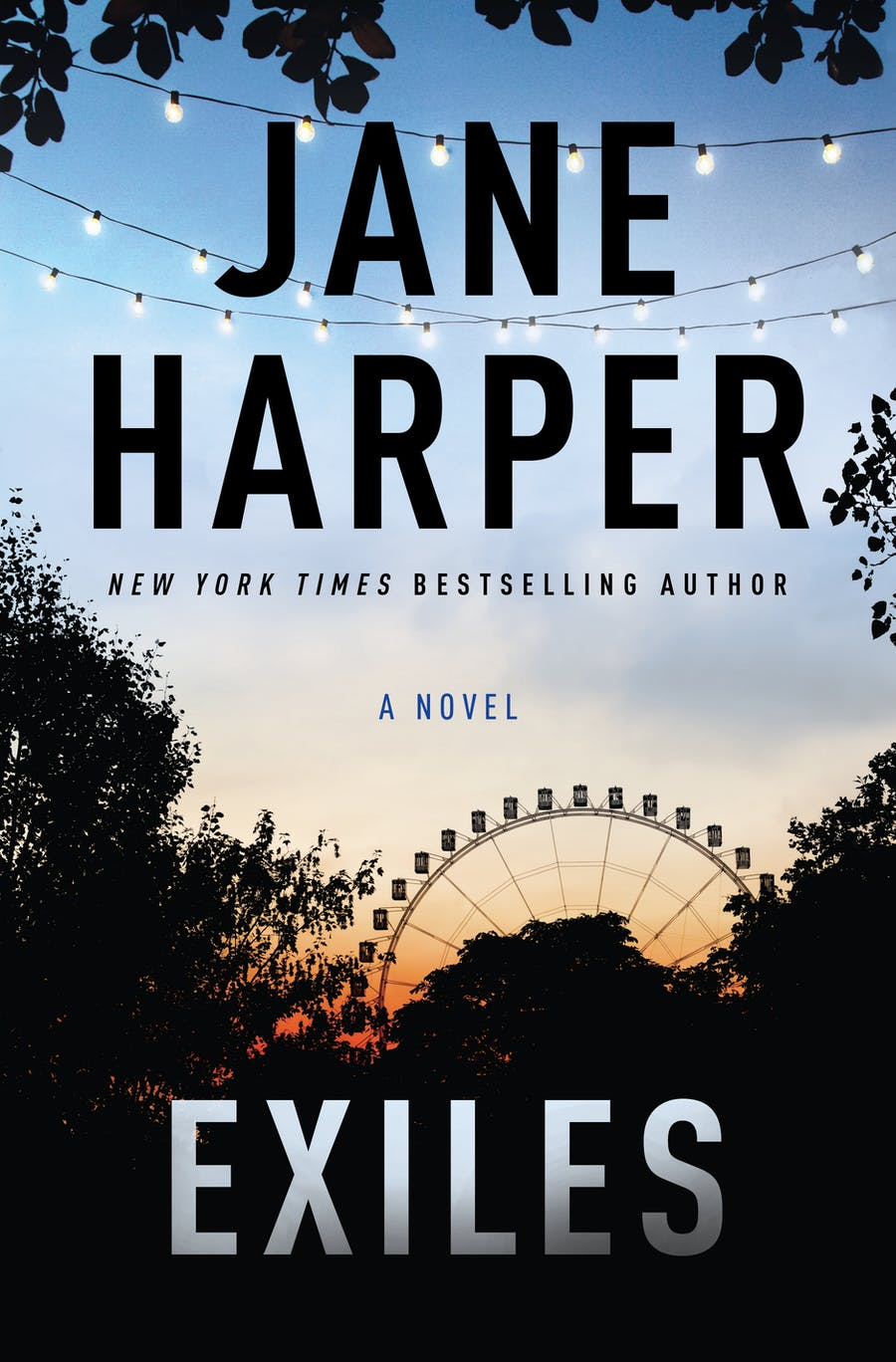
Book Review: Exiles by Jane Harper

I always look forward to Jane Harper’s books and have read them all. Exiles is also the third and last in the Aaron Falk series, so I was keen to read this one.

 A baby is found lying peacefully in her pram at a rural festival but there is no sign of the mother.  Yes, this hooked me immediately.

It’s a year later when we meet Aaron who arrives in the deep wine country of South Australia to attend the christening of his godchild. It also happens to be the twelve-month anniversary since the baby’s mother, Kim Gillespie disappeared and Aaron is drawn into the appeal for information at the very same food and wine festival where she disappeared. Kim Gillespie’s shoe was found in a reservoir and there is speculation about whether it’s suicide, murder or a merely an accident. Aaron becomes engrossed in her close-knit family and friends and he begins to wonder what secrets they’re hiding.

I loved the setting, the wine, the vines and could well envisage the landscape. Harper certainly knows how to paint a picture.

However, I did find the first half quite slow because it was an information dump of backstory and for the life of me, I wondered why she started the story twelve months later. After all, Falk was actually at the festival when Kim disappeared. The time gap added no value that I could see. I really wanted to be in the action from the start not hear about it.

By the time the novel ramped up half way through I was losing interest. There I’ve said it. There was a lot of characters to keep track of and care or not care about. But I persisted to the very satisfactory end. The police work seemed to plod and Falk appeared to be more of a bystander along for the ride. The side plot of his romance dominated more than his interest in the case. But then he’s on leave and why should he care about something that happened a year earlier? His motivation to investigate laboured until finally we got to see his internal musings and questioning of people and events. On the plus side, his romantic life showed more of his vulnerability and his own internal conflicts which I enjoyed.

Not her best but for many, it will be enough.

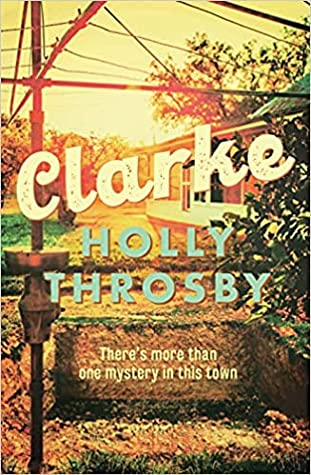
Book Review: Clarke by Holly Throsby

This is about the mysterious disappearance of a woman. Or is it?

Set in 1991, police arrive at Barney’s rental house to dig up the backyard looking for Ginny Lawson who has been missing for six years. Next door lives Leonie who was a close friend of Ginny’s and who eagerly awaits justice for her friend. She’d never liked Ginny’s brute of a husband who has already sold up and moved away and is married to someone else in QLD. Barney and Leonie as well as a number of neighbours are keenly watching proceedings hoping for a resolution.

This novel is much more than about the disappearance of Ginny. It’s also a study of people, their relationships and central to that is loss and grief.

Alternating between Barney’s and Leonie’s point of view, Throsby gently draws out their characters revealing who these two people are. Leonie cares for four-year old Joe who keeps asking for his mother. Barney parks outside of McDonalds to glimpse his estranged son who works there. Leonie was a good friend to Ginny lamenting how the police had ignored her initial concerns about her friend’s disappearance and Ginny’s brutish husband.

Throsby goads us into making assumptions about these two characters nudging us to think one thing then slowly revealing their backstories. I did however guess the connection quite early between the two.

It’s a slow-moving story, gently threading the everyday mundane of surviving loss, dealing with grief and attempting to move on. Much like unwrapping a many layered parcel wrapped, each one makes you love and feel for the characters understanding them until we are left with nothing but hope at the end.

“Leonie rinsed her tea mug and set it on the drying rack. She went back to the table and collected Joe’s milky bowl, ‘Uptown Girl’ was coming softly out of the radio.

‘I want to see my mum.’

‘Sweetheart,’ said Leonie, holding the bowl.”

The town of Clarke, populated with 13000 people is just big enough to have all the usual amenities, even a shopping plaza, the description of which is so well portrayed that I could visualise the bleakness of the 1991 recession.

The end is very neatly tied together, perhaps a little too coincidental, but this one is an engaging read and I loved the characters more than anything else. Beautifully written, it’s a very compelling read. Pick this one up when you can.

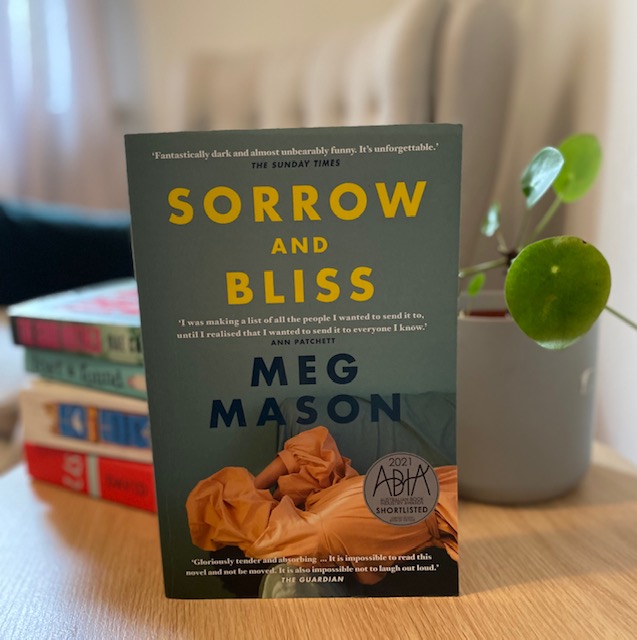
Book Review: Sorrow and Bliss by Meg Mason

Most of us have been touched by mental illness, either directly or indirectly by someone we know. This is a remarkably frank and honest story about a young woman called Martha who knows that something is not right but has no idea what it is and how to go about fixing it.

Martha comes from a family where her sculptor mother is barely there for her children preferring to leave her offspring to their own devices. Her father, a wannabe poet knows his daughter is not well and tries his best to help.

This novel is also about relationships and love too, especially between sisters. Martha’s sister Ingrid is her rock, her sounding board and her support. Ingrid is also quite a personality, all knowing and seeing when it comes to protecting Martha. The same can be said of the relationship between Martha’s mother and her aunt, Winsome. Indeed, it is Winsome, my most favourite character who holds the extended family together putting her arms around her own children as well as her nieces. Her love is intense and loyal. Winsome goes above and beyond including financing her own sister’s lifestyle. She even takes on Patrick, a young boy of fourteen whose own father can’t be bothered with him.  

Martha flits between relationships choosing the wrong men and learns much later how important Patrick is to her, unaware of his love until she is in her thirties.

The author deals with the illness in intricate detail, deliberately withholding from the reader the name of the condition, when it is finally diagnosed. The author does mention afterwards that the illness is fabricated and I’m not sure how people with genuine illnesses might react to that.  Nevertheless, it shines a light on how difficult mental illness can be and the problematic road to seeking the appropriate help which can be as daunting as it is difficult.

The author’s navigation around failing and blooming relationships is genuine and tender as is the discussion surrounding the pressure to have children for many women. Mason also spotlights the effects on loved ones who can feel helpless and lost in their support as shown by the toll on Ingrid and Patrick.

The writing is beautiful, flowing gently through the years of Martha’s life culminating in a hopeful ending.

I enjoyed this book but for some it might be hard to handle so much sadness. But there is a lot of light and shade with much love and humour that you can’t help be drawn into it.

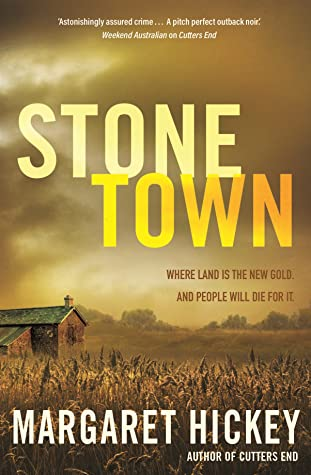
Book Review: Stone Town by Margaret Hickey

Stone Town is a fast-paced rural crime drama. Three teenagers discover the body of a property developer in the middle of a paddock in an area once known for its gold.

Senior Sergeant Mark Ariti, recently posted back to his home town after nursing his dying mother. Recently bereaved and divorced, he is hoping for a quite life but the murder and disappearance of another policewoman Detective Sergeant Natalie Whitsted, prompts the arrival of two detectives and complicates his life.  

There are a lot of characters in this novel but it easy to keep track of them – the women of the CWA, the detectives, Mark’s ex-work partner, his children, the teenagers and many, many others. The landscape is constantly wet and the author does a brilliant job of portraying the bleakness of the rain as well as the rural community. As Mark get sot know the community he also learns how highly regarded and involved his own mother was.

The novel is certainly page-turning and I finished it quickly compelled to know what happened. The end wasn’t entirely surprising as clues were dropped particularly in the last quarter of the book.

This is a second novel with Mark Ariti, the authors first was Cutters End and there are references of this throughout the book. Not having read it, I’m not sure if that would have helped. I certainly thought the character of Mark was well portrayed and there were no gaps for me. After reading this book, I would read Cutters End.

Overall, a very enjoyable read and it would be a great one to read over the holiday season.