Tag Archives: Goodreads

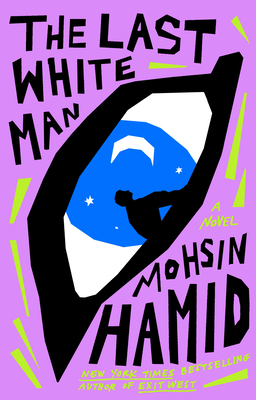
Book Review: The Last White Man  by Mohsin Hamid

This is a story about Anders, a white man who wakes one morning to find his skin has turned dark and when he looks into the mirror a stranger’s face is all he sees. Terrified he tells his new lover, Oona. Before long, there are reports coming from all over the country that this happening to other white people.

The main characters are Anders and Oona whose relationship grows as the established order of society is challenged and changes. It reminded me very much of what may have been inspired by our response. Like the pandemic, there is panic buying and fear as more and more white people change colour. Suspicion, resistance and racist vigilantes, riots and violence ensue.

There is also the voice of another generation in Ander’s father and Oona’s mother. The relationship Anders has with his father is tender and illuminating. Oona’s mother resists and fights, clinging to her conservative views until the end.

The writing is quite different, in very long paragraphs, punctuated only by commas. The following excerpt is an example which goes for almost a page.

“”When Anders got back in his car it occurred to him that the three people he had seen were all white, and that he was perhaps being paranoid, inventing meaning out of details that might not matter, and at a traffic light he confronted his gaze in the rear-view mirror, looked for the whiteness there, for it must be somewhere, maybe in his expression, but he could not see it, and the more he looked the less white he seemed, as though looking for his whiteness was the opposite of whiteness… “

Reading this novel with paragraphs so long made me almost hold my breath, as tension and change escalates. But it’s not all doom and gloom as Hamid shows us what society can do and perhaps it is a way of giving us hope for the adaptability or even a metamorphosis of humans into a better non-racist future.

It’s a short read and I’m sure will be on the awards list. I enjoyed this one.
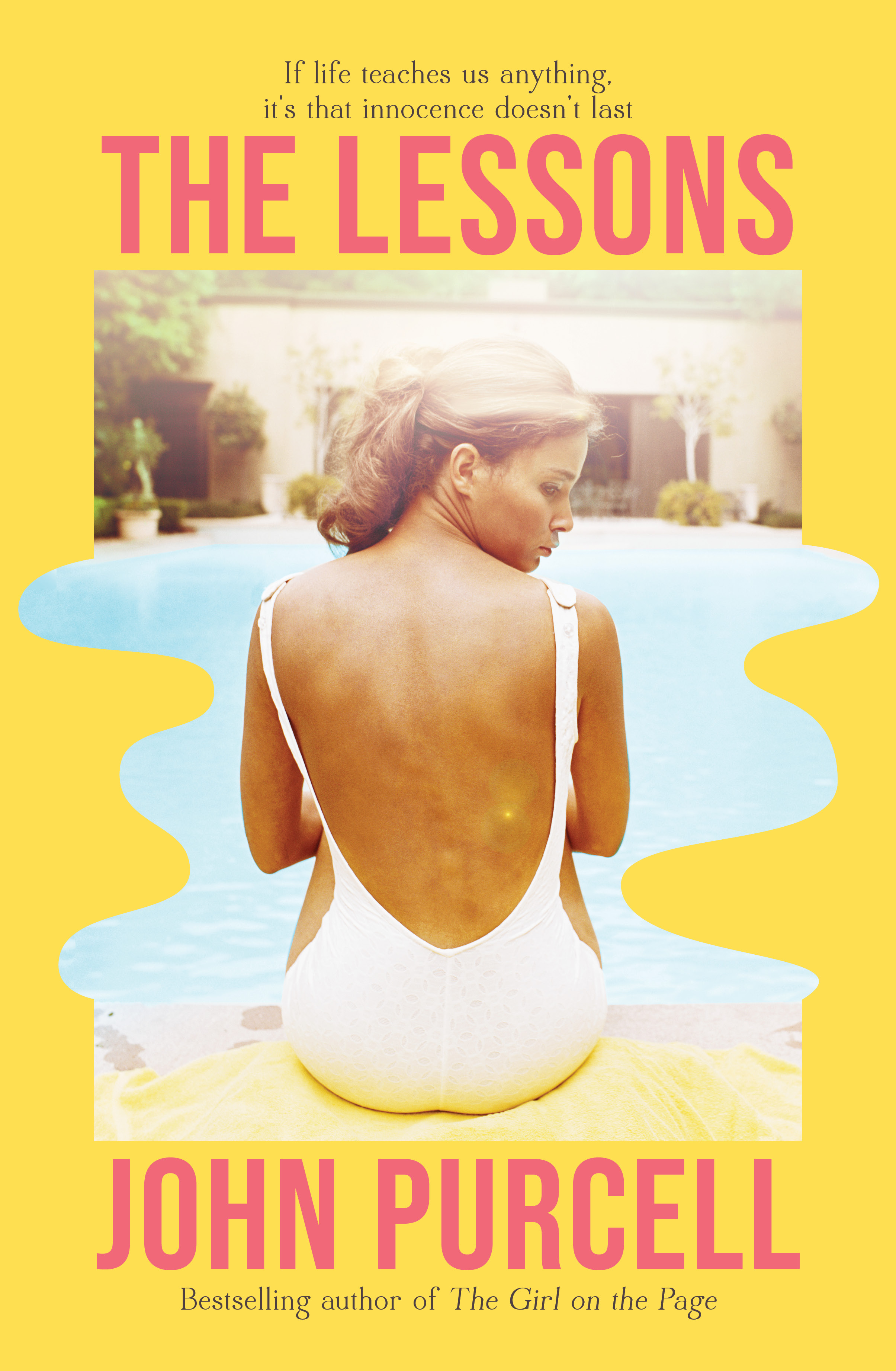
Book Review: The Lessons by John Purcell

This novel is a compelling story of a forbidden first love, class division and betrayal.

It’s 1961 when sixteen- year- old Daisy comes home from boarding school and meets young farmer, Harry. They fall deeply in love but her mother intervenes deciding that Daisy should be away from his influence and sends her to her Aunt Jane’s house unaware that the young Daisy is pregnant.

Daisy has always been convinced that her mother does not love her, and given that her mother was forced to marry Daisy’s father because she herself was pregnant at a young age gives rise to their fractious relationship.

Interspersed between the 1961’s timeline we meet Aunt Jane in 1983. She is a writer of renown on her way to a literary event in New York where she is interviewed about an earlier work exploring a coming of age novel, said to be drawn from real life.

We are privy to the point of views from Daisy, Harry and Jane which is cleverly handled to propel the story forward as Purcell explores how far a person would go for love, given numerous obstacles thrown their way.

Jane, a bohemian character in a marriage of what seems to be convenience is lost in her own relationships. Harry is a simple man who knows what he wants and that is Daisy. The interference by her mother and Jane creates a tragic outcome for the young lovers who go through life always yearning for one another.

I worried about Purcell’s handling of the female point of view particularly during a troubling event but I thought he handled it sensitively and well. The power of this novel is the characters and Purcell cleverly ensures that the reader quickly engages and cares about each one of them, even the ones who don’t behave all that well.

I really couldn’t put this one down, loved the swinging sixties, filled with lusty scenes, class differences and the final eyebrow raising reveal towards the end. Yes, check this one out.

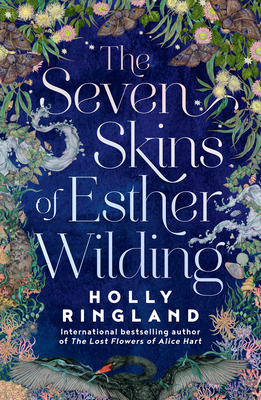
Book Review: The Seven Skins of Esther Wilding by Holly Ringland

I have mixed feelings about this book which is about love, sisters, daughters, sorrow and grief mixed with fairytales and women’s voices.

Sound like a lot? It is and it’s quite a long read.

The story opens with Esther. A swan crashes into her ute from above and she thinks it’s her missing sisters spirit. Her sister Aura last seen walking along the beach disappeared twelve months earlier and Esther has been called home for a memorial service. She has a fractious relationship with her tattooist mother Freya but together with her therapist father, Esther is asked to go to Denmark. Why? Because her sister had lived there for three years before returning home  broken and deeply sad and they believe Esther should go and find out what happened.

The plot slowly unfolds as we discover stories surrounding tattooing and how women’s stories can be told on their skin. We discover that Aura has a childhood diary where her teenage ramblings stop when she’s about to turn sixteen. It picks up again when she’s in Denmark when her studies into folklore and fairy tales brings her to write about the seven skins, lines and passages she also has tattooed on her body the meaning of which remains a mystery.

I enjoyed the imagery and the arc of Esther’s character even though she wasn’t a particularly likeable character but that wasn’t the point. Her grief and the trauma of losing her older sister, the relationships around her and her self-discovery was touching and quite moving. The other characters weren’t terribly engaging either serving little purpose than to tiptoe around Esther.

Mostly the novel centres on Esther’s point of view with occasional drifts to others and this I found to be unfulfilling because it failed to move the story along. I also found long chunks of information about each skin, her flashbacks about her sister and the fairy tale reference to be quite repetitive. Even her one night stand with Tom was repeated a few times. There was a lot of detail and description which was nice when it deserved a place but many times, I found it merely slowed the story down. Perhaps that was the intention for this slow boil of a novel but it didn’t suit me.

A minor plot issue, but given that Freya came from Denmark herself, why she as a mother would not hop on a plane to find out what happened to her own daughter did lose me a bit. I didn’t really buy her reasons but took the leap of faith and accepted it.

Having said that, there was lots about this novel I did enjoy. The idea that grief can paralyse a person, the bonds of sisters, especially an older sister’s impact on her younger sister ( I must remember that, as I am an older sister). It is beautifully written and quite lyrical but overall it didn’t quite work for me.

Book Review: The Drover’s Wife by Leah Purcell

This story is loosely based on Henry Lawson’s 1892 poem, The Drovers Wife. The author, Leah Purcell has reimagined it and focused on the bleak harshness for women and indigenous people during that time.

Molly Johnson lives in the high country in a shanty with her four children. The oldest, Danny is only twelve. Her husband, Joe never appears in the story as he is away droving. It’s just as well because when he is home, he’s drunk and violent. Molly is pregnant and isolated having only her children around her. Her life although harsh and unforgiving is challenged by the people who visit. The new policeman arrives with his wife and child having survived drowning in a flooded river. Next is Yakuda, an aboriginal man, in shackles who is wanted for allegedly killing a family.

The story plunges the reader into anxiety for Molly, her children and her survival as well as for Yakuda. But you can’t help but admire their gutsy determination for a better life as their relationship grows.

But this is not a story with a happy ending, so prepare yourself. The switch on occasion from third person to first person can be off putting but the story is a powerful one giving the reader a very unromanticised version of early Australia, a place of violence where women and the indigenous are little more than indentured slaves with few rights or voice or place.

The story has been made into a play where it first was brought to life and is now also a movie released in 2021 starring Purcell herself. I must now find it and watch it. And if you can check this one out.

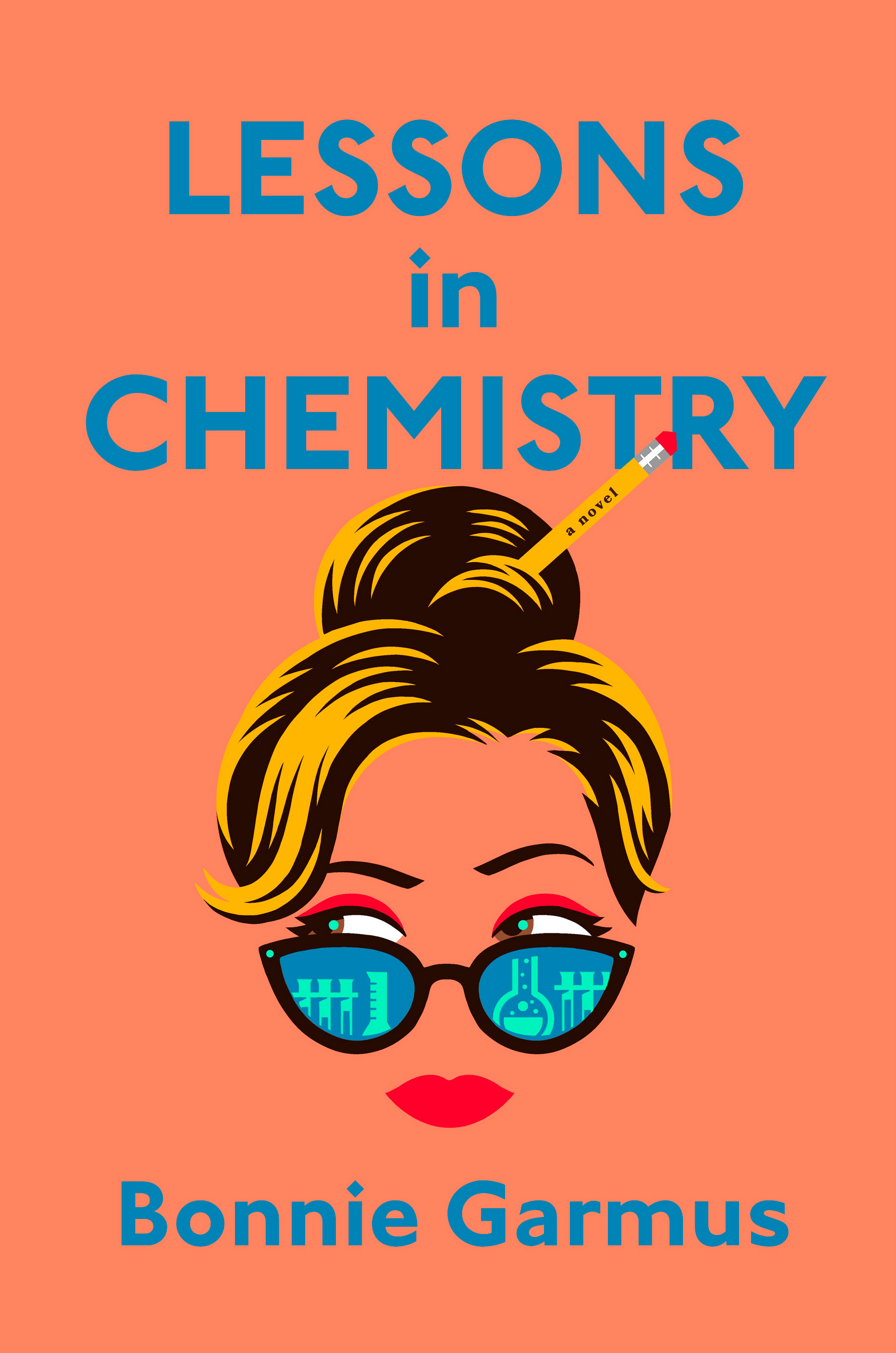
Book Review: Lessons in Chemistry by Bonnie Garmus

Oh, what a read this one was. I could not put it down.

Set in the late 1950’s, this novel is a delightful and empowering story exploring the world of science, love, and motherhood. The main character, Elizabeth Zott, is a brilliant and ambitious young chemist who is determined to make a name for herself in the male-dominated field of science. But when she meets and falls in love with her soulmate, Calvin Evans a brilliant, Nobel Prize nominated chemist, she finds herself torn between her career goals and her heart.

The novel highlights the challenges that women faced in the scientific, television and rowing communities, and the struggle to balance personal and professional aspirations when social mores forced women into conformity. When Elizabeth finds herself a single mother, she fails to see the problems that others see and her character is so engaging that I felt for her the whole way, cheering her along as she inspired others on her journey.

And it is an inspiring story of a woman facing calamitous obstacles but who pushes through regardless.

The characters are endearing from her daughter Madeline to the feisty Harriet who builds up the courage to leave her husband. And of course, who could forget the dog, Six-thirty through whose eyes we were given the privilege of seeing a different world.

The author’s writing style is engaging and fluid, making it easy to get lost in the story and the characters.

The chemistry between Elizabeth and Calvin is endearing and heartfelt as they ignore the social mores of the time.  It’s a perfect blend of science and fiction, providing a unique and captivating reading experience.

There are a few twists, many of which I did not see coming. But this one is also full of hope that the world is changing for women now and into the future. Sigh, if only it was that simple.

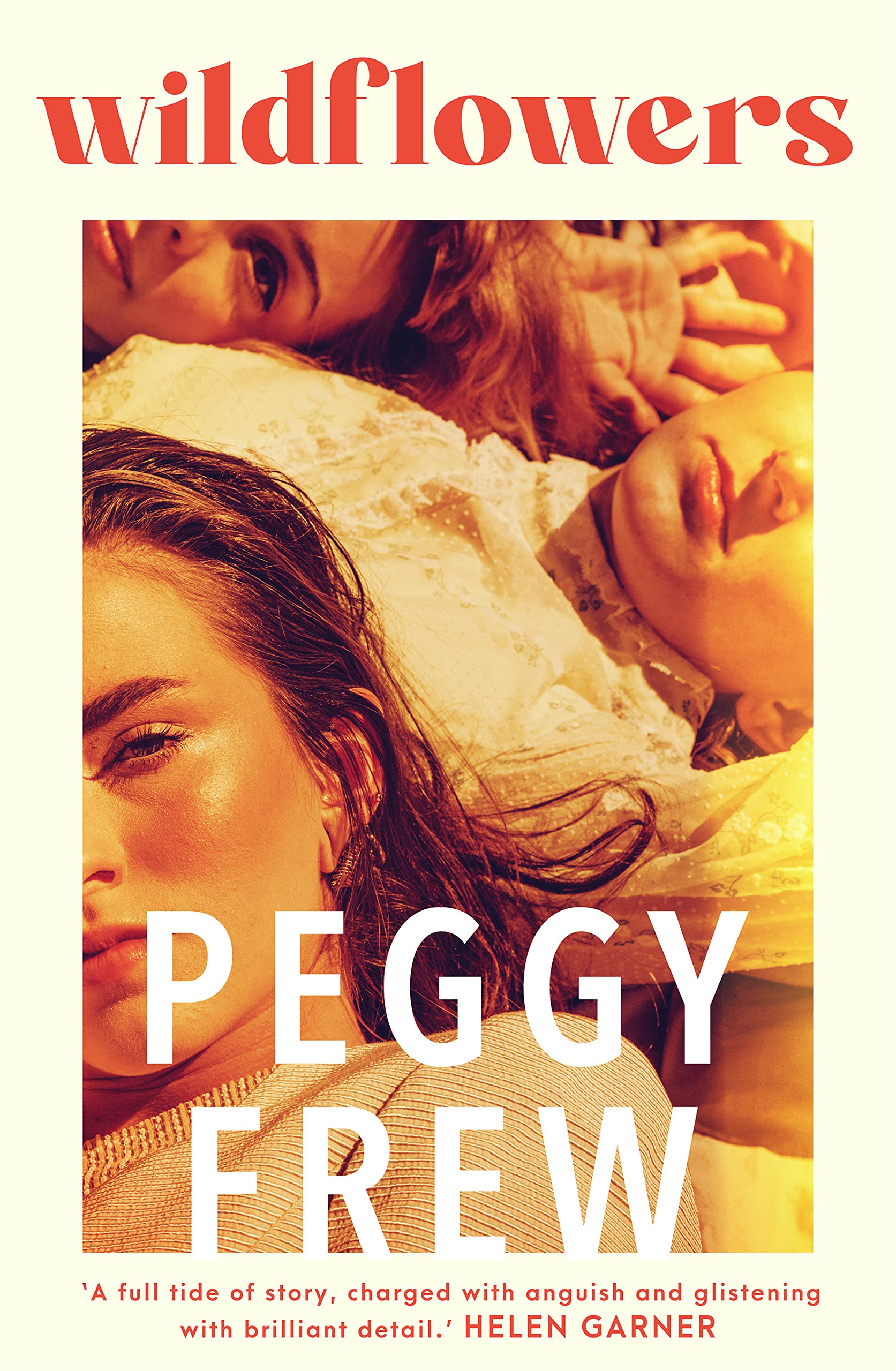
Book Review: Wildflowers by Peggy Frew

I have really loved Frew’s last two books, Hope Farm and Islands so I knew I just had to get Wildflowers.

Like the others, Wildflowers is  a story of family and in this case, the relationship and challenges of three sisters. Meg is the oldest, followed a year later by Nina and then four years after is Amber.

The story is largely centred around Nina and the affect on her by Amber, with her addiction and Meg who has an overwhelming need to fix and nurture Amber. When Meg decides that she and Nina need to perform an intervention on Amber, they whisk her younger sister away to a remote far north Queensland house. It’s here that good intentions slide and their relationship is tested.

Told from Nina’s point of view, its her gaze at her sisters and her largely ineffectual parents that gives us perspective.  From the opening, it’s clear that Nina who has packed up her belongings in boxes, not showering, or eating properly, is in the one who is really in trouble.

Nina reflects on her own life, her sexual life of disappointments, her inability to voice her thoughts  or even her ability to function. As her state of mind deteriorates before and after the intervention she slides into a space where no-one notices her crisis.

The sisters all perform and live in their assigned roles from childhood. “Meg, ten, is the Good One, and Nina, nine is the Forgetful One, and Amber, little Bam, only five is the Wild One, a puppy, a seal cub.” Often labelling children with their designated role means they wear it for life. Frew explores the roles of the sisters each fractured within the family.

Nina is a dislocated observer trying to make some meaning of her life as well as of her her family and her sisters as she reflects on what happened in QLD five years earlier. She is struck with an inertia and apathy yet unable to vocalise and stop Meg who is hellbent on fixing Amber. Nina struggles with the morals of what is going on but her weakness paralyses her from taking any action. She comes face to face with understanding who her sisters actually are. As is so often the case, Frew explores the question of how well we really know our siblings and our actions dependant on our designated role. It’s an interesting idea and one that is explored well.

Beyond the family, Nina reflects on her list of sexual partners, none of whom create a meaningful relationship. Tarnished by her experiences she slowly realises that it is not what she wants and without any real action she drifts away from these men.

But we never truly get a deep understanding of Nina and her motivations, nor do we learn much more about Amber or Meg. Yet the relationships between them change and evolve as they weave in and out of each other’s lives as siblings do.

It’s not a happy novel and reminds me a little of Sorrow and Bliss without the wit. But the writing is descriptive, the rainforest, the party house and the landmarks in Melbourne to name a few. It’s also emotive and confronting and in the end hopeful.

Wildflowers is unsettling and at times, confronting. From the first few pages, I was invested but this may not be a novel for everyone.

Book Review: The Tilt by Chris Hammer

I was unaware that this novel is the second in a series, but it mattered little. It really was suitable as a standalone.

The tension begins from the first page when a woman plans to blow up a regulator wall, while a man runs frantically through a forest dodging shooters. Three months later a skeleton belonging to a man missing since 1943 is found. Detective Constable Nell Buchanan is assigned to investigate, returning to her home town where her family still lives. She’s has a difficult relationship with her family which peaks our curiosity. Then another body turns up.

This is not your classical rural crime novel as it has many layers flipping back and forwards in timeline, often without warning. There are also many characters to keep you on your toes as you, the reader try to piece the family and community ties both past and present.

The writing is brilliant, descriptive as it is beautiful, placing us in the Australian landscape of forest, river and small country town. ‘The lack of wind meant there was nothing to mitigate the oppression that enveloped the weatherboard house on the plain above the Cadell Tilt. It baked and it sweated and it cowered, its iron roof shimmering like a skillet.’

The locals are cringe-worthy. ‘He has a face like a slab of marble, white and veined with pink, topped with a strawberry-blond mullet so thickly woven it could be a doormat.’ And they are suspicious, curious and not always friendly.

Tension grows from the shadowy presence of preppers, cookers and twitchers as we’re never really sure who they are.  Nell becomes embroiled in an old family feud as things get personal and old grudges emerge the more she digs deeper into the mystery.

Nell herself gives little away and at times I wondered if she really had grown up in the area as she seemed quite disconnected. She certainly didn’t head down memory lane to give us much insight into anything more than her family background. But then that was the point as the family tree came together like a piece out of ancestory.com. As I read I was kind of wishing I had the chart to refer to but when I saw it mapped out at the end, I realised that advanced knowledge would give away some of the twists. And there are a lot of twists much like the Murray River so well featured in the family saga.

I really loved this novel, the first I’ve read by Hammer and I’ll be searching for the rest.