Tag Archives: Goodreads

The Fortune Men by Nadifa Mohamed

This book was shortlisted for the Booker Prize in 2021 and was a book club pick for May.

It’s 1952. Mahmood Mattan lives in Cardiff and is a petty criminal walking the streets for opportunity. He’s cheeky, a pick-pocket, gambler and a proud Somalian. He is also deeply in love with his three young boys and his estranged wife. When he is accused of murdering a white Jewish woman, he believes in the English legal system and his innocence. His belief slowly crumbles amidst lies, mistaken identity and a system where privilege is not within his reach.

It’s a heart-breaking story and there is no happy ending. If anything, the carriage of injustice makes you angry and depressed. Mahmood is certainly a scallywag which he acknowledges but he admits he’s not a murderer. His blind faith in the legal system reveals the incompetence of all involved and all he has is the undying love of his wife and boys which of course only serves to make it all the more sad.

It is inspired by a true story as revealed at the end where justice was continually sought for years after. But what the author does is humanise the very details, putting us in Mahmood’s shoes, feeling all that he does. And it’s uncomfortable as we experience his fading hope.

It’s a descriptive book, probably a little too much for me as it slowed the story down. Yet the writing is beautiful so I can understand the shortlisting elevation.

It’s not a happy read but it is one about injustice, racial divides, and privilege. And that makes it an important one to read.
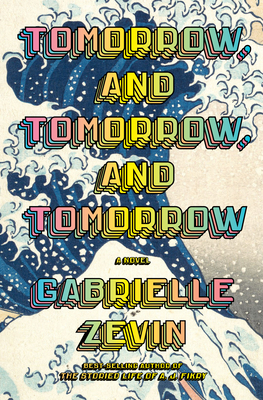
Book Review: Tomorrow and Tomorrow and Tomorrow by Gabrielle Zevin

I was curious about this book which has been receiving rave reviews world-wide.

It’s about two children who meet in a hospital. Sam is recovering from surgery to his smashed foot and the other, Sadie is visiting her sister who has cancer. They meet in a games room and soon develop a friendship over their mutual love of gaming.

Fast forward several years they bump into each other in a subway, each at university and each still in love with gaming. Together they make a game and with their mutual friend, Marx their game becomes a smash in the world of gaming.

At first glance, you might not consider reading this one. While it is about gaming, we are taken into the lives of Sadie and Sam and their evolving complicated relationship of friendship and how that is tested as their success grows.

Zevin gives an insight into gaming and its power over its audience, but more than that she shows us the history of the technology and its influence into everyday gaming lives. Yet, she didn’t delve deeper into the lives of gamers where the downside can be devastating for those addicted day and night. Nevertheless, this novel is so much more than gaming. It is about relationships and Zevin’s treatment of the friendship is tender yet complicated as she deep dives into their motivations, their personality and their treatment of each other.

I also liked the diversity of the characters, Sadie is Jewish, Sam is half Korean and Marx is half Japanese and the cultural mix was enlightening without singularly drawing attention to itself.  It’s an enjoyable journey to follow the lives of these two characters. Sometimes, they aren’t that likeable although Sam probably wins the most sympathy of the two. The supporting cast of Marx and Sam’s grandparents are stars while Dov is unlikeable.

It’s a long book and there were a couple of occasions where it dragged a little, but not for long. The writing is great, the story compelling and very readable. And now I might just have to see what the fuss is about and play a game. Give this one a go.

Book Review: The Fancies by Kim Lock

I read Kim Lock’s earlier novel, The Other Side of Beautiful and loved it. I was very excited to hear that her latest had just been published and I was not disappointed.

This is a story about small towns and the characters who live there. Abigail Fancy is the daughter of Young Dick Fancy and Nell Fancy who are town’s mover and shakers. Abigail  returns home after a stint in jail despite the fact that she’d sworn she’d never return to the town which drove her out. But after twenty-four years it’s time to face her enemies and her demons.

This is a novel about characters and Lock has delightfully teased out many likeable and unlikable ones. Some are quirky, some inquisitive, some gossipy while others are tough and caring and full of self-importance. At the heart is a down to earth story filled with Australian vernacular laced liberally with humour and wisdom diving deep into misogynistic world where there is little justice.

“Word of Abigail’s return spread fast.

After the barbeque at Young Dick’s, Col Morton, starry-eyed, headed straight downhill to the pub and told the publican, Larry Dinwiddle. Larry told his wife Beverley, the postmistress, who then told Sheila Rocket, who was the first through the post office doors the next morning. ‘

The setting is a small fishing town on the coast of South Australia and Lock paints a great picture of community, the crayfishing industry and landscape.

The story of what happened twenty-four years ago unfolds slowly and the climax towards the end is delightful. Old Dick, the grandfather is dying and has dementia earning his own alternate short chapters when he applies moments of lucidity and brutal honesty and the town’s secrets begin to unravel despite Young Dick’s best efforts to keep a lid on everything.

“How many times do I have to tell him? I’m not gonna be here tomorrow, let alone next bloody Christmas. I’m carking it, I say. Dropping off the perch. Taking a dirt nap. Shuffling off this mortal coil. Dying, I tell him. Are you thick in the head?”

I just loved this book. It’s funny, sad and cleverly constructed with characters you want to spend time with. It would be a great movie and it reminds me of the quirkiness of The Dressmaker. Let’s hope this one makes it to the big screen. In the meantime buy this one and read it.

Book Review: Sea of Tranquility by Emily St. John Mandel


Sea of Tranquility is a wonderful novel of time travel which takes the reader from Vancouver Island in 1912 to land five hundred years later on a colony on the moon. It is an imaginative delight, exploring time travel and its fragilities. It’s also science fiction at its best and I’ve just wondered why I have read so little of this genre.

The novel begins in 1912 with Englishman, Edwin St Andrew who is forced by his family to travel to Canada. He’s not particularly keen to settle in the new frontier but during a walk in a forest, he encounters a shocking phenomena of a violin playing and a swooshing sound for which he can find no explanation. 

Two centuries later, a famous writer, Olive Llewellyn hears a musician playing violin in a subway while trees emerge around him.  Her latest book is about a pandemic which resonates just a little too much given our recent history. She inserts a strange paragraph about the musician. Another three hundred years later, we meet naïve but bored, Gaspery-Jacques Roberts who lives in the dark colony on the moon. He becomes a detective who is sent on a time-travelling mission to 1912 to investigate the anomaly witnessed by Edwin.

There is a lot in this novel to keep you focussed on the timelines and the characters who are all well-developed yet complex, each with their own motivations and desires. Edwin St Andrew is a man trapped between two worlds, the old and the new, struggling to find his place. Olive Llewellyn is torn about her daughter and the changing world around her as she faces yet another pandemic.  Gaspery-Jacques Roberts is desperate to prove himself yet struggles with the moral and ethical issues around time travel.

The author creates a cohesive and believable world. The scientific and technological elements make sense adding depth to the narrative.

Overall, this is a delightful and imaginative novel that explores the complexities of time-travel and the fragility of human existence. It kept me hooked until the very satisfactory and surprising end. I really enjoyed this short action packed novel.

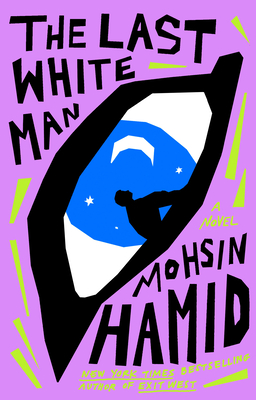
Book Review: The Last White Man  by Mohsin Hamid

This is a story about Anders, a white man who wakes one morning to find his skin has turned dark and when he looks into the mirror a stranger’s face is all he sees. Terrified he tells his new lover, Oona. Before long, there are reports coming from all over the country that this happening to other white people.

The main characters are Anders and Oona whose relationship grows as the established order of society is challenged and changes. It reminded me very much of what may have been inspired by our response. Like the pandemic, there is panic buying and fear as more and more white people change colour. Suspicion, resistance and racist vigilantes, riots and violence ensue.

There is also the voice of another generation in Ander’s father and Oona’s mother. The relationship Anders has with his father is tender and illuminating. Oona’s mother resists and fights, clinging to her conservative views until the end.

The writing is quite different, in very long paragraphs, punctuated only by commas. The following excerpt is an example which goes for almost a page.

“”When Anders got back in his car it occurred to him that the three people he had seen were all white, and that he was perhaps being paranoid, inventing meaning out of details that might not matter, and at a traffic light he confronted his gaze in the rear-view mirror, looked for the whiteness there, for it must be somewhere, maybe in his expression, but he could not see it, and the more he looked the less white he seemed, as though looking for his whiteness was the opposite of whiteness… “

Reading this novel with paragraphs so long made me almost hold my breath, as tension and change escalates. But it’s not all doom and gloom as Hamid shows us what society can do and perhaps it is a way of giving us hope for the adaptability or even a metamorphosis of humans into a better non-racist future.

It’s a short read and I’m sure will be on the awards list. I enjoyed this one.

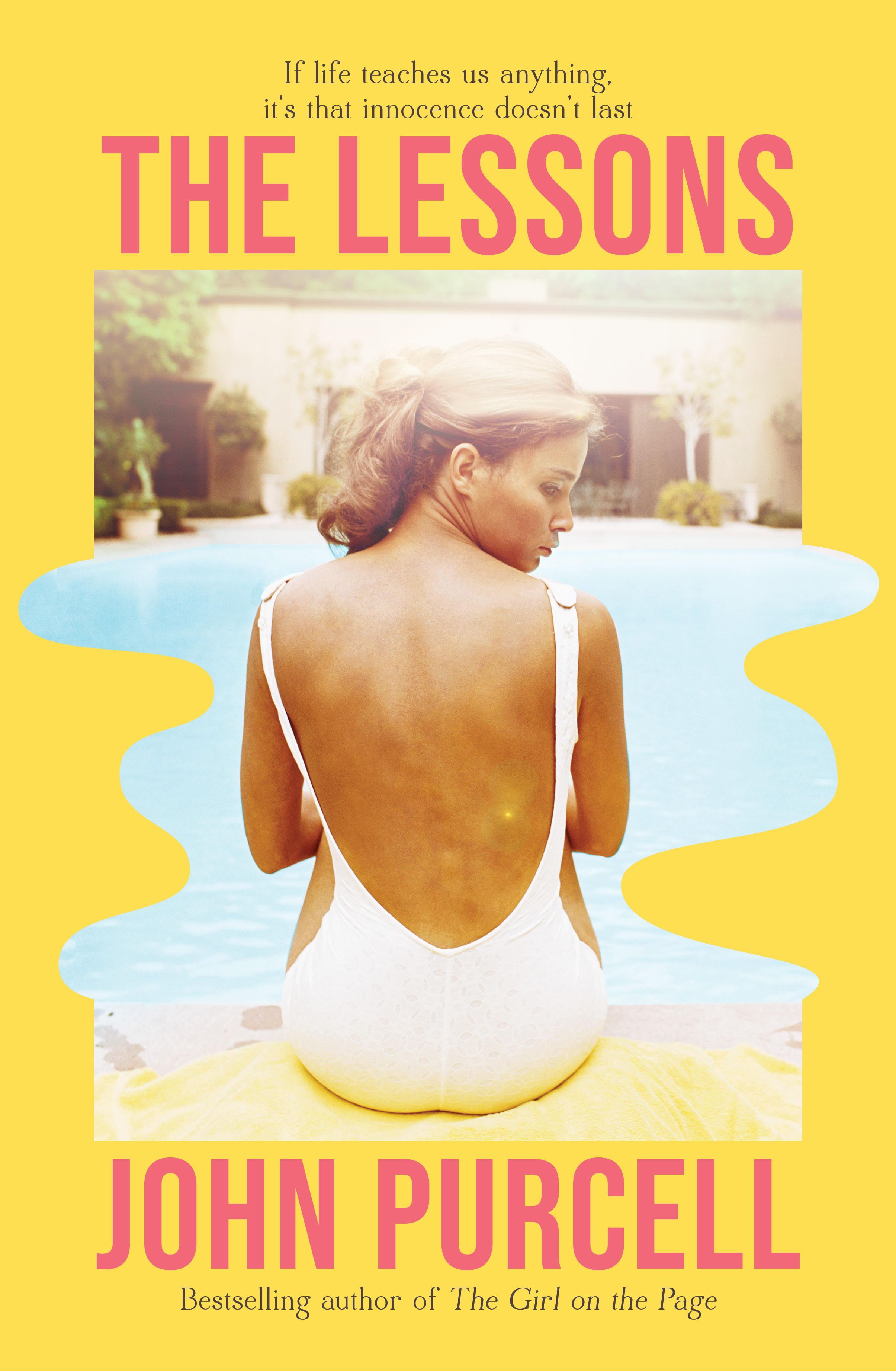
Book Review: The Lessons by John Purcell

This novel is a compelling story of a forbidden first love, class division and betrayal.

It’s 1961 when sixteen- year- old Daisy comes home from boarding school and meets young farmer, Harry. They fall deeply in love but her mother intervenes deciding that Daisy should be away from his influence and sends her to her Aunt Jane’s house unaware that the young Daisy is pregnant.

Daisy has always been convinced that her mother does not love her, and given that her mother was forced to marry Daisy’s father because she herself was pregnant at a young age gives rise to their fractious relationship.

Interspersed between the 1961’s timeline we meet Aunt Jane in 1983. She is a writer of renown on her way to a literary event in New York where she is interviewed about an earlier work exploring a coming of age novel, said to be drawn from real life.

We are privy to the point of views from Daisy, Harry and Jane which is cleverly handled to propel the story forward as Purcell explores how far a person would go for love, given numerous obstacles thrown their way.

Jane, a bohemian character in a marriage of what seems to be convenience is lost in her own relationships. Harry is a simple man who knows what he wants and that is Daisy. The interference by her mother and Jane creates a tragic outcome for the young lovers who go through life always yearning for one another.

I worried about Purcell’s handling of the female point of view particularly during a troubling event but I thought he handled it sensitively and well. The power of this novel is the characters and Purcell cleverly ensures that the reader quickly engages and cares about each one of them, even the ones who don’t behave all that well.

I really couldn’t put this one down, loved the swinging sixties, filled with lusty scenes, class differences and the final eyebrow raising reveal towards the end. Yes, check this one out.

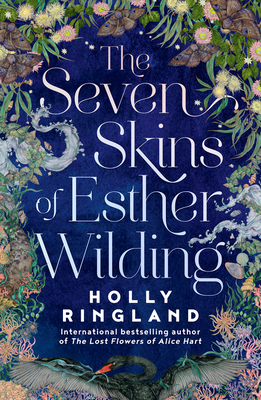
Book Review: The Seven Skins of Esther Wilding by Holly Ringland

I have mixed feelings about this book which is about love, sisters, daughters, sorrow and grief mixed with fairytales and women’s voices.

Sound like a lot? It is and it’s quite a long read.

The story opens with Esther. A swan crashes into her ute from above and she thinks it’s her missing sisters spirit. Her sister Aura last seen walking along the beach disappeared twelve months earlier and Esther has been called home for a memorial service. She has a fractious relationship with her tattooist mother Freya but together with her therapist father, Esther is asked to go to Denmark. Why? Because her sister had lived there for three years before returning home  broken and deeply sad and they believe Esther should go and find out what happened.

The plot slowly unfolds as we discover stories surrounding tattooing and how women’s stories can be told on their skin. We discover that Aura has a childhood diary where her teenage ramblings stop when she’s about to turn sixteen. It picks up again when she’s in Denmark when her studies into folklore and fairy tales brings her to write about the seven skins, lines and passages she also has tattooed on her body the meaning of which remains a mystery.

I enjoyed the imagery and the arc of Esther’s character even though she wasn’t a particularly likeable character but that wasn’t the point. Her grief and the trauma of losing her older sister, the relationships around her and her self-discovery was touching and quite moving. The other characters weren’t terribly engaging either serving little purpose than to tiptoe around Esther.

Mostly the novel centres on Esther’s point of view with occasional drifts to others and this I found to be unfulfilling because it failed to move the story along. I also found long chunks of information about each skin, her flashbacks about her sister and the fairy tale reference to be quite repetitive. Even her one night stand with Tom was repeated a few times. There was a lot of detail and description which was nice when it deserved a place but many times, I found it merely slowed the story down. Perhaps that was the intention for this slow boil of a novel but it didn’t suit me.

A minor plot issue, but given that Freya came from Denmark herself, why she as a mother would not hop on a plane to find out what happened to her own daughter did lose me a bit. I didn’t really buy her reasons but took the leap of faith and accepted it.

Having said that, there was lots about this novel I did enjoy. The idea that grief can paralyse a person, the bonds of sisters, especially an older sister’s impact on her younger sister ( I must remember that, as I am an older sister). It is beautifully written and quite lyrical but overall it didn’t quite work for me.