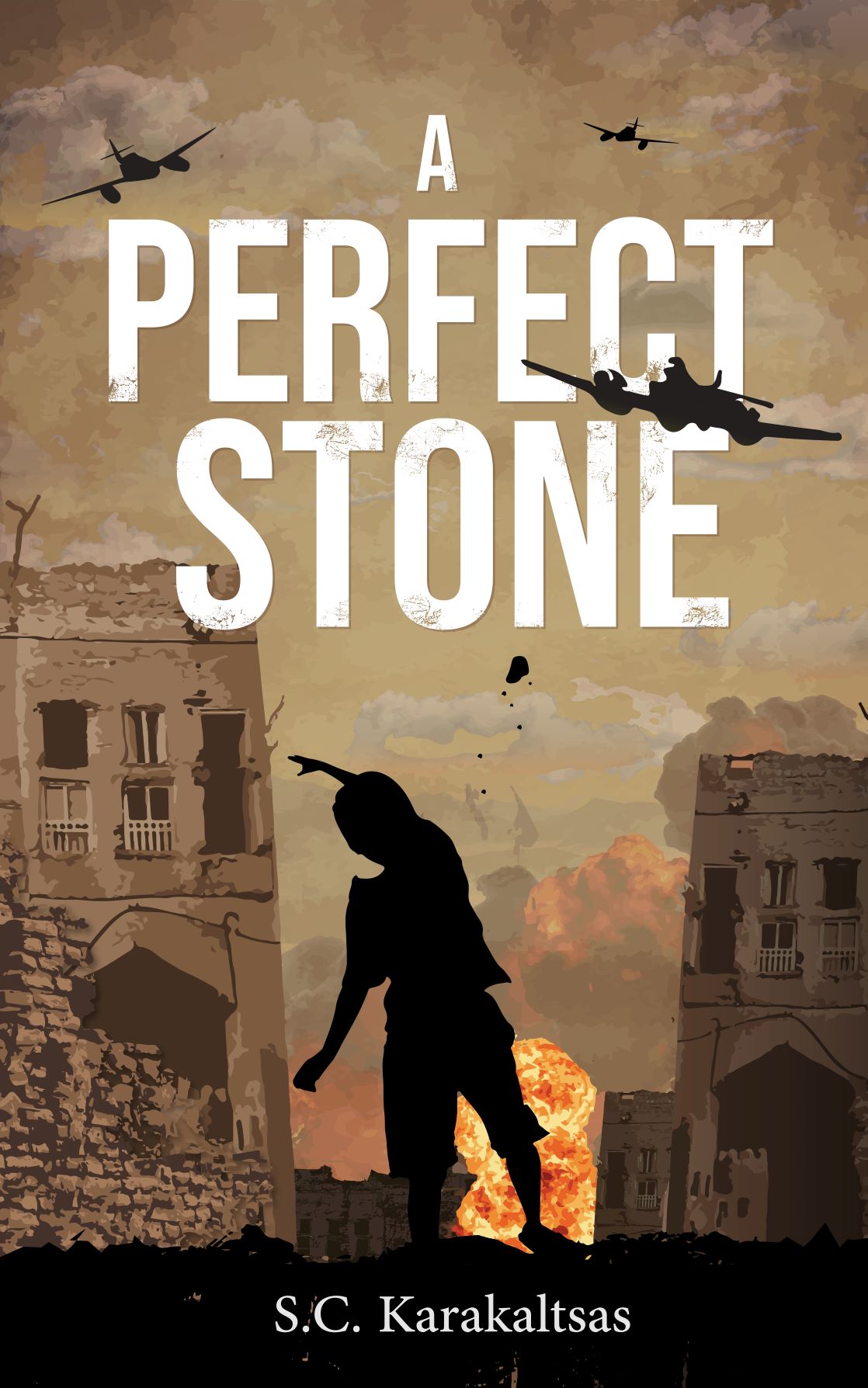
I’m very excited that A Perfect Stone was selected as one out of eight top reads about the Greek Civil War for 2020 by Book Authority. You can check out the article here : https://bookauthority.org/books/new-greek-civil-war-books
A Perfect Stone is an historical fiction story about a boy’s journey across the mountains to escape the civil war. It’s available at many online bookstores including Amazon
Tag Archives: historical fiction
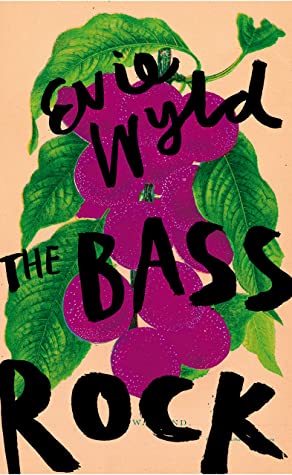
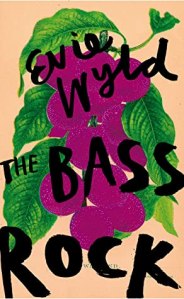
Book Review: The Bass Rock by Evie Wyld

This is a book where the reader needs to work. By that, I mean not everything is delivered to you and neatly tied up in a bow. You must concentrate and think beyond what is on the page and it’s not a book for everyone.
For a start there are three different stories in three different timelines and numerous characters and some side stories along the way. And what they all have in common is Bass Rock set in coastal Scotland.
“something about the Bass Rock was so misshapen, like the head of a dreadfully handicapped child.”
There is Sarah, a young woman in the 1700’s accused of being a witch who is on the run after being saved by a priest and his son. Then in a post-WW2 setting, there is Ruth, who marries a widow and tries to come to terms with being a young bride and stepmother to two young boys. The third story is about Vivienne in present day who grieves for her dead father and comes to Bass Rock to be caretaker of the house once lived in by Ruth.
It’s a difficult thing to do full justice to three very rich stories. For me the strongest story is around Ruth and could have stood alone or at least could have withstood sharing the pages with Vivienne. The one with Sarah was difficult for me to engage with and had little connection to the other two stories.
In Ruth’s story, the behaviour of the village townspeople, and in particular the priest is quite bizarre, yet she is made to feel the odd one out. There is a mysterious ghostly presence in the house which is felt by Ruth and Vivienne and the unravelling of this separate story is violent and difficult to read. The manipulation of Ruth by her husband is infuriating and what goes on in the boy’s boarding school is left to the reader to piece together.
“Ruth had slept badly, waking throughout the night, too hot or too cold, with the smell of the school in her nose, like thick mud and flowers left to rot in their water.”
This is a tale of murder, domestic, sexual and psychological abuse, generational trauma in a largely patriarchal setting. At times brutal, the harshness of life for the women matches the harshness of the landscape. Somehow the thread of resilience and survival binds the women in their relationships with others. For Ruth it’s with Betty the housekeeper, for Vivienne it’s with Maggie a woman she befriends and for Sarah it’s with the boy.
It’s an intricate, haunting and thought-provoking novel, beautifully written. I found myself re-reading it to make sense of some of the story and fully analyse and appreciate the characters.
Nevertheless, this one will stay with me for a quite a while.
Book Review: The Dutch House by Ann Patchett
This character driven novel broodily unpacks the drama of a family over five decades.
Right after WW2, Cyril Conroy buys a run-down mansion as surprise for his wife, Elna. With their daughter Maeve, they move into the house which is still filled with the previous family’s abandoned belongings. Elna is uncomfortable and unhappy with the ostentatiousness of her new surroundings and Cyril brings in servants to help in the mistaken belief that this will make his wife happy. Elna has a son Danny, ten years after Maeve and she continues to be restless disappearing for days when finally, when Danny is three, she inexplicably abandons her family and disappears for good.
Danny is the unreliable narrator of this story. He tries to make sense of his past as well as his present. He remembers little of his mother and his father is remote. He relies on the servants and his older sister for his care. When his father marries Andrea, two more children are brought into the house. Life becomes more difficult for Danny and his sister when it’s clear that Andrea is a reluctant step-mother. When his father dies, Andrea throws fifteen-year-old Danny and her sister out to look after themselves.
The thing about an unreliable narrator like Danny is that he is on the periphery of the family story. As an adult, he is almost clueless about the women of this family, including his wife, struggling to understand how they think and why. Yet his clingy possessiveness of his sister (mother substitute) affects him for life.
Is your childhood home as central to who you are? In this case it’s pivotal. The Dutch House is a symbol for what was good and bad in the brother and sisters’ lives.
I found it interesting that Danny wanted so much to be like his father. A father who became rich without his wife knowing, who bought her The Dutch House as a romantic and generous gesture not knowing his wife hated it.
‘God’s truth,’ Maeve said. ‘Our father was a man who had never met his own wife.’
Danny falls into the trap himself with his own wife and history repeats itself except that he eventually comes to realise it. His reliance on his sister was interesting and almost stifling. And although we learn a lot about Maeve through his eyes, there’s a lot we don’t know. We never know if Maeve had romantic interests or friends and I wonder if the closeness Danny had for her was not as close as it could have been.
The same can be said of the step-mother painted as evil and money hungry who loved the house, yet she is as mysterious to brother and sister and reader alike.
It’s a modern-day Cinderella story up to a point and the love between the siblings is intense and tender. I love Patchett’s writing style, easy to read, yet beautifully crafted. It’s a slow burn of a story, so take your time and enjoy it.
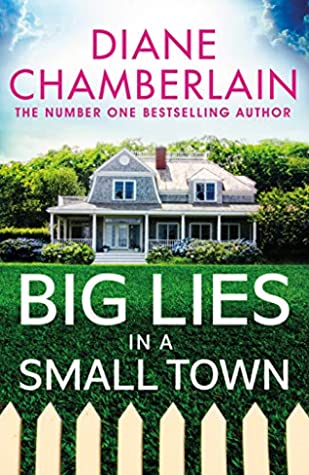
Book Review: Big Lies in a Small Town by Diane Chamberlain
The town of Edenton, North Carolina is front and centre of this dual timeline novel and what a surprisingly gripping historical mystery it is.
Morgan Christopher, once an art student is in jail for a crime she didn’t commit, when she is released on bail to restore a post office mural in time for the opening of a gallery in Edenton. She has no training on restoration and has a short deadline to complete it or she faces returning to jail. She sets to work on the mural and as she cleans and restores it, the painting reveals more than she expected.
Anna Dale, a young talented artist wins a contest in 1940 to paint the mural for the Edenton Post Office and we follow her story. Coming from the north near New York, she confronts prejudices and secrets in the small town. She disappears and so does the mural until it turns up in 2018 for Morgan to restore and the questions mount throughout the book until we reach the satisfying climactic end.
The prologue opens with three black children discovering a dead white man setting the scene for a deliciously slow unveiling. I so enjoyed this book, particularly the last half and was unable to put it down. The character development of Anna and Morgan was very well done. The two find themselves and each other with art.
Chamberlain does an amazing job with both timelines and her research into the real town and its history, good and bad, was very enlightening. Both stories are compelling and heart-breaking fully engaging the reader from start to finish.
You won’t be disappointed reading this one and I’d heartily recommend it.
Book Review: City of Girls by Elizabeth Gilbert

Nineteen-year-old Vivian Morris arrives in New York to stay with her flamboyant Aunt Peg. Her aunt owns and runs a struggling theatre and, Vivian helps out by designing and sewing the costumes for her. Vivian, naïve and in awe of her new life in New York befriends show girl Celia and together they treat the city and the men in it, as their playground. One night, a drunken Vivian makes a mistake, which results in public scandal and humiliation for her and the theatre. She is ostracised from the world she’s grown to love forcing her to reassess who she is and what kind of person she wants to be. It leads her eventually to the love of her life.
Apart from Vivian Morris and the minor characters along the way, the biggest star of this drama is New York. I loved reading about the world of theatre and show-business and Gilbert has done a masterful job in researching the era of the late 1930’s and early 1940’s, so that we, the reader feel fully immersed.
The book opens with Vivian telling her story to Angela in response to her request about what Vivian was to her father. She replies that all she can tell her is what Angela’s father meant to her. And so, her story begins. And what a story it is.
It’s an honest portrayal of glamour, sex, fashion, debauchery and decadence. The old Vivian in the story doesn’t portray herself as anything other than stupidly young, frivolous and naïve. She harks back to a time of promiscuity, unwed mothers, homosexuality and where scandal by the tabloids was as ever-present as it is today.
The narration style in first person by Vivian jarred my reading at first and it took a little while to get used to it. It’s a long read and it takes quite a while for Vivian to answer Angela’s initial question, but when she does you get why it’s so long. It was one I couldn’t put down. Enjoyable and enlightening.
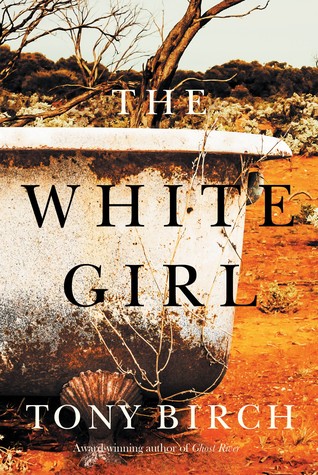
Book Review: The White Girl by Tony Birch
This is the first book I’ve read by Tony Birch and it won’t be the last.
Odette Brown is a woman who lives in shanty town in outback rural Australia in the early sixties. She looks after her grand-daughter Sissy keeping them both from the attention of the welfare authorities who systematically remove fair-skinned Aboriginal children from their families supposedly for their own good.
When Sissy turns thirteen, she comes under the notice of new policeman in town who zealously takes on the job of being the legal custodian all aboriginal children in the district. Odette leaves with her granddaughter and heads to the city with the policeman in hot pursuit.
This book, although a fictional story gives us a sense of the Aboriginal experience, one which was never taught in Australians schools or talked about in the daily newspapers.
“For years, Aboriginal people living on the mission were barred from entering town, except on Saturday mornings between eight and noon, when they were permitted to shop at the company store in the main street. “
It’s well-paced and filled with tension. It’s also a story of resilience, love, courage and hope as well as connection to and the importance of family. In the words of the author, “What I do hope for with this novel, is that the love and bravery of the tenacity and love within the hearts of those who suffered the theft of their own blood.”
It’s an easy to read and well-written book which touches on important issues of a nasty era.
Book Review: The Island of Sea Women by Lisa See

The Island of Sea Women is a fascinating novel of sorrow and grief but more importantly it’s also a novel of friendship, spirituality and the strength of women in an unusual matriarchal society.
Set on the Korean Island of Jeju, the friendship of two women Young-sook and Mi-ja stretches across time from the occupation by the Japanese until 2008. From different backgrounds, they join the Haenyeo, a collective of women, who traditionally for centuries dive and harvest sea creatures to not only feed themselves, but for sale. The men traditionally stay home and look after the children while the women come together and dive. The island is known for their Haenyeo traditions where women dive even in freezing conditions and worship a female god to protect them when they go out. At the age of fifty-five they retire and nuture baby dives in their teen years.
I thought the book started slowly as we learnt about how the friendship began and all about the matriarchy of the collective and the diving. I have to be honest, while I didn’t warm to the characters at first, I persisted and I’m so glad I did. The next two thirds was a dynamite of action, tragedy and heartbreak. The story flipped into and out of 2008 but not too often.
It’s a fascinating history and the author has done a mountain of work on her research, not just about the Haenyeo, the ancient practice of worshipping female Gods but of Korea’s past and lead up to the War. I’d never heard of this particular Island and when I finished the novel, I found myself reading more about it.
I’d recommend it thoroughly.