Tag Archives: Reading

The Month that was…May 2023

What I’m watching…

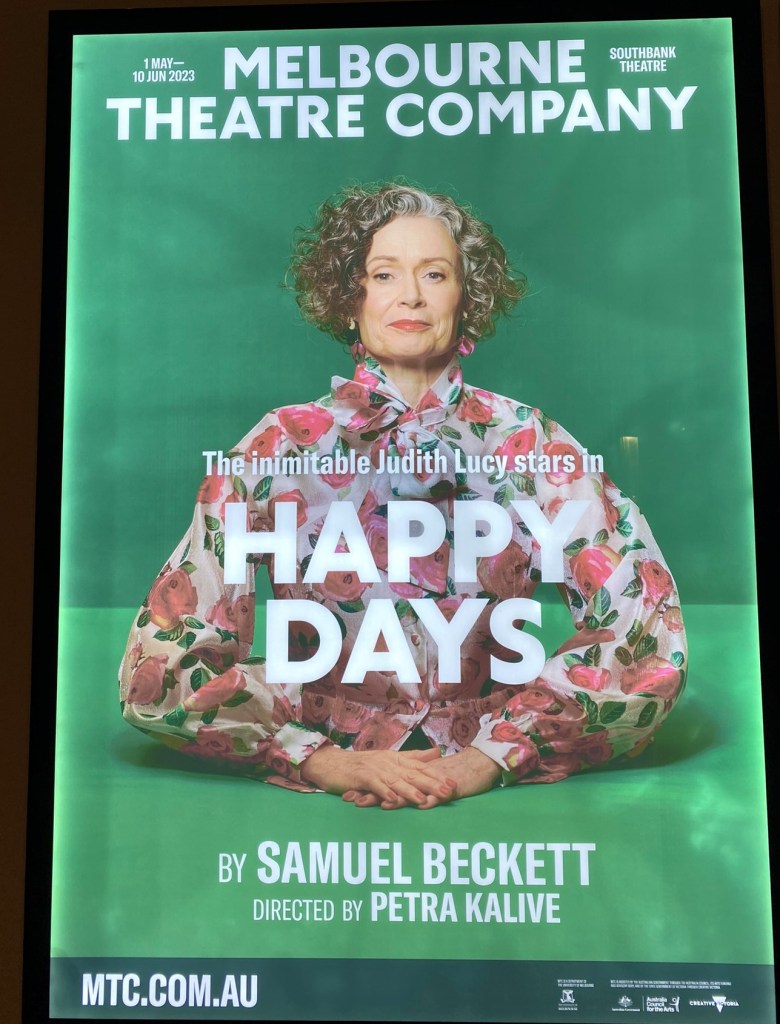
A month at home enjoying the last of the falling autumn leaves and summer’s heat. But I did manage to take in a play, Samuel Beckett’s Happy Days starring the incredible Judith Lucy. Ms Lucy, best known for her comedic abilities, shone in this virtually one woman show. The play itself left me scratching my head and required a lot of thought and analysis which enlightened with reflection. It’s on in Melbourne until June 10th.

We also took in the Monet & Friends at The Lume, Melbourne where the digital screen of art comes alive one walls and floors. It truly is an immersive and magical experience Highly recommended but hurry as I believe it ends in early June.

What I’m reading…

Watch out for my upcoming reviews but here are the ones for The Fancies and The Sea of Tranquility

Until next month…

Book Review: Sea of Tranquility by Emily St. John Mandel


Sea of Tranquility is a wonderful novel of time travel which takes the reader from Vancouver Island in 1912 to land five hundred years later on a colony on the moon. It is an imaginative delight, exploring time travel and its fragilities. It’s also science fiction at its best and I’ve just wondered why I have read so little of this genre.

The novel begins in 1912 with Englishman, Edwin St Andrew who is forced by his family to travel to Canada. He’s not particularly keen to settle in the new frontier but during a walk in a forest, he encounters a shocking phenomena of a violin playing and a swooshing sound for which he can find no explanation. 

Two centuries later, a famous writer, Olive Llewellyn hears a musician playing violin in a subway while trees emerge around him.  Her latest book is about a pandemic which resonates just a little too much given our recent history. She inserts a strange paragraph about the musician. Another three hundred years later, we meet naïve but bored, Gaspery-Jacques Roberts who lives in the dark colony on the moon. He becomes a detective who is sent on a time-travelling mission to 1912 to investigate the anomaly witnessed by Edwin.

There is a lot in this novel to keep you focussed on the timelines and the characters who are all well-developed yet complex, each with their own motivations and desires. Edwin St Andrew is a man trapped between two worlds, the old and the new, struggling to find his place. Olive Llewellyn is torn about her daughter and the changing world around her as she faces yet another pandemic.  Gaspery-Jacques Roberts is desperate to prove himself yet struggles with the moral and ethical issues around time travel.

The author creates a cohesive and believable world. The scientific and technological elements make sense adding depth to the narrative.

Overall, this is a delightful and imaginative novel that explores the complexities of time-travel and the fragility of human existence. It kept me hooked until the very satisfactory and surprising end. I really enjoyed this short action packed novel.

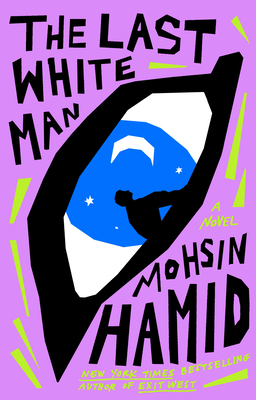
Book Review: The Last White Man  by Mohsin Hamid

This is a story about Anders, a white man who wakes one morning to find his skin has turned dark and when he looks into the mirror a stranger’s face is all he sees. Terrified he tells his new lover, Oona. Before long, there are reports coming from all over the country that this happening to other white people.

The main characters are Anders and Oona whose relationship grows as the established order of society is challenged and changes. It reminded me very much of what may have been inspired by our response. Like the pandemic, there is panic buying and fear as more and more white people change colour. Suspicion, resistance and racist vigilantes, riots and violence ensue.

There is also the voice of another generation in Ander’s father and Oona’s mother. The relationship Anders has with his father is tender and illuminating. Oona’s mother resists and fights, clinging to her conservative views until the end.

The writing is quite different, in very long paragraphs, punctuated only by commas. The following excerpt is an example which goes for almost a page.

“”When Anders got back in his car it occurred to him that the three people he had seen were all white, and that he was perhaps being paranoid, inventing meaning out of details that might not matter, and at a traffic light he confronted his gaze in the rear-view mirror, looked for the whiteness there, for it must be somewhere, maybe in his expression, but he could not see it, and the more he looked the less white he seemed, as though looking for his whiteness was the opposite of whiteness… “

Reading this novel with paragraphs so long made me almost hold my breath, as tension and change escalates. But it’s not all doom and gloom as Hamid shows us what society can do and perhaps it is a way of giving us hope for the adaptability or even a metamorphosis of humans into a better non-racist future.

It’s a short read and I’m sure will be on the awards list. I enjoyed this one.

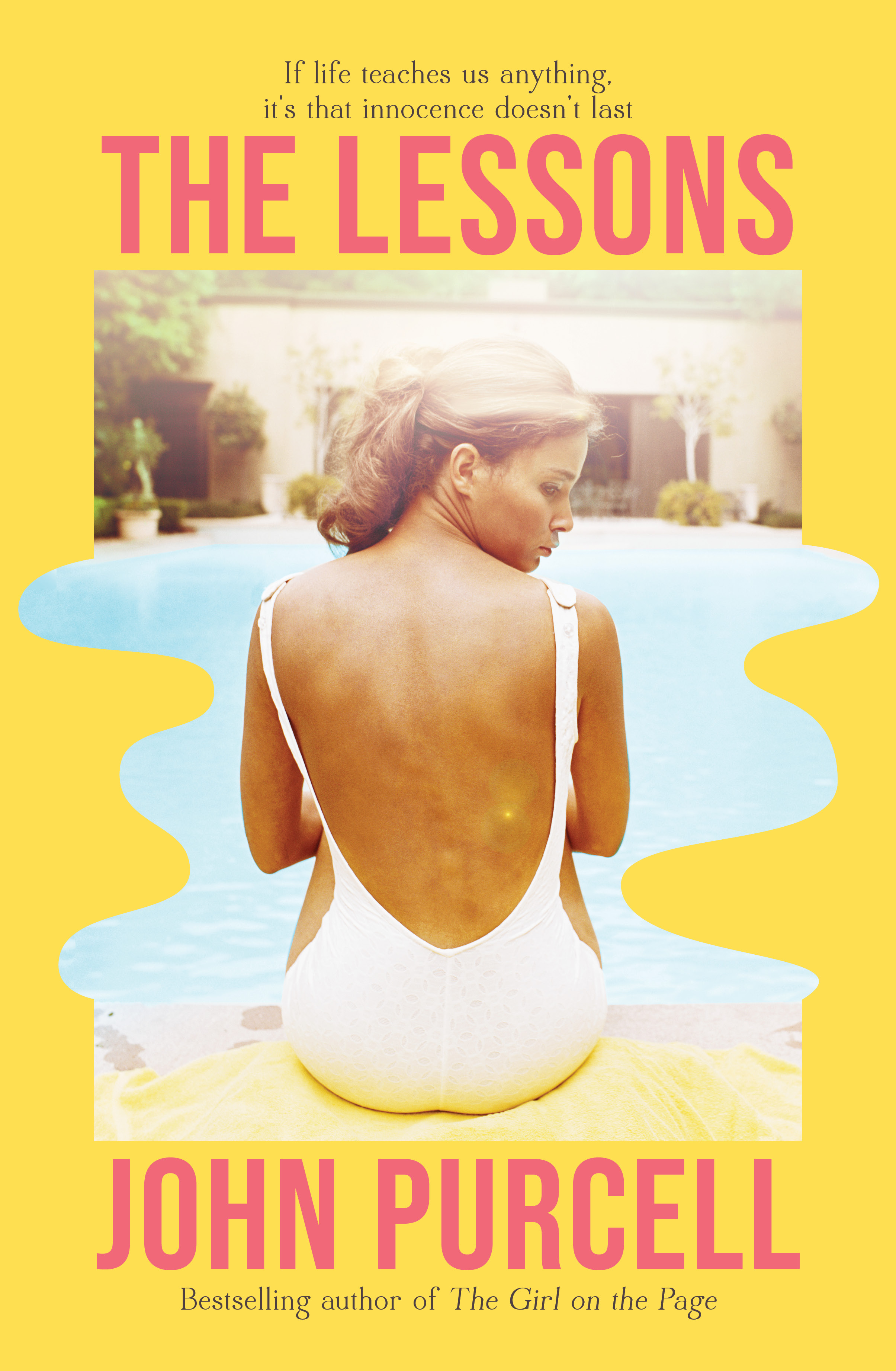
Book Review: The Lessons by John Purcell

This novel is a compelling story of a forbidden first love, class division and betrayal.

It’s 1961 when sixteen- year- old Daisy comes home from boarding school and meets young farmer, Harry. They fall deeply in love but her mother intervenes deciding that Daisy should be away from his influence and sends her to her Aunt Jane’s house unaware that the young Daisy is pregnant.

Daisy has always been convinced that her mother does not love her, and given that her mother was forced to marry Daisy’s father because she herself was pregnant at a young age gives rise to their fractious relationship.

Interspersed between the 1961’s timeline we meet Aunt Jane in 1983. She is a writer of renown on her way to a literary event in New York where she is interviewed about an earlier work exploring a coming of age novel, said to be drawn from real life.

We are privy to the point of views from Daisy, Harry and Jane which is cleverly handled to propel the story forward as Purcell explores how far a person would go for love, given numerous obstacles thrown their way.

Jane, a bohemian character in a marriage of what seems to be convenience is lost in her own relationships. Harry is a simple man who knows what he wants and that is Daisy. The interference by her mother and Jane creates a tragic outcome for the young lovers who go through life always yearning for one another.

I worried about Purcell’s handling of the female point of view particularly during a troubling event but I thought he handled it sensitively and well. The power of this novel is the characters and Purcell cleverly ensures that the reader quickly engages and cares about each one of them, even the ones who don’t behave all that well.

I really couldn’t put this one down, loved the swinging sixties, filled with lusty scenes, class differences and the final eyebrow raising reveal towards the end. Yes, check this one out.

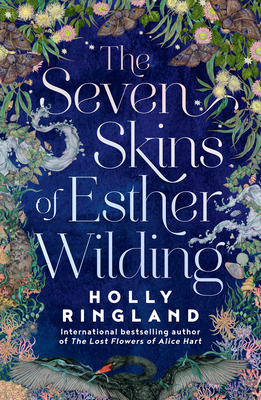
Book Review: The Seven Skins of Esther Wilding by Holly Ringland

I have mixed feelings about this book which is about love, sisters, daughters, sorrow and grief mixed with fairytales and women’s voices.

Sound like a lot? It is and it’s quite a long read.

The story opens with Esther. A swan crashes into her ute from above and she thinks it’s her missing sisters spirit. Her sister Aura last seen walking along the beach disappeared twelve months earlier and Esther has been called home for a memorial service. She has a fractious relationship with her tattooist mother Freya but together with her therapist father, Esther is asked to go to Denmark. Why? Because her sister had lived there for three years before returning home  broken and deeply sad and they believe Esther should go and find out what happened.

The plot slowly unfolds as we discover stories surrounding tattooing and how women’s stories can be told on their skin. We discover that Aura has a childhood diary where her teenage ramblings stop when she’s about to turn sixteen. It picks up again when she’s in Denmark when her studies into folklore and fairy tales brings her to write about the seven skins, lines and passages she also has tattooed on her body the meaning of which remains a mystery.

I enjoyed the imagery and the arc of Esther’s character even though she wasn’t a particularly likeable character but that wasn’t the point. Her grief and the trauma of losing her older sister, the relationships around her and her self-discovery was touching and quite moving. The other characters weren’t terribly engaging either serving little purpose than to tiptoe around Esther.

Mostly the novel centres on Esther’s point of view with occasional drifts to others and this I found to be unfulfilling because it failed to move the story along. I also found long chunks of information about each skin, her flashbacks about her sister and the fairy tale reference to be quite repetitive. Even her one night stand with Tom was repeated a few times. There was a lot of detail and description which was nice when it deserved a place but many times, I found it merely slowed the story down. Perhaps that was the intention for this slow boil of a novel but it didn’t suit me.

A minor plot issue, but given that Freya came from Denmark herself, why she as a mother would not hop on a plane to find out what happened to her own daughter did lose me a bit. I didn’t really buy her reasons but took the leap of faith and accepted it.

Having said that, there was lots about this novel I did enjoy. The idea that grief can paralyse a person, the bonds of sisters, especially an older sister’s impact on her younger sister ( I must remember that, as I am an older sister). It is beautifully written and quite lyrical but overall it didn’t quite work for me.
Book Review: The Drover’s Wife by Leah Purcell

This story is loosely based on Henry Lawson’s 1892 poem, The Drovers Wife. The author, Leah Purcell has reimagined it and focused on the bleak harshness for women and indigenous people during that time.

Molly Johnson lives in the high country in a shanty with her four children. The oldest, Danny is only twelve. Her husband, Joe never appears in the story as he is away droving. It’s just as well because when he is home, he’s drunk and violent. Molly is pregnant and isolated having only her children around her. Her life although harsh and unforgiving is challenged by the people who visit. The new policeman arrives with his wife and child having survived drowning in a flooded river. Next is Yakuda, an aboriginal man, in shackles who is wanted for allegedly killing a family.

The story plunges the reader into anxiety for Molly, her children and her survival as well as for Yakuda. But you can’t help but admire their gutsy determination for a better life as their relationship grows.

But this is not a story with a happy ending, so prepare yourself. The switch on occasion from third person to first person can be off putting but the story is a powerful one giving the reader a very unromanticised version of early Australia, a place of violence where women and the indigenous are little more than indentured slaves with few rights or voice or place.

The story has been made into a play where it first was brought to life and is now also a movie released in 2021 starring Purcell herself. I must now find it and watch it. And if you can check this one out.

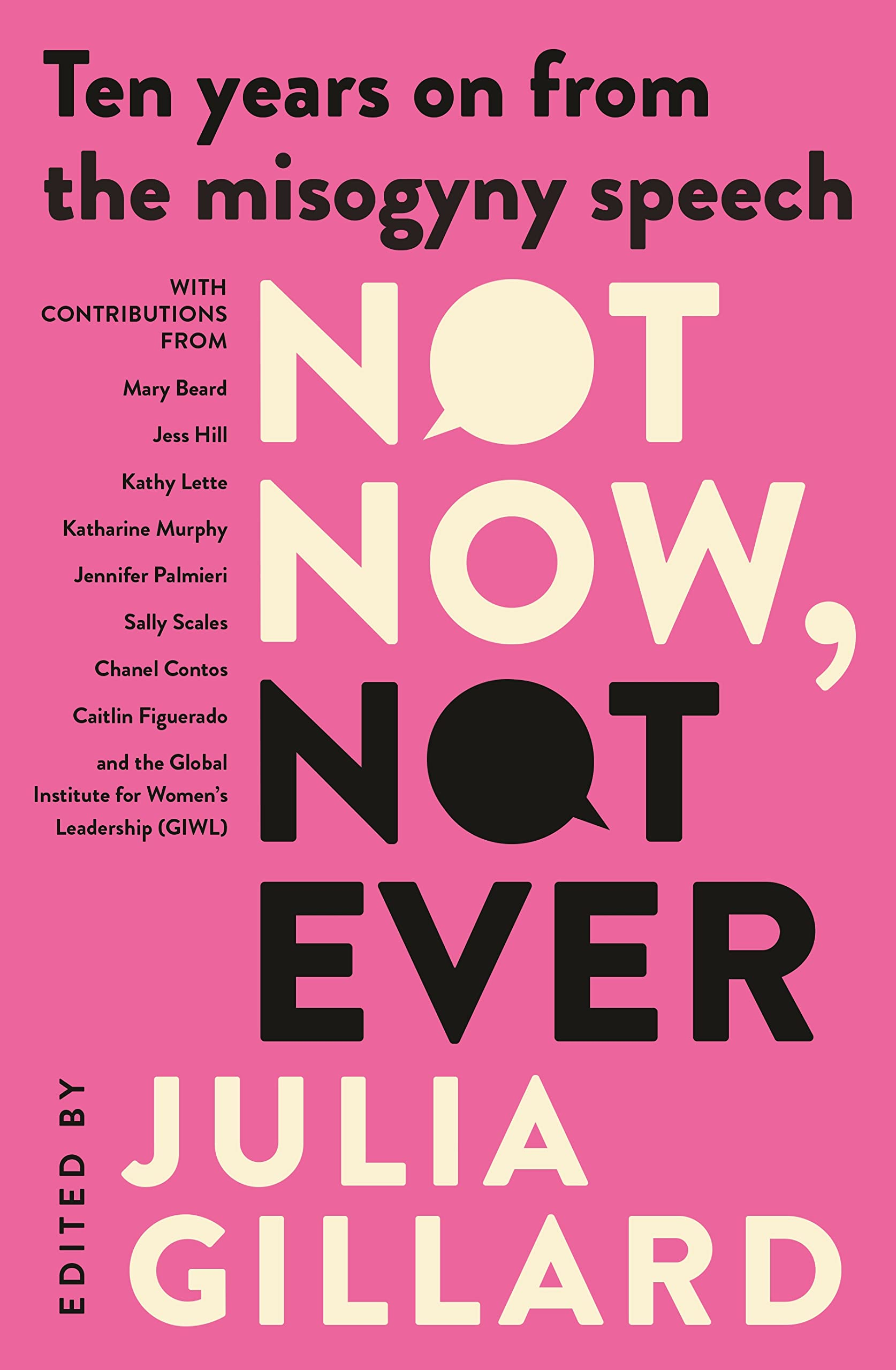
Book Review: Not Now, Not Ever edited by Julia Gillard

For those of you who aren’t Australian, Julia Gillard was our first female Prime Minister. She took on the role with gusto and purpose batting away every critical and nasty comment about her physical appearance to her personal relationship as an unmarried childless woman. Hurtful and devastating to any women let alone the leader of our country. Yet Julia carried on until she didn’t. That day in 2012 when she finally stood up to the Opposition Leader and his party and called him out for his sexist behaviour not just to her but to all Australian women, was a momentous one inspiring a shift if just a little that day, but which has grown and inspired many since. Indeed, it as pertinent now as it was then reminding women everywhere around the world that enough is enough.

This book is about that speech but is so much more. Julia has brought together a collection of essays from other women some of whom admitted that the speech was a wake-up call for action. Jess Hill, a young journalist was asked to investigate domestic violence and once she began digging was horrified at what she found in homes and families around the country. In Barak Obama’s administration having to deal with constant racism, the speech was used to galvanise and inspire.  In homes around Australia, it made people sit up and think and commence action.

I was in a leadership role myself at the time, working in a mainly male team having had to battle sexism which was never apparent on the surface. There were policies in place. But I do remember that year, our organisation had all male leaders undergo an intensive course on changing their attitudes and behaviours around sexism in the workplace. It was a truly incredible thing for a corporate organisation to do.

“Sexism experienced is a societal problem impacting on people’s perceptions of safety, confidence, health and wellbeing.”  More importantly sexism reinforces women’s individual and social disadvantages and if we want a fairer happier society, then the move to gender equality is urgent. Unfortunately, for most countries and in Australia this is not forecast to be reached for at least 150 years. Too late for me or my daughters.

This book is an important one to read and it is easy to follow and understand, inspiring and educating us about how sexism and misogyny affect each and every one of us. So go and get this one, learn and act. It’ll help you to understand so that we all move our society in a better, fairer direction.