Author Archives: S.C. Karakaltsas

Unknown's avatar

About S.C. Karakaltsas

I am a published author of historical fiction and short stories.

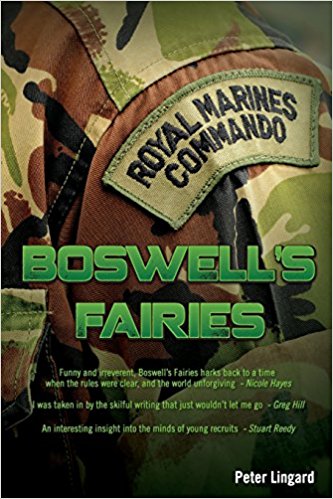
Interview: Peter Lingard, Author of Boswell’s Fairies

Instead of a book review, this week, I thought I’d chat with internationally published author, Peter Lingard who has just released his debut novel, Boswell’s Fairies – see my earlier review

I hope you enjoy it.

Peter Lingard, tell us a bit about yourself.

My life has been in phases. I went to a good school but quit at 15. I worked in a bank and found it stultifying. I served in the Royal Marines and, after leaving them, worked for a shoe importer because marine shipping was the closest thing to Royal Marines on the filing system used by the employment agency. The man that owned the company considered taking me on a good deed. It was an easy jump to freight forwarding and later my employer sent me to the US to open a new office for them at JFK airport. It took me a number of years but I eventually owned my own freight forwarding company in NY.

I yearned to travel again and returned to the UK where I worked as an accountant and a farmhand for a while. However, too many people were saddled with attitudes that soured me. (I wrote to a newspaper in Wales suggesting that if they put as much energy in their work as they do in hating the English, they be a very successful country. The responses were less than pleasant.) As Australians speak English, I thought this country might be a good place to visit, and I arrived in 2000.

You’ve just published your first novel. What is your book, Boswell’s Fairies about?

A lot of servicemen are adept at telling fantastic stories. Marines I knew swore they’d swum the widest oceans, climbed the highest mountains (not without justification – think of the Falklands war), and dated the most beautiful and willing women. I have blended these colourful lies with the story of a squad of recruits undergoing the 10 months of basic trading. The main characters are a bored banker, not too hard to image, and a pro wrestler who was fed up of having to lose every fight until someone decided he’d paid his dues.

What inspired you to write this story?
What’s the point of having a good story if you can’t tell it to people? Writing it was enjoyable. That is until one has to edit and edit and re-edit.

How long have you been a writer and what influenced you to first put pen to paper?
I was always a good joke teller and I excelled when it came to shaggy-dog stories. I could take a shaggy-dog story and make it shaggier but then sometimes forget about the punch line. While there was never a decision to start writing, I used to write things down and improve my jottings, as I did with jokes. Once I was happy with the result, I’d forget about them. In 2002, or then about, my wife suggested I join a writing group to see what others might think of my musings. The Americans have an expression that fits … run it up the flag pole and see if anyone salutes it. Well, quite a few did salute my stuff. A radio station in Queensland liked my tales but not my writing skills and the host, Charles Eeles, took the time to give me some pointers. Then I progressed from one writing group to another until I found the current bunch of writers at Phoenix Park. We are a good mix and are well advised by the facilitator, Nicole Hayes.

You’ve written more than 300 short stories, many of which have been published. How difficult was it to write a full length novel?
It wasn’t much different in some respects. Each chapter in my novel was a short story and the continuity of the plot and main characters strung the stories together. Once I’d finished the book, I did away with chapters and only had breaks for changes of location. I’m working on another book which is another a collection of stories without much connection … well, the main character is a barman in a London pub and there will be an ongoing romance, but it’s still just a bunch of stories. Shaggy dog stories.

What books have influenced you the most and what are you currently reading.
I was impressed by My Son, My Son. I can’t remember the author’s name (if anyone says that about me, they die!). Another one was, I Bought a Mountain (again no author). I found Great Expectations enjoyable, even if though I had to read it as a school project. I like books by Scott Turow and Sebastian Faulkes. Dan Jenkins is an author who influenced my style. John le Carre’s The Pidgeon Tunnel (and everything else he’s written) please me greatly. Kamila Shamsie, A God In Every Stone impressed me. What am I reading now? Scott Turow’s Personal Injuries, but I’m not into yet (at 200+ pages).

I was raised to respect books. Never bend them back (it ruins the spine), never turn down the corner of the page to mark where you’re up to, and never leave a book unfinished. I still respect the first two, but I’ve decided the third is bull, so this book better buck up soon.

If you could give advice to an aspiring writer, what would it be?
Use advice carefully. Make sure you keep your style – unless of course it’s your style that’s holding you back. Be judicial … remember the adage; people do, teachers teach.

What’s next in writing for you?
As I mentioned before, I’m writing about the life of a London barman. The working title is The Book of Dave. It’s humorous and perhaps barbed at times but readers will laugh and, if I find the right lines, they’ll be sometimes saddened. Then I have two more books featuring the main characters in Boswell’s Fairies. One covers their time in the Philippines, Singapore, Malaysia and Borneo, and the other is about their return to England to find guys have grown hair to their shoulders and girls have hiked up their dresses. I don’t have titles for those yet; perhaps Asian Tour and Swing Time? We shall see.


Boswell’s Fairies     Now available on Amazon or on http://peterlingard.com/
About the Author

Peter Lingard’s  short stories have been published over 300 times in The Literary Hachette, Blue Crow, Structo, Crack the Spine, Short and Twisted, 100 Stories for Queensland, and other such magazines. Many pieces have aired on 4RPH, Brisbane, and Radio NAG, Queensland.  Fifty-two of his stories are published by Alfie Dog in the UK. He also appeared on Southern FM’s program ‘Write Now’  and on 3CR ‘Spoken Word’ to read, recite and discuss his work and was a regular guest  on 3WBC to read his tales. Peter’s  work has garnered praise, prizes, and accolades from critics around the world including Australia, America, and the UK.
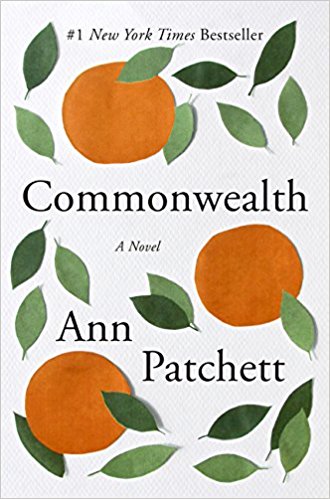


Book Review: Commonwealth by Ann Patchett

In 1964, Bert Cousins gate crashes a christening party being thrown by a colleague for his daughter, Franny Keating. Impulsively kissing his colleague’s wife, Bert’s actions set off a chain of events  intertwining both the Cousin and Keating families together for the rest of their lives.

This story takes us through the trials and tribulations of blended families and how the behaviour of  parents can have a long-lasting effect on their children.

Growing up in the ’60’s with little parental supervision was an upbringing for many of us which, in today’s world, would probably  be considered neglect. For many, there were no lasting consequences but for the blended family of six children in this novel, there is.  What happens is cleverly teased  across the story by the author.

As an adult, Franny meets a writer and releases her family’s story to him which is published years later. Instead of being a critical turning point, as we expect, this event blends itself into the narrative. The expected uproar never eventuates and we are left wondering why.

Voyeuristically, we are party to the lives of each of the family members and their relationships. And the author compels us to want to know how they turn out. I thought the climax would be the coming together of the family during a funeral, but the novel twisted further into the future leaving me wanting closure on some of the siblings such as Holly and Albie.

The author delivered characters so well that I felt I knew them. I cared what happened and wanted to be part of it. It’s not perfect, it jumps point of view on occasion, some loose ends were left, but the strength of the characters and the style of the writing is hypnotic. I really enjoyed it and am sorry it’s ended.  Check it out for yourself.

Book Review: Boswell’s Fairies by Peter Lingard

Paul Johnson, a bank officer in Manchester rebels against his father’s wishes and  joins Her Britannic Majesty’s Corps of Royal Marines at the age of 19.

It’s 1960 and Paul finds himself with a motley group of recruits whose backgrounds are in stark contrast to his own. Sergeant Boswell is assigned to lead their Squad and his first introduction leaves you in no doubt that the reader is in for a no-nonsense ride.

“Now we’ve got you, the molly-coddling is over. When I say jump, you dinna ask how high; ya just put one-hundred-and-ten per-cent into it. Like it or not, you are going to be the best squad that ever passed through recruit training. If you canna make what I deem to be the acceptable grade, I will have you put back to the next squad. Hear me well. If I canna find a legitimate reason to have you back-squadded, I will beat the living shit out of you.”

The reader winces with Paul as he quickly learns the harsh realities of life when he realises his mistake right before he receives his first punishment.

“I almost laughed. Perhaps I did laugh. It was an involuntary reaction that I immediately knew was wrong, so all that escaped me was, I thought, an inaudible hiccup. Although we were already quiet, we seemed to become instantly quieter. I saw Boswell’s eyes widen. A cloud moved in front of the sun, as if to protect it. I’m sure birds stopped singing. The fearful silence seemed palpable. Only the innocent wind could be heard blowing around us.”

Paul becomes friends with ex-wrestler, Jack Mason and together they settle into the rigors of intense training to earn the coveted Green Beret with H squad, strangely  nicknamed as Boswell’s Fairies. When not learning to be a marine, Paul and Jack  go in search of romance, learning a lot about themselves and each other as they undergo the gruelling lessons of what it is to be a man, to love and to belong.

The writing is excellent, peppered with humour as the author takes us on a journey through England of the sixties. The language is as it should be, coarse and authentic. It made me laugh, it made me smile and it made me squirm. It’s a gripping tale of what was and now can never be in today’s world. A raw and honest portrayal of life as a marine in training. A powerfully written debut novel which takes you to another place.

Highly recommended.

Book Giveaway ends in 12 hours

Historical Fiction, True Crime and Coming of Age

Goodreads Book Giveaway

Climbing the Coconut Tree by S.C. Karakaltsas

Climbing the Coconut Tree

by S.C. Karakaltsas

Giveaway ends October 21, 2017.

See the giveaway details
at Goodreads.

Enter Giveaway

https://www.goodreads.com/giveaway/widget/255112

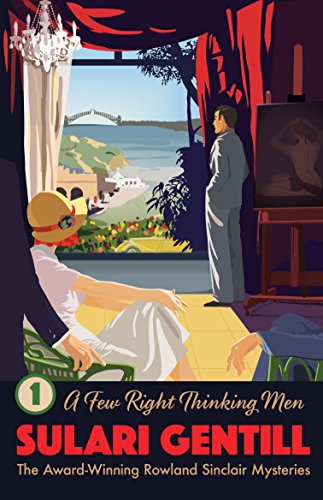
Book Review: A Few Right Thinking Men by Sulari Gentill

I met Sulari Gentill at the Emerging Writers Festival held in Melbourne in 2014 when I first commenced my own writing journey. She was on a panel and I was in awe of the amount of work she’d completed in a very short time – five books in five years. I am sorry to say it’s taken this long to read her first book in the Rowland Sinclair series and I’m certainly not disappointed.

Rowland Sinclair is a wealthy young man from a prominent family whose lifestyle as an artist, is at odds with the rest of his family. Unwittingly he becomes embroiled in the political tensions of the early 1930’s when the fear of communism fuelled right wing ideas of revolution. When Rowland’s uncle is murdered, Rowland or Rowly as he is affectionately known, throws himself headlong into danger to find the culprit.

The book starts off slowly as the setting and characters establish themselves. Then, the action and tension begin. Sulari does a great job to transport the reader to a very different time and place. I was fascinated to learn about this tumultuous period of Australia’s history and excerpts from newspapers of the time at the beginning of each chapter is a clever way to provide the reader with extra information. It’s a well written first novel and I’m keen to read more from this author – there’s seven more in the series.

My second crime novel by an Australian in a month and I’m beginning to like this genre.

Book Review: The Heat by Garry Disher

Wyatt is a smart thief with scruples who’s been around long enough to be cautious and wily. Turning down a job in Melbourne with the haphazard Pepper brothers, he instead, accepts a job in Noosa to steal a painting. He’s meticulous in his planning, holding off the charms of the local real estate agent who freelances as a crook herself. But the plan dramatically unravels as Wyatt, using his wits fights to survive.

I don’t often read crime novels and this one was told from the criminal’s point of view. This is the first book I’ve read by Australian Garry Disher. I’d not heard of him until this book was recommended to me by a friend. Although, this is the eighth in a series, it appeared not to matter that I’d not read any of the earlier novels.

The start was slow as the story and characters were set up. Then the action started and I could barely put the book down. I enjoyed the description of places I know well.  I didn’t  really warm to any of the characters – well, they are crooks after all. The fast pace of violence and suspense hooked me as I tried to figure out the double cross. Oddly, I found myself on Wyatt’s side hoping he’d get away with the crime and survive.

Overall, I enjoyed the writing style. The Heat is an enjoyable holiday read, perfect to take you away from your everyday.  I think I may now be hooked on crime novels especially by Garry Disher.

Book Review: The Mandibles by Lionel Shriver

Having read Shriver’s incredible book, “We Need to Talk about Kevin,” I was very excited to read her latest. Set in 2029, this is a story about a family whose large inheritance is wiped out when America’s economy spirals into a financial abyss. The story follows the lives of the Mandible family and how they cope with hardship along with millions of others over the next twenty years.

The daily lives of the citizens are reminiscent of a country at war – spirally prices for scarce food, lack of water and no jobs – yet the country is not at war. This might be set in the future but I can think of a number of countries where this is happening in the present day.

The authors imaginary world includes accounting chips embedded into the necks of citizens to track their income and expenditure so as to ease the Government’s collection of a 70% tax rate; robots; flexscreens which are paper thin devices of communications. There’s a wall between America and Mexico which is designed to keep the subservient Americans out of affluent Mexico.

Most of the dialogue is dominated by the family’s obsession about the economics of their country’s plight. It is so heavy handed it becomes a bore of information dumping revealing little about the characters other than their sameness. This is what lost it for me. When the story actually gets going (after about page 200), I became more engaged. The family’s difficulties and their survival is interesting. But the lack of depth of the characters left me with little empathy for any of them. After 400 pages I knew little more about them and more importantly, cared less about them than I should have. Was I enlightened with all the economic speak? Not at all. An interesting premise could have given so much if the author had concentrated more on her characters.

I was disappointed as I expected more than was delivered. But then maybe, reading about the financial ales of a country like America is not a futuristic surprise just a daily reality for much of the world.