Category Archives: Writing

How exactly do I find out more?

State Library of Victoria

State Library of Victoria

So  I knew a bit  about Ocean Island. But if I really wanted to understand what my father had experienced, I would have to read something of that time. Luckily he’d mentioned reading  the “Mid-Pacific Outposts” which had been written in 1945 by  Albert Ellis himself (see my earlier post entitled ‘ Where is Ocean Island?’ for more on him).

Surely my father had kept a copy – I searched through all of his old boxes – nothing  but old school trigonometry books – why on earth had he kept these?

I searched the internet and found it listed but not in stock. I searched bookshops for old and rare books – nothing.

Then I discovered Trove which is the brainchild of the National Library of Australia. What a site! I found articles, newspapers, books, letters, archived for viewing in many cases on-line, dating back to the 1800’s – and mostly for free. It listed the book available in my own State library. The only catch was I would have to go there – it wasn’t available to borrow.

I admit that I’d never been to this amazing place in the centre of Melbourne. Once there, I ordered the book and waited for half an hour while they brought it down from some secret spot in the bowels of the library. I  explored –  there were terminals, a newspaper room, communal desks, people everywhere and books, books and books. It was a busy place. I must have looked like a country hick – mouth open in awe. In truth, I  live only a short distance away in suburbia.

Soon my book, labled with my name, was ready. It  looked and smelt like it’d been in a dark dusty dungeon. I  found a place at a communal table and opened the cover.The last time it had been taken out of its dingy hiding spot was in the fifties – a popular book, it wasn’t.

After ten minutes of reading, I was only up to page 15 – this was going to be slow.  My Ipad was in my bag – so I took photos of the pages I wanted. I glanced around but no-one bothered me or seemed the least bit concerned.

There was great information but if Mr Ellis were relying on reviews of his book today, I’m sure the feedback would not be good.

The internet has been an amazing source of information  and it continually astounds me. But there was stuff in this book that I would never have found on the internet and there are still holes in our information highway waiting to be filled.

Where is Ocean Island?

pacificislands

I began telling friends about my project. I was surprised they were interested – they wanted to know more.

“Where is Ocean Island?”
“In the middle of the Pacific,” I happily answered. But that meant nothing to anyone.
“You know, Nauru?” I said.
“Yes.”
Everyone knows about Nauru but only because of the emotional and raging debate against Australia using it to house asylum seekers.

“Well, it’s near there. About a hundred or so kilometres to the east,” I said confidentally.But I knew very little else.

I thought I’d better find out a bit more and the internet enlightened and surprised me.

I read one reference from a fellow to the question, ‘where is Ocean Island’ and he replied, “All over Australia mate.” What did he mean? I soon found out.

In the early 1900’s, Nauru had been in the hands of the Germans who mined phosphate. Albert Ellis, a young New Zealander discovered that there was tons of phosphate on nearby Ocean Island and placed a stake on behalf of the British. He negotiated with the island chiefs and paid them fifty pound a year and promised to bring in water. The islanders or Banabans ( as they were known)  thought it was a great deal considering that most of their number had been wiped out from the last long drought some years before. So at the turn of the century, mining commenced and didn’t stop until the phosphate was virtually gone in 1979. During that time, Australia managed Nauru and Ocean Island jointly with New Zealand and Britain. When the First World War broke out, the British secured Nauru from the Germans and the Australians mined it too.

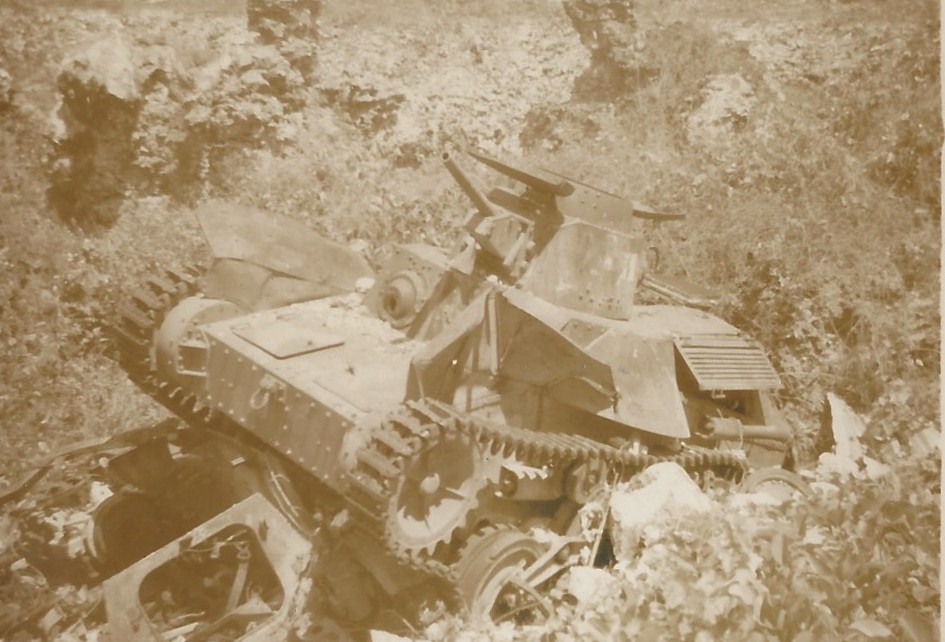
However,during the Second World War the Australians abandoned both islands when the Japanese advanced and occupied most of the Central  pacific region. The islanders were treated harshly and most of the Banabans were dispersed across the other nearby islands. Food was scarce and death was the norm at the hands of the Japanese. My father must have been touched by the site of old Japanese tanks left abandoned around the island. This is a photo he took in 1948.

Abandoned Japanese Tank left on Ocean Island ( Banaba)

Abandoned Japanese Tank left on Ocean Island ( Banaba)

Today, Banaba as it is now known, belongs to Kirabati, one of the poorest nations on earth. You can just make out the speck called Banaba near Nauru on the map above. Now largely abandoned with an ecological disaster on their hands, a small number of native Banabans try to eek out a living.  The rest of their people live on Rabi, an island bought for their relocation in 1945 – some hundreds of kilometres away in Fiji.

So what is phosphate used for? It was mined and brought back by ship and used primarily by our farmers as fertiliser.

My curiosity and excitement about this island was growing. I was drawn to the place and its history and the experience my father had in the twelve months he was there. In the back of my mind, the threads of a story was brewing.

I wasn’t a writer I told myself. I didn’t know what I was going to do or how this project was going to unfold, but I knew I had to push on.


The Box

Chinese Camphorwood Chest

Chinese Camphorwood Chest

I couldn’t wait to read more and every spare moment I typed. Thank goodness for spell check.

His letters were detailed. I could sense my father missed home but he also seemed happy which must have been a comfort to my grandmother.

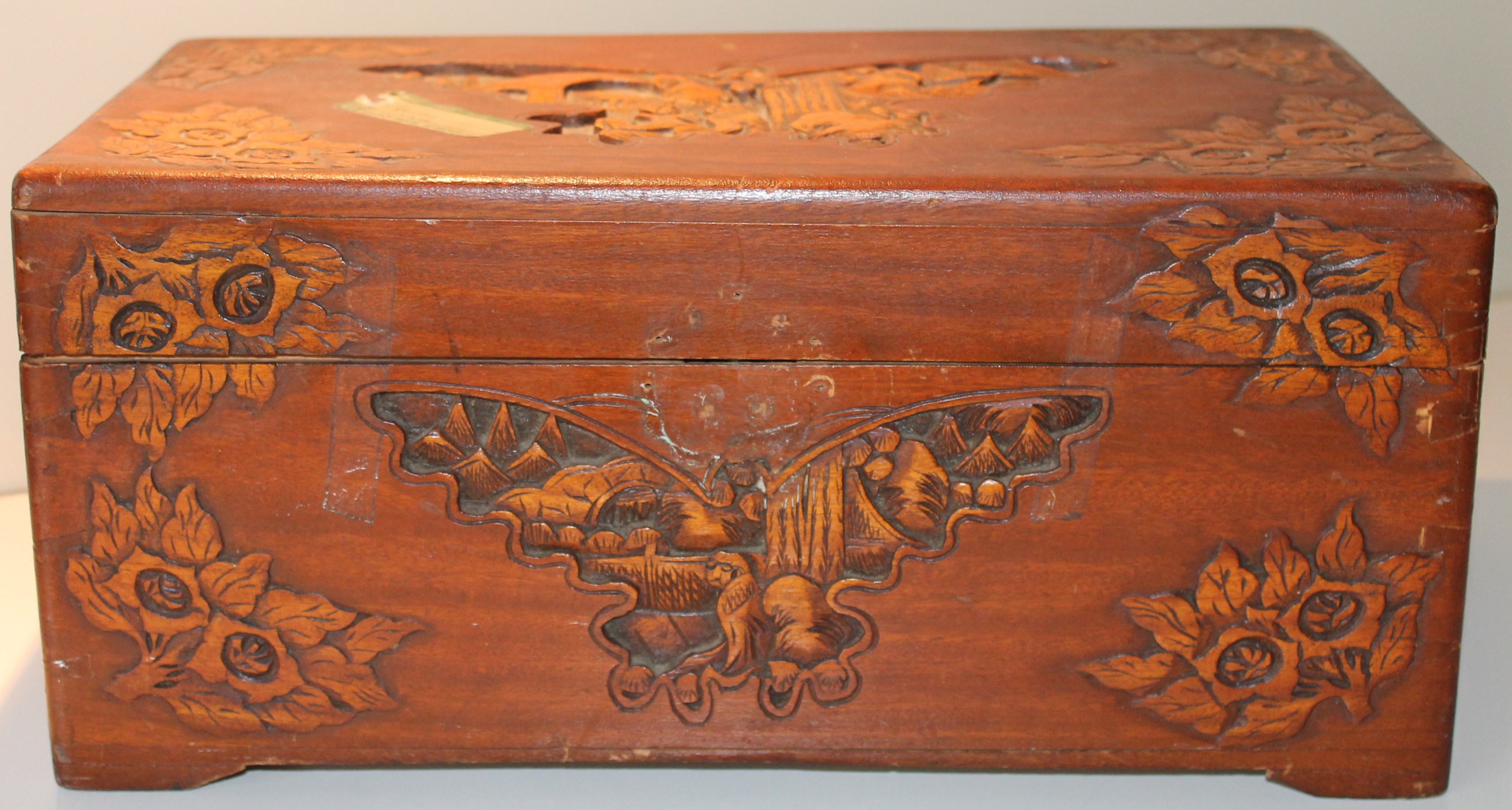
He explained proudly about the purchase of a camphorwood chest from a Chinaman. He described it in detail, the markings, the size and the cost. He had bargained for the first time and boasted at how cheap he had acquired his prize.

I looked up from my typing and glanced at my shelf. There was the camphorwood chest, holding letters and photos of a lost time.

It was the same one. I was sure of it.

A Mother’s Worry.

Pinnacles on Ocean Island

Pinnacles on Ocean Island

As a man, there are things you can write to your father that you don’t write to your mother.

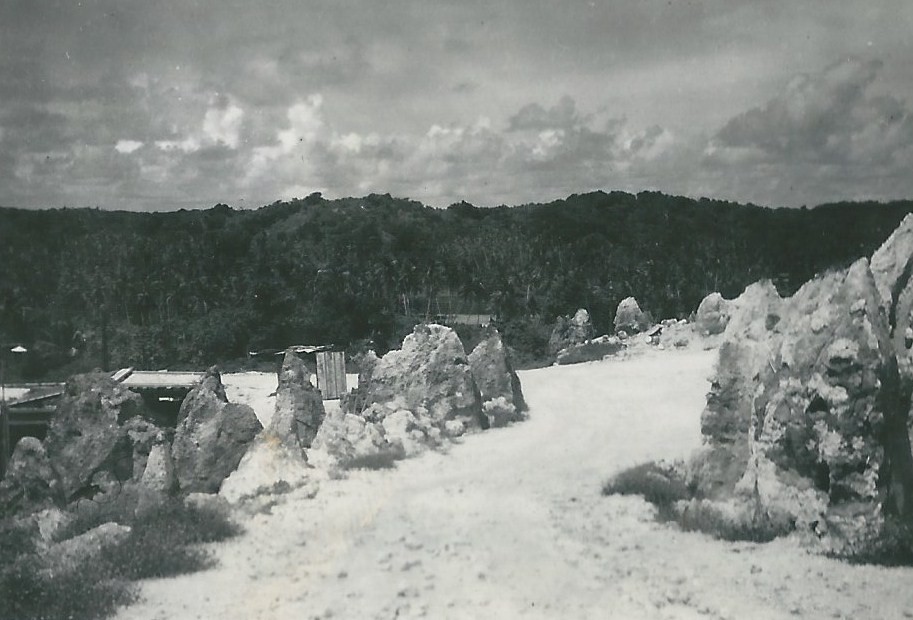
The next letter  to my grandfather was different and the tone changed.This was a man to man letter. The language was looser, less formal. He described the hardship; hacking at bush; of sweat and dirt; the mining and how it worked; of cableways; crushers, dryers and storage bins and pinnacles of phospate. It was a dry, harsh landscape and it sounded less than tropical island idyllic.

In contrast the next letter to my grandmother talked about his broken watch which he was sending back to her to organize repair. He told her of listening to the amateur hour and about his housemate. He mentioned that he’d cut his leg falling on some steps some weeks prior; that it had become infected and that he had gone to hospital for a few days. He told his mother not to panic, “The leg is quite ok now, so don’t go worrying.”

What a bombshell that must have been. She found out well after the fact.What must she have been thinking. Like most mothers she would have worried. Isn’t it built in as soon as you’ve conceived? If a child tells you not to worry, that’s when you worry. I’m surprised he confessed. But was this because there were bigger issues brewing on the island?

This was a pattern in his behaviour that I recognised. Even when he was sick and in his last days he didn’t want any fuss and tried to hide the reality of his predictament from his family.

I wondered what else he was leaving out.

What Happened to the Strikers?

Looking across Home Bay - Ocean Island 1948

Looking across Home Bay – Ocean Island 1948

Like a good book put aside, I anticipated the next revelation.

I learnt about the friends my father had made; what he ate, the cheap cigarettes he’d bought to send home and the native phrases he’d learnt. He went to dinner parties; joined the rifle club; played cricket, went to the outdoor picture theatre and attended a fatele which he described as a native dance.

I discovered that the Gilbertese natives had been sent home and replaced by Ellice natives. I wondered if this was related to the strike? “Well anyhow the latest rumor is that, since they can’t get enough Ellis labour, they’re going to recruit about 600 Chinese which will means I’ll have to learn Chinese!!”

I reviewed his earlier letters and it was the Gilbertese natives who had gone on strike to get 10 pounds a month. If you went on strike in 1948 they merely sacked and deported you. Imagine doing that today?

But then, there are more subtle and covert ways to deal with workers these days.

Turmoil

SCAN0048

It had been a few days before I could get back to the letters. I’d been emotionally drained after thinking about my father. Perhaps it was part of the grieving process –  I don’t know. I decided not to think too much – get it down – read and think later.

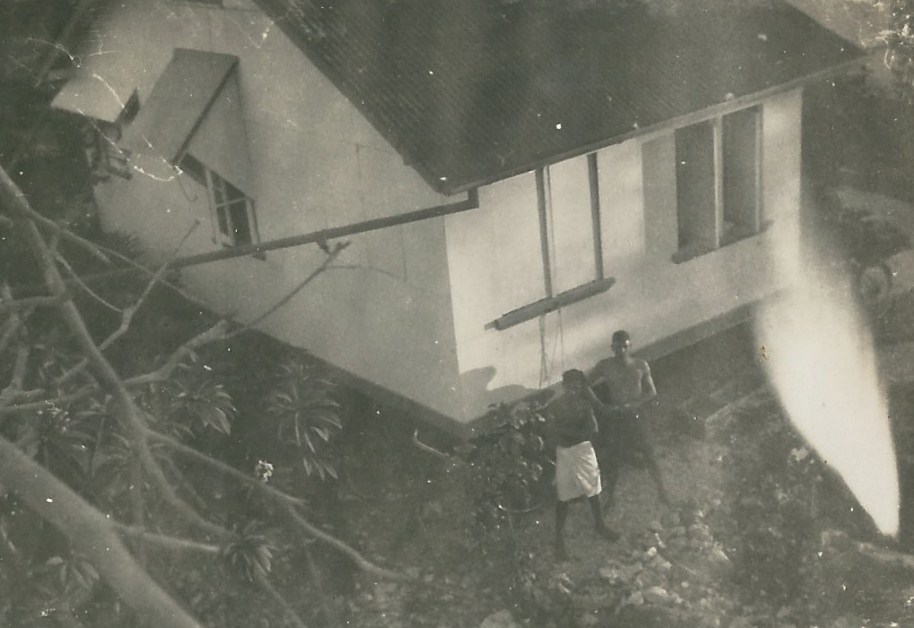
The third letter was to my grandfather – interesting. I had thought all the letters were to my grandmother. I had never known my grandfather – he had died several years before my parents had even met.The date was 30 June 1948 and my father had been away for a whole month. He had finally arrived on Ocean Island. There was a hand drawn diagram of his house and a photo of it (displayed above). Could that be him, shirtless? I wasn’t sure. There were no drones so someone must have climbed a tree to take this shot.

The next paragraph made me think this was no idyllic island paradise. He explained that the natives had gone on strike; some natives were speared; and Europeans had armed themselves with guns. I wasn’t expecting this. What had been going on? Then he talked about how hot it was, what his job was like and detailed descriptions of his meals. I re-read the part about the strikes and firearms. He was matter of fact. I tried to read between the lines; was he scared, anxious,homesick, excited? He ended the letter by advising his father to take his mother for a holiday to Brisbane to see his sister – nice touch. I’m sure alarm bells would have been ringing for his parents.

I couldn’t wait to get to the next letter, dated a week later and was frustratingly short – half a page. It mostly explained that he needed to write the letter quickly to catch the boat. There was nothing more about the strike. What was really going on that he hadn’t put into his letters? He ended it by promising to write a really long letter later that night. Lucky for me I could read his next letter in an instant. How excruciating it must have been for my grandparents to wait weeks for the next instalment. That wouldn’t work now in our age of instant gratification.

As I typed the next letter quickly, I wondered if he would update about the strike. There were descriptive passages about the weather, the people he met and his daily routine. He mentioned his boss Mr Allen, who he described as “quite a decent chap”. He joined the Rifle Club and learnt some local phrases from the natives. He seemed to be getting along well. No updates on the strike. Was he keeping that to himself so as not to worry his parents?

Here was the hard part. I wanted the letters and the story to reveal itself to me. But I knew that if I read ahead then my discipline to type it all would wane. I knew myself too well.

Getting to know my father

SCAN0004

I took a deep breath and began typing the first letter – one and half pages. There were words I couldn’t decipher. He was on the ship, “The Triona”. He talked about the Lascars – who were they? Who were the Mc Raes he saw before he left? I penned a note to ask my Aunt. She was bound to know. At 94, she was still as sharp as a tack.

I typed up the next letter ’20 June 1948’. Three weeks in and he was still on the ship. There was a diagram of his quarters and a description of the food he’d eaten. I guess he was a typical 18 year old boy who loved to eat. He wondered if his new nephew or niece had arrived. He worried about my grandfather and if he was coping with the garden without him. He was sick of being at sea.

I finished typing the second letter and pondered. It dawned on me that I was getting to know my father as a teenager. What child ever gets to do that? He was 28 when I was born and my earliest memories of him began at three. I was looking up at him, my neck craned to watch him shave off his red fluffy beard – he would have been 31. I really got to know him in his mid to late 30’s and by the time I was a teenager with a consciousness, he was already in his 40’s. By then we were already worlds apart.

What an extraordinary opportunity I’d been given to discover my father as a boy and watch him turn into a man – into the man I knew and loved. He was the man who I had adored and followed everywhere as a kid; who did no wrong in my eyes – the teacher, the larrikin, the organiser, the drinker; the fixer, the adventurer. The man,I had stood up to as a teenager, and fiercely argued with, for my own independence. The man who had been my champion; who had been proud of everything I had ever done even though I shrugged it off. The man who could fly off the handle for the smallest of things yet hated confrontations. The man, who in later years, withdrew from me and everyone else, into his own world. Had he always been like that?