Tag Archives: Book reviews

Book Review: The Lost Pages by Marija Pericic

Marija Pericic won the Vogel Prize for this stunning debut novel set in Prague in 1908. Pericic reimagines the relationship between literary giants, Max Brod and Franz Kafka.

Knowing little about either novelist, I was quickly drawn into a story full of anguish, tension and human fragility. The author veered away from the known story that Brod was asked by his friend Kafka, on his death bed to destroy all of his unpublished work. Instead, Brod publishes it making sure that posthumously, Kafka is revered and honoured into the future.

What happens though, if history is rewritten? What if Brod, a tortured man with physical disabilities is filled with self-doubt and actually loathes Kafka as his rival? What if Brod falls in love with a girl who loves Kafka? It makes for a compelling read. Does it matter that the work is fiction? It’s an interesting take on historical figures. Events are true but the rest is not.

The writing and development of characters was exquisite as we are taken into Brod’s point of view. His disability is a key theme “The tongues of those who inhabited my world were silent, but their eyes were not. Their eyes spoke, that sea of eyes through which I moved each day. They glanced and looked in secret and averted their gazes, and this looking and not-looking spoke louder than any voice of disgust, curiosity or, worst of all, pity.”

Life in Prague in the early 1900’s is rich with description and mood which changes with the deterioration of Brod’s mind. The twist at the end caught me by surprise leaving me yearning for more.
My Reading List for 2018

In my last post I listed the books I read for 2017 and chose my Book of the Year. https://sckarakaltsas.wordpress.com/2018/01/01/books-of-the-year-2017/

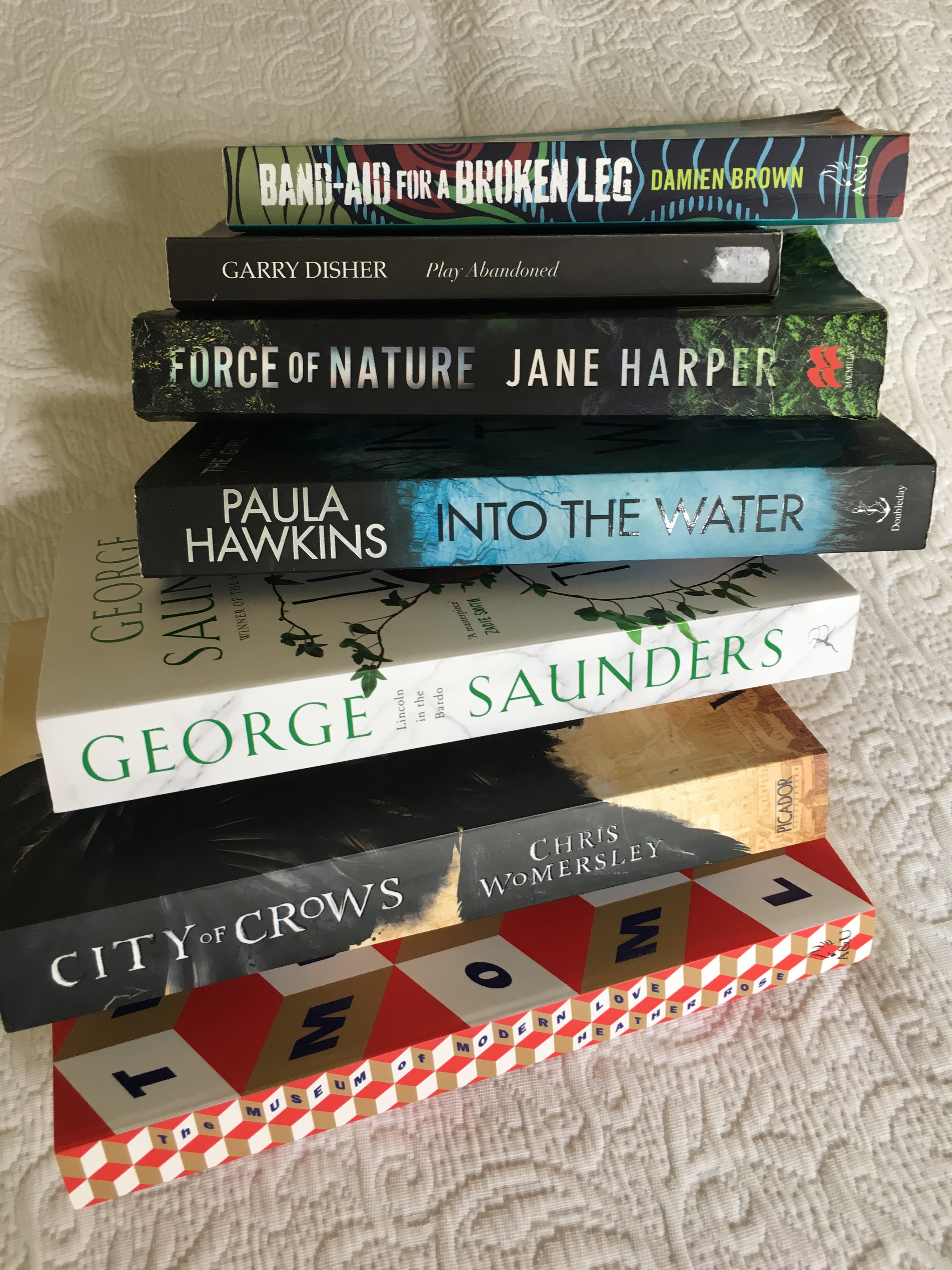
It’s time to start compiling the books I want to read in 2018. Some in my list are ones voted on by my book group, some I’ve heard about and others are recommendations.

Let’s see how many I actually get through.

Here goes -:
1. Lincoln in the Bardo by George Saunders
2. Into the Water by Paula Hawkins
3. A Gentleman in Moscow by Amor Towles
4. Never Let Me Go by Kazuo Ishiguro
5. The Sympathizer by Viet Thanh Nguyen
6. Little Fires Everywhere by Celeste Ng
7. The Choke by Sophie Laguna
8. Force of Nature by Jane Harper
9. City of Crows by Chris Womersely
10. Our Souls of the Night by Kent Haruf
11. The Museum of Modern Love by Heather Rose
12. Band-aid for a Broken Leg by Damien Brown
13. Skylarking by Kate Mildenhall
14. Conspiracy of Lies by Kathryn Gauci
15. The Horsemen by Tim Pear
16. The Lost Pages by Marija Pericic
17. Fever Dream by Samanta Schweblin
18. Play Abandoned by Garry Disher
19. The Hate U Give by Angie Thomas
20. Eleanor Oliphant is Completely Fine by Gail Honeymoon

No doubt there will a few new releases thrown into the mix as well. If you have any recommendations, I’d love to hear about them.

Book of the Year: 2017

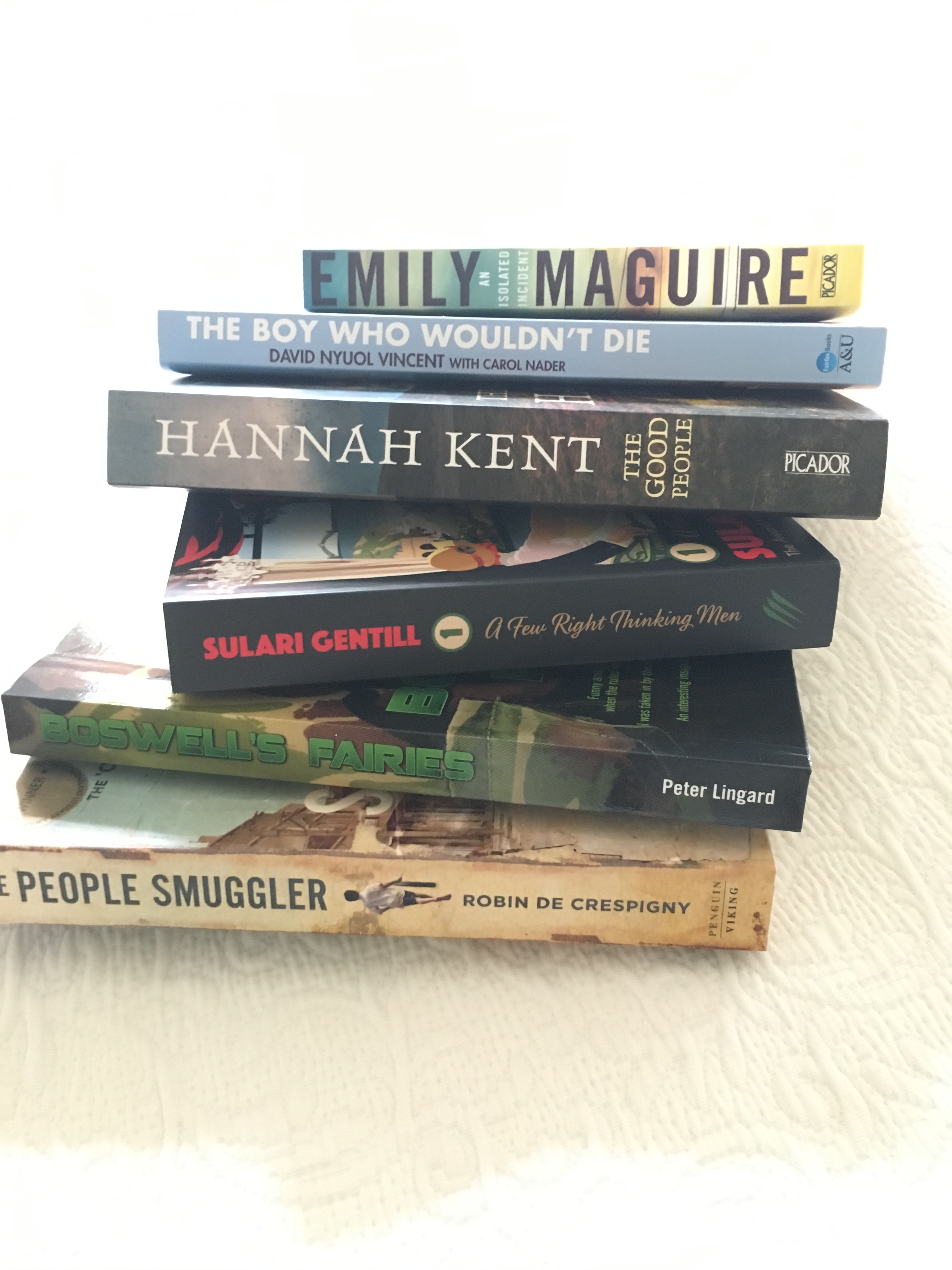
I decided at the beginning of the year to  keep track of what I read and have surprised myself with the list. I know for some readers, twenty seven books is not that many, just over 2 per month.  I guess that’s not too bad especially since I haven’t included all the books and papers I’ve read as research for the current book I’m writing.  Interestingly, my list contains 18 books by women, of which 12 happen to be Australian. My selection is skewed to Australian writers, there are 17 on the list which makes me think I should widen my choices. But there are just so many good Australian authors and if you’ve never tried one, then you should.  I’ve completed reviews on half and hope to continue this into 2018 as I become more diligent with my reading.

Here is the list for 2017.  I wonder how it compare to yours.
1. Beauty is a Wound by Eka Kurniawan *
2. Talking to My Country by Stan Grant
3. The Invention of Wings by Sue Monk Kidd
4. The Boy Who Wouldn’t Die by David Nyuol Vincent
5. By Grand Central Station I Sat Down and Wept by Elizabeth Smart *
6. A Shadow’s Breath by Nicole Hayes
7. The Good People by Hannah Kent
8. The Embroider by Kathryn Gauci
9. The Sciences of Appearances by Jacinta O’Halloran
10. The Mermaid Chair by Sue Monk Kidd
11. Eileen by Ottessa Moshefgh *
12. The People Smuggler by Robin De Crespigny
13. Reckoning by Magda Szubanski
14. North Water by Ian McGuire *
15. Everything to Live For by Turia Pitt
16. The Mandibles by Lionel Shriver *
17. The Last Days of Ava Langdon by Mark O’Flynn
18. Beauty in Thorns by Kate Forsyth
19. The Heat by Garry Disher
20. A Few Right Thinking Men by Sulari Gentill
21. Commonwealth by Ann Patchett
22. Boswell’s Fairies by Peter Lingard
23. The Noise of Time by Julian Barnes *
24. The Lakehouse by Kate Morton
25. An Isolated Incident by Emily Maguire
26. The Dry by Jane Harper
27. The High Mountains of Portugal by Yann Martel *

My top picks for 2017 are highlighted in bold. The ones with an * are my least favourite and as for the rest, I’d recommend each and every one of them. But I have to pick my book of the year, and it is pretty hard as it’s very close. But my choice would have to be  The Good People by Hannah Kent. Beautifully written, it’s a haunting story of three women in rural Ireland in the 19th Century.

On to 2018. Happy New Year everyone.


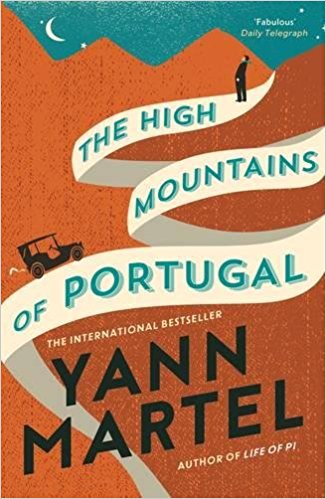
Book Review: The High Mountains of Portugal by Yann Martel

I loved Martel’s Booker Prize Winner, Life of Pi and was keen to read The High Mountains of Portugal. This is not so much a novel but three separate stories spanning a century. It begins in 1904 when a young man, Tomas goes in search of an artefact which he believes will jeopardise Christianity. Using the strange mode of transport for its time, the motor car, Martel takes us on an interesting journey. Thirty-five years later a Portuguese pathologist devoted to Agatha Christie murder mysteries finds himself in his own murder mystery. Fifty years on, a grieving Canadian goes to a village in Portugal with a chimpanzee and Tomas’s initial quest is brought full circle.

Part fable and fantasy Martel takes us on an almost spiritual journey. The detail is sometimes laborious and at other times fascinating. Try to imagine getting into a vehicle for the first time when there was none around and navigating it in first gear through gawking villagers who’ve never seen a car before. I laughed when Tomas parked the car under a tree. Later he realises that he did not know how to reverse the car and instead chopped the tree down only to be faced with a stump which he could not drive over. However, the journey, at times, becomes all most as tedious as a real life one. I found myself skipping some repetitive sections to get to the point. The second story meandered. Although the third was better.

It’s not a fast paced read and it has little in plot. Yet the themes of love and loss are delicately weaved into what is sometimes absurd surrealism. Martel writes beautifully and plays with style and ideas, but I’m afraid this wasn’t quite enough for me.

Book Review: The Dry by Jane Harper


Aaron Falk, a Federal police officer returns to his hometown in country Victoria to attend the funeral of his former childhood friend Luke, who murdered his wife and son then turned the gun on himself. Behind the scenes, lies the twenty-year-old history of the death of a teenage girl which still  haunts Aaron and the town. Luke’s grieving parents, plead with Aaron to investigate what they can’t accept as a murder-suicide and together with a local policeman, he unwinds more than he bargains for.

The tone of the novel is pure Australian small town and the author does a wonderful job of pulling us right into the pace never letting us go. It gets into your head as you wonder why Luke stopped his killing spree with his baby daughter, the only survivor. The heat and the drought are nothing new to Australians and is a supporting role in this story of survival as it climaxes toward the end. Anticipating what we think will happen next is thwarted by a twist.

Beautifully written,  the buzzing blow flies  and blast of hot air made me shudder as I read the opening pages. It’s not often that I am unable to put a book down, but with this one, I read it until I finished. I wanted to know what really happened and when you read it, you will too.

Book Review: An Isolated Incident by Emily Maguire

The novel opens in a small Australian country town with a young policeman informing Chris Rogers that her younger sister, Bella Michaels may have been found after having been reported missing. He asks Chris to identify the brutally slain body which turns out to be Bella.

Unlike so many crime novels, this is told mostly from the point of view of Chris and we feel every bit of her anguish. ‘The loss of her is already too much and then there’s the other thing – the end of being loved in the way only my sister could love me. What I feel for her survives and that hurts like battery acid every minute, but worse is that what she felt for me died with her. I will never be loved like that again. ‘

Twelve years older than Bella, our hearts break as the relationship and the intense love between Chris and her only sister is revealed. We’re introduced to Nate, Chris’s truckie ex-husband and their complicated relationship.

The crime and the police investigation is secondary to how the people who are left behind deal with the trauma of loss. The writing is superbly raw and honest and delves into themes of an ever-present feeling of violence, vulnerability and fear felt by many women particularly heightened in the aftermath of a vicious crime. About men’s violence on women, the following paragraph is the most poignant of all.

And there are men who don’t cause quite so much damage and so are all too happy to publicise the worst so they can look mild in comparison, and men who do no violence and so don’t see how it is their problem that others do, and here are men who want us to know about the bad and the worse and the negligent so that we go to them for protection and there are men … who are pure and good of heart and intent and who want only to be our friends and brothers and lovers but we have no way of telling those from the others until it’s too late and that, perhaps is the most unbearable thing of all.’

On the other side, is the media’s portrayal of a slain girl who is interesting only because she is young and pretty and the relentless pursuit for an angle at all costs. And this is where we’re put into journalist, May Norman’s point of view. We read her posts just as we would the newspaper. She too must deal with the aftermath of the murder and her job of reporting, while escaping from her own loss of love. If there is any weakness at all in this novel, it would be this character whom I found difficult to warm to.

Shortlisted for the Miles Franklin and Stella prize in 2017, this is an important novel to read, well executed and exquisitely written.

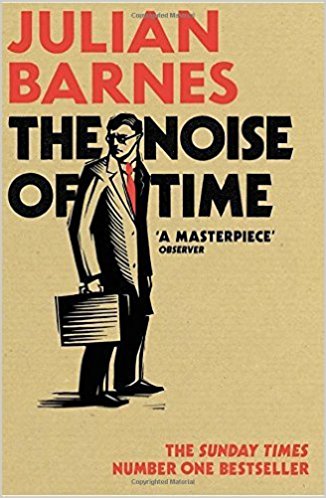
Book Review: The Noise of Time by Julian Barnes

The Noise of Time by Julian Barnes is about the life of Russian composer, Dmitri Shostakovich. You may well have heard of Shostakovich and his music. Successful in Russia, he enjoyed acclaim, until at the age of 30, he wrote an opera attended by Stalin who hated it. This was a time when millions of people were murdered by Stalin and Shostakovich fully expected to be one of them after his work, previously acclaimed was denounced in 1936.
‘Lenin found music depressing.
Stalin thought he understood and appreciated music.
Khrushchev despised music.
Which is the worst for a composer?’ thought Dmitri Shostakovich.

Surviving, he spends his life as a pawn by the State to suit their own political agenda.

In three parts which marked three different events, the author illuminates us with details of Shostakovich’s early life, his marriages, his music, his friends and enemies; and life in the Soviet Union through several decades until his death in 1975. The reader gets a sense of  Shostakovich’s insecurities, his obsessions and the constant compromise for his art in order to survive and regain a foothold into the elite when he regains popularity following Stalin’s death.

I’d never heard of the composer and have never read anything by Julian Barnes who won the Pulitzer Prize for an earlier novel called The Sense of Ending.

The novel opens with Shostakovich standing by a lift, suitcase in hand waiting to learn his fate after he is denounced. I was fascinated by the life of Shostakovich and also the Soviet Union particularly under Stalin. Unfortunately for me, that’s where the fascination stopped.

There was a lot of detail about three significant events in the composer’s life. However, it  became wooden  as this fictional biography disintegrated into an essay about the constraints of creativity in a totalitarian society and less about the feelings of the man and those around him. The author doesn’t make it easy as there’s a plethora of  unfamiliar names and places which  became confusing.  Although well written, the story meandered in the second half into a general narrative. The end reads like a biography of facts told with little emotion and could have almost qualified for a Wikipedia entry. “Two years after he joined the Party, he married again: Irina Antonovna. Her father had been victim of the Cult of Personality; she herself was brought up in an orphanage for children of enemies of the state; now worked in music publishing.”

Reading this short book did compel me to read more and listen to the composer’s music, which wasn’t to my taste.  Shostakovich led a difficult life and I’m grateful for the extra knowledge and glad I persisted.  But my advice would be to read up on the composer before you tackle this one – it might make more sense.