Category Archives: Book reviews

Book Review: The Dry by Jane Harper


Aaron Falk, a Federal police officer returns to his hometown in country Victoria to attend the funeral of his former childhood friend Luke, who murdered his wife and son then turned the gun on himself. Behind the scenes, lies the twenty-year-old history of the death of a teenage girl which still  haunts Aaron and the town. Luke’s grieving parents, plead with Aaron to investigate what they can’t accept as a murder-suicide and together with a local policeman, he unwinds more than he bargains for.

The tone of the novel is pure Australian small town and the author does a wonderful job of pulling us right into the pace never letting us go. It gets into your head as you wonder why Luke stopped his killing spree with his baby daughter, the only survivor. The heat and the drought are nothing new to Australians and is a supporting role in this story of survival as it climaxes toward the end. Anticipating what we think will happen next is thwarted by a twist.

Beautifully written,  the buzzing blow flies  and blast of hot air made me shudder as I read the opening pages. It’s not often that I am unable to put a book down, but with this one, I read it until I finished. I wanted to know what really happened and when you read it, you will too.

Book Review: An Isolated Incident by Emily Maguire

The novel opens in a small Australian country town with a young policeman informing Chris Rogers that her younger sister, Bella Michaels may have been found after having been reported missing. He asks Chris to identify the brutally slain body which turns out to be Bella.

Unlike so many crime novels, this is told mostly from the point of view of Chris and we feel every bit of her anguish. ‘The loss of her is already too much and then there’s the other thing – the end of being loved in the way only my sister could love me. What I feel for her survives and that hurts like battery acid every minute, but worse is that what she felt for me died with her. I will never be loved like that again. ‘

Twelve years older than Bella, our hearts break as the relationship and the intense love between Chris and her only sister is revealed. We’re introduced to Nate, Chris’s truckie ex-husband and their complicated relationship.

The crime and the police investigation is secondary to how the people who are left behind deal with the trauma of loss. The writing is superbly raw and honest and delves into themes of an ever-present feeling of violence, vulnerability and fear felt by many women particularly heightened in the aftermath of a vicious crime. About men’s violence on women, the following paragraph is the most poignant of all.

And there are men who don’t cause quite so much damage and so are all too happy to publicise the worst so they can look mild in comparison, and men who do no violence and so don’t see how it is their problem that others do, and here are men who want us to know about the bad and the worse and the negligent so that we go to them for protection and there are men … who are pure and good of heart and intent and who want only to be our friends and brothers and lovers but we have no way of telling those from the others until it’s too late and that, perhaps is the most unbearable thing of all.’

On the other side, is the media’s portrayal of a slain girl who is interesting only because she is young and pretty and the relentless pursuit for an angle at all costs. And this is where we’re put into journalist, May Norman’s point of view. We read her posts just as we would the newspaper. She too must deal with the aftermath of the murder and her job of reporting, while escaping from her own loss of love. If there is any weakness at all in this novel, it would be this character whom I found difficult to warm to.

Shortlisted for the Miles Franklin and Stella prize in 2017, this is an important novel to read, well executed and exquisitely written.

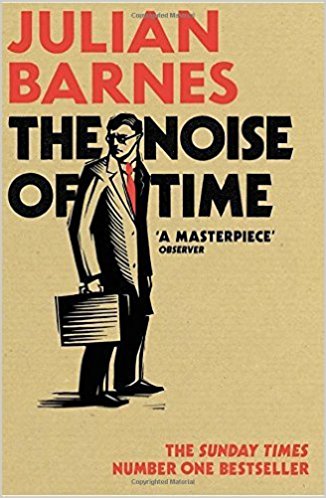
Book Review: The Noise of Time by Julian Barnes

The Noise of Time by Julian Barnes is about the life of Russian composer, Dmitri Shostakovich. You may well have heard of Shostakovich and his music. Successful in Russia, he enjoyed acclaim, until at the age of 30, he wrote an opera attended by Stalin who hated it. This was a time when millions of people were murdered by Stalin and Shostakovich fully expected to be one of them after his work, previously acclaimed was denounced in 1936.
‘Lenin found music depressing.
Stalin thought he understood and appreciated music.
Khrushchev despised music.
Which is the worst for a composer?’ thought Dmitri Shostakovich.

Surviving, he spends his life as a pawn by the State to suit their own political agenda.

In three parts which marked three different events, the author illuminates us with details of Shostakovich’s early life, his marriages, his music, his friends and enemies; and life in the Soviet Union through several decades until his death in 1975. The reader gets a sense of  Shostakovich’s insecurities, his obsessions and the constant compromise for his art in order to survive and regain a foothold into the elite when he regains popularity following Stalin’s death.

I’d never heard of the composer and have never read anything by Julian Barnes who won the Pulitzer Prize for an earlier novel called The Sense of Ending.

The novel opens with Shostakovich standing by a lift, suitcase in hand waiting to learn his fate after he is denounced. I was fascinated by the life of Shostakovich and also the Soviet Union particularly under Stalin. Unfortunately for me, that’s where the fascination stopped.

There was a lot of detail about three significant events in the composer’s life. However, it  became wooden  as this fictional biography disintegrated into an essay about the constraints of creativity in a totalitarian society and less about the feelings of the man and those around him. The author doesn’t make it easy as there’s a plethora of  unfamiliar names and places which  became confusing.  Although well written, the story meandered in the second half into a general narrative. The end reads like a biography of facts told with little emotion and could have almost qualified for a Wikipedia entry. “Two years after he joined the Party, he married again: Irina Antonovna. Her father had been victim of the Cult of Personality; she herself was brought up in an orphanage for children of enemies of the state; now worked in music publishing.”

Reading this short book did compel me to read more and listen to the composer’s music, which wasn’t to my taste.  Shostakovich led a difficult life and I’m grateful for the extra knowledge and glad I persisted.  But my advice would be to read up on the composer before you tackle this one – it might make more sense.

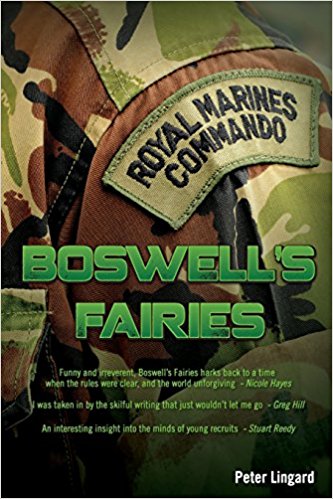
Interview: Peter Lingard, Author of Boswell’s Fairies

Instead of a book review, this week, I thought I’d chat with internationally published author, Peter Lingard who has just released his debut novel, Boswell’s Fairies – see my earlier review

I hope you enjoy it.

Peter Lingard, tell us a bit about yourself.

My life has been in phases. I went to a good school but quit at 15. I worked in a bank and found it stultifying. I served in the Royal Marines and, after leaving them, worked for a shoe importer because marine shipping was the closest thing to Royal Marines on the filing system used by the employment agency. The man that owned the company considered taking me on a good deed. It was an easy jump to freight forwarding and later my employer sent me to the US to open a new office for them at JFK airport. It took me a number of years but I eventually owned my own freight forwarding company in NY.

I yearned to travel again and returned to the UK where I worked as an accountant and a farmhand for a while. However, too many people were saddled with attitudes that soured me. (I wrote to a newspaper in Wales suggesting that if they put as much energy in their work as they do in hating the English, they be a very successful country. The responses were less than pleasant.) As Australians speak English, I thought this country might be a good place to visit, and I arrived in 2000.

You’ve just published your first novel. What is your book, Boswell’s Fairies about?

A lot of servicemen are adept at telling fantastic stories. Marines I knew swore they’d swum the widest oceans, climbed the highest mountains (not without justification – think of the Falklands war), and dated the most beautiful and willing women. I have blended these colourful lies with the story of a squad of recruits undergoing the 10 months of basic trading. The main characters are a bored banker, not too hard to image, and a pro wrestler who was fed up of having to lose every fight until someone decided he’d paid his dues.

What inspired you to write this story?
What’s the point of having a good story if you can’t tell it to people? Writing it was enjoyable. That is until one has to edit and edit and re-edit.

How long have you been a writer and what influenced you to first put pen to paper?
I was always a good joke teller and I excelled when it came to shaggy-dog stories. I could take a shaggy-dog story and make it shaggier but then sometimes forget about the punch line. While there was never a decision to start writing, I used to write things down and improve my jottings, as I did with jokes. Once I was happy with the result, I’d forget about them. In 2002, or then about, my wife suggested I join a writing group to see what others might think of my musings. The Americans have an expression that fits … run it up the flag pole and see if anyone salutes it. Well, quite a few did salute my stuff. A radio station in Queensland liked my tales but not my writing skills and the host, Charles Eeles, took the time to give me some pointers. Then I progressed from one writing group to another until I found the current bunch of writers at Phoenix Park. We are a good mix and are well advised by the facilitator, Nicole Hayes.

You’ve written more than 300 short stories, many of which have been published. How difficult was it to write a full length novel?
It wasn’t much different in some respects. Each chapter in my novel was a short story and the continuity of the plot and main characters strung the stories together. Once I’d finished the book, I did away with chapters and only had breaks for changes of location. I’m working on another book which is another a collection of stories without much connection … well, the main character is a barman in a London pub and there will be an ongoing romance, but it’s still just a bunch of stories. Shaggy dog stories.

What books have influenced you the most and what are you currently reading.
I was impressed by My Son, My Son. I can’t remember the author’s name (if anyone says that about me, they die!). Another one was, I Bought a Mountain (again no author). I found Great Expectations enjoyable, even if though I had to read it as a school project. I like books by Scott Turow and Sebastian Faulkes. Dan Jenkins is an author who influenced my style. John le Carre’s The Pidgeon Tunnel (and everything else he’s written) please me greatly. Kamila Shamsie, A God In Every Stone impressed me. What am I reading now? Scott Turow’s Personal Injuries, but I’m not into yet (at 200+ pages).

I was raised to respect books. Never bend them back (it ruins the spine), never turn down the corner of the page to mark where you’re up to, and never leave a book unfinished. I still respect the first two, but I’ve decided the third is bull, so this book better buck up soon.

If you could give advice to an aspiring writer, what would it be?
Use advice carefully. Make sure you keep your style – unless of course it’s your style that’s holding you back. Be judicial … remember the adage; people do, teachers teach.

What’s next in writing for you?
As I mentioned before, I’m writing about the life of a London barman. The working title is The Book of Dave. It’s humorous and perhaps barbed at times but readers will laugh and, if I find the right lines, they’ll be sometimes saddened. Then I have two more books featuring the main characters in Boswell’s Fairies. One covers their time in the Philippines, Singapore, Malaysia and Borneo, and the other is about their return to England to find guys have grown hair to their shoulders and girls have hiked up their dresses. I don’t have titles for those yet; perhaps Asian Tour and Swing Time? We shall see.


Boswell’s Fairies     Now available on Amazon or on http://peterlingard.com/

About the Author

Peter Lingard’s  short stories have been published over 300 times in The Literary Hachette, Blue Crow, Structo, Crack the Spine, Short and Twisted, 100 Stories for Queensland, and other such magazines. Many pieces have aired on 4RPH, Brisbane, and Radio NAG, Queensland.  Fifty-two of his stories are published by Alfie Dog in the UK. He also appeared on Southern FM’s program ‘Write Now’  and on 3CR ‘Spoken Word’ to read, recite and discuss his work and was a regular guest  on 3WBC to read his tales. Peter’s  work has garnered praise, prizes, and accolades from critics around the world including Australia, America, and the UK.


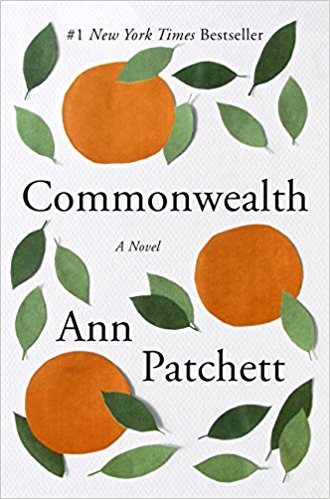
Book Review: Commonwealth by Ann Patchett

In 1964, Bert Cousins gate crashes a christening party being thrown by a colleague for his daughter, Franny Keating. Impulsively kissing his colleague’s wife, Bert’s actions set off a chain of events  intertwining both the Cousin and Keating families together for the rest of their lives.

This story takes us through the trials and tribulations of blended families and how the behaviour of  parents can have a long-lasting effect on their children.

Growing up in the ’60’s with little parental supervision was an upbringing for many of us which, in today’s world, would probably  be considered neglect. For many, there were no lasting consequences but for the blended family of six children in this novel, there is.  What happens is cleverly teased  across the story by the author.

As an adult, Franny meets a writer and releases her family’s story to him which is published years later. Instead of being a critical turning point, as we expect, this event blends itself into the narrative. The expected uproar never eventuates and we are left wondering why.

Voyeuristically, we are party to the lives of each of the family members and their relationships. And the author compels us to want to know how they turn out. I thought the climax would be the coming together of the family during a funeral, but the novel twisted further into the future leaving me wanting closure on some of the siblings such as Holly and Albie.

The author delivered characters so well that I felt I knew them. I cared what happened and wanted to be part of it. It’s not perfect, it jumps point of view on occasion, some loose ends were left, but the strength of the characters and the style of the writing is hypnotic. I really enjoyed it and am sorry it’s ended.  Check it out for yourself.

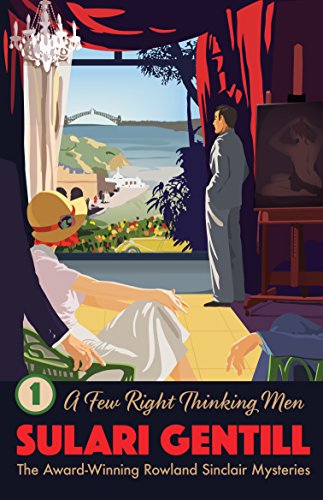
Book Review: A Few Right Thinking Men by Sulari Gentill

I met Sulari Gentill at the Emerging Writers Festival held in Melbourne in 2014 when I first commenced my own writing journey. She was on a panel and I was in awe of the amount of work she’d completed in a very short time – five books in five years. I am sorry to say it’s taken this long to read her first book in the Rowland Sinclair series and I’m certainly not disappointed.

Rowland Sinclair is a wealthy young man from a prominent family whose lifestyle as an artist, is at odds with the rest of his family. Unwittingly he becomes embroiled in the political tensions of the early 1930’s when the fear of communism fuelled right wing ideas of revolution. When Rowland’s uncle is murdered, Rowland or Rowly as he is affectionately known, throws himself headlong into danger to find the culprit.

The book starts off slowly as the setting and characters establish themselves. Then, the action and tension begin. Sulari does a great job to transport the reader to a very different time and place. I was fascinated to learn about this tumultuous period of Australia’s history and excerpts from newspapers of the time at the beginning of each chapter is a clever way to provide the reader with extra information. It’s a well written first novel and I’m keen to read more from this author – there’s seven more in the series.

My second crime novel by an Australian in a month and I’m beginning to like this genre.

Book Review: The Heat by Garry Disher

Wyatt is a smart thief with scruples who’s been around long enough to be cautious and wily. Turning down a job in Melbourne with the haphazard Pepper brothers, he instead, accepts a job in Noosa to steal a painting. He’s meticulous in his planning, holding off the charms of the local real estate agent who freelances as a crook herself. But the plan dramatically unravels as Wyatt, using his wits fights to survive.

I don’t often read crime novels and this one was told from the criminal’s point of view. This is the first book I’ve read by Australian Garry Disher. I’d not heard of him until this book was recommended to me by a friend. Although, this is the eighth in a series, it appeared not to matter that I’d not read any of the earlier novels.

The start was slow as the story and characters were set up. Then the action started and I could barely put the book down. I enjoyed the description of places I know well.  I didn’t  really warm to any of the characters – well, they are crooks after all. The fast pace of violence and suspense hooked me as I tried to figure out the double cross. Oddly, I found myself on Wyatt’s side hoping he’d get away with the crime and survive.

Overall, I enjoyed the writing style. The Heat is an enjoyable holiday read, perfect to take you away from your everyday.  I think I may now be hooked on crime novels especially by Garry Disher.