Tag Archives: australian authors

Book Review: See What I Have Done by Sarah Schmidt

It’s 4th August 1892 and Lizzie Borden discovers her father dead in the home they share in Fall River, Massachusetts. Her step mother is later discovered upstairs. Both have been brutally slain by an axe. Strangely, Lizzie and the maid, the only two at home heard nothing. This is a respectable, wealthy family and the police and neighbours speculate about who could have done it.

The story mostly covers three days; the day before the murders, the day of and the day after. Schmidt retells this true story from multiple points of view; Lizzie, her sister Emma, the maid, Bridget and a stranger, Benjamin who had been sent to have words with Mr Borden the very morning of the murders.

We quickly learn that not all is right within this family. The sisters striving for independence still remain at home and unwed. They have a tight bond with each other which borders on the obsessive. Money seems to be at the root of the unhappiness. The father is very wealthy yet the family scrimps on basics. Lizzie, although almost thirty seems to be a lost soul striving for her father’s attention and her sister’s love, almost obsessively. Yet, she suffers from a type of amnesia and can barely recollect the events of the morning of the murders. The police appear incompetent and we never really get to the bottom of it. Bridget, the maid has her own problems and is desperate to leave.

The imagery is vivid; rotting pears, decapitated pigeons, rotting mutton soup and foul smells in an upstairs bedroom will leaving you feeling nauseas. Perhaps these repetitive images are a tad overdone, but it all adds to placing us right into this fascinating and intriguing story.

The author does a great job of interpreting the facts. The weak link for me is the penultimate chapter which was from Benjamin’s’ point of view and it jarred. Benjamin comes back to see the sister’s years later and we find out about Lizzie’s arrest and acquittal although little else. Then, the very last chapter takes us to Lizzie’s point of view and back in time again. I think the book might have been better without Benjamin’s chapter.

It’s very well written and the cover is superb. The timeline of facts at the end was also very helpful. We are kept guessing right up to the end. Did Lizzie do it or not? You need to make up your own mind.

Book Review: Any Ordinary Day by Leigh Sales

I closed the last page and had to go for a walk to clear my head and take in the colour of the day. The brilliance of blue sky contrasted with the red, yellow and green of the falling leaves helped me  contemplate what was in this book. The walk brought me into the ‘now’ of savouring my own ordinary day.

Leigh Sales explores what happens to a person when they’re blindsided by a moment they never see coming. She carefully treads through her own life as a mother, wife and award winning journalist, who you think would be resilient having had to confront other people’s tragedies on a regular basis. But journalists are only human too and she readily confesses to her own blindsided moments.

People like Walter Mikac who suffered tremendously when his wife and two young daughters were gunned down; Stuart Diver, who buried under tons of earth and rubble was unable to save his wife; Juliet Darling whose husband was brutally murdered by his son; the list goes on. Sales talks to each one about their trauma and grief and what they valued most from those around them in their road to recovery.  She talks to detectives, medical personnel, families and friends to learn from them. The discussions are honest and at times raw causing Sales to examine the role of journalists and the media and in particular her own actions in the past of pursuing a story despite the cost for the person who has suffered from a trauma.

I was very interested in the role of support and what it is that gets people through. While  Sale weaves in some scientific theory with facts and figures it’s not heavy handed. It’s matter of fact and down to earth and easy to read. At times, it’s confronting but thought provoking enough for you to learn something, if not be inspired.

Historical Fiction Reading: A Perfect Stone


For those of you in Melbourne next Thursday (11 April 2019)  you’re invited to come along to the Prahran Mechanics Institute for a 6:00pm start to hear me read from A Perfect Stone. With me will be Ella Carey, International best selling author of The Things We Don’t Say, Secret Shores, From a Paris Balcony, The House by the Lake, and Paris Time Capsule.

Afterwards there will be an ‘open mic’ session where anyone is welcome to read a short passage from either their own work, or a favourite passage from another author.

I’d love to see a friendly face in the crowd. It’s free, but please do book.

Details are below-:

Event Details
5.30pm for 6.00pm start, Thursday 11 April 2019.
Prahran Mechanics Institute
39 St Edmunds Rd, Prahran.

Ticketing
Tickets (free) can be booked from Trybooking:
https://www.trybooking.com/book/event…
Everyone is invited to join us for dinner at a local restaurant at the end of the event (7.00pm).

Who are we?
Historical Novel Society Australasia (HNSA) promotes the writing of historical fiction in Australia and New Zealand. Our flagship event is our biennial conference – 25-27 October 2019, Western Sydney University Paramatta).

Local chapters exist in various cities of Australia. The Melbourne Chapter hosts a monthly lunch and an Events series – all intended to promote networking and support amongst aspiring, emerging and established writers.

For More Information:
Go to our Facebook event page: https://www.trybooking.com/eventlist/hnsamelbourne
Melbourne Chapter: https://www.facebook.com/groups/242775092782782/
HNSA: https://www.facebook.com/groups/HNSAustralasia/

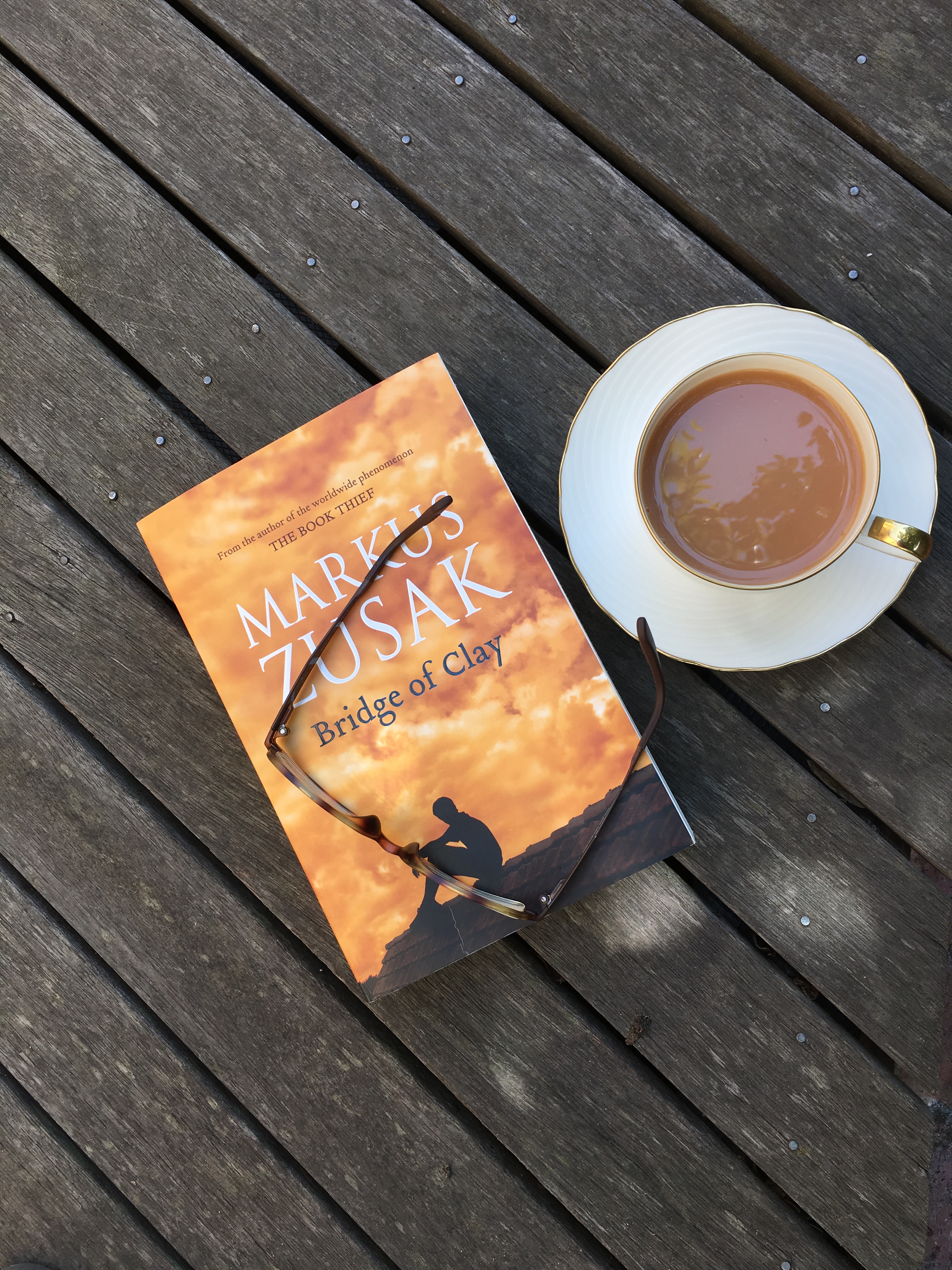
Book Review: Bridge of Clay by Markus Zusak

I held this tome of a book in my hands with trepidation at first, just because it’s a long read. Now I’ve finished it, I hold it like it’s a bible of words to be revered.

I simply loved this book.

Within the first few pages we’re introduced to the narrator, Matthew Dunbar, who, the day after getting married, is digging in someone’s backyard he doesn’t know for a typewriter he’s never seen before.

If before the beginning … was a typewriter, a dog and a snake, the beginning itself – eleven years previously – was a murderer, a mule and Clay.

And from that point we are engulfed in the story of the five Dunbar boys whose mother, Penny has died and their father has fled. The oldest is Matthew and the fourth boy is Clay who builds a bridge.

The moving family saga swaps between the present, the past and the time before and while this may be confusing at first, this is a book that commands your undivided attention and almost your every waking moment. There’s a rhythm and heartbeat to the writing, much like the metronome used by the Penny when teaching kids to read. The writing is pared back and at times almost poetic. The words are there for a reason and boy, does Markus Zusak know how to put them together.

For the longest time then, ten minutes at least, he stood at the mouth of Archer street, relieved to have finally made it, terrified to be there. The street didn’t seem to care; its breeze was close but casual, its smoky scent was untouchable. Cars stubbed out rather than parked, and the powerlines drooped from the weight of mute, hot and bothered pigeons. Around it, a city climbed and called:
Welcome back, murderer.

Each boy has his place in the family but Clay is the one they all look up to and need. The bonds of brotherhood can never be broken and their survival and hurt belongs to them all.
I loved the animals; the mule, Achilles, is a star in his own right.

This grey, patchy, ginger, light brown, thatch-faced, wide-eyed, fat nostrilled casual bastard of a mule – was standing steadfast, on the cracked lino.

And who could forget fur-shedding Hector the cat, Agamemnon, the head-butting fish and Telemachus the pigeon?

We grow to love Penny, and understand her background and the power of motherhood on her tribe of boys. Her passing is truly heartbreaking.

The reader is privy to the rough and tumble of what young boys are like, beating each other up all in preparation for what lies ahead.

They reached the sixth floor and Clay dumped Tommy sideways and tackled the mouth on his right. They landed on musty tiles, Clay half smiled, the other two laughed, and they all shrugged off the sweat. In the struggle, Clay got Henry in a headlock. He picked him up and ran him round.
‘You really need a shower, mate.’ Typical Henry … To interrupt, Tommy, thoroughly thirteen, took a running jump and brought all three of them down, arms and legs, boys and floor.

And like an onion we peel off the layers and the story reveals itself bit by bit so that by the end we know everything that’s happened and why.

I enjoyed spending time with the Dunbar boys. I worried for them, shed a tear for them, laughed with them, and didn’t want to leave them when I closed the final page. They will stay with me for a very long time.

Dive in, take your time, immerse yourself and enjoy this one.


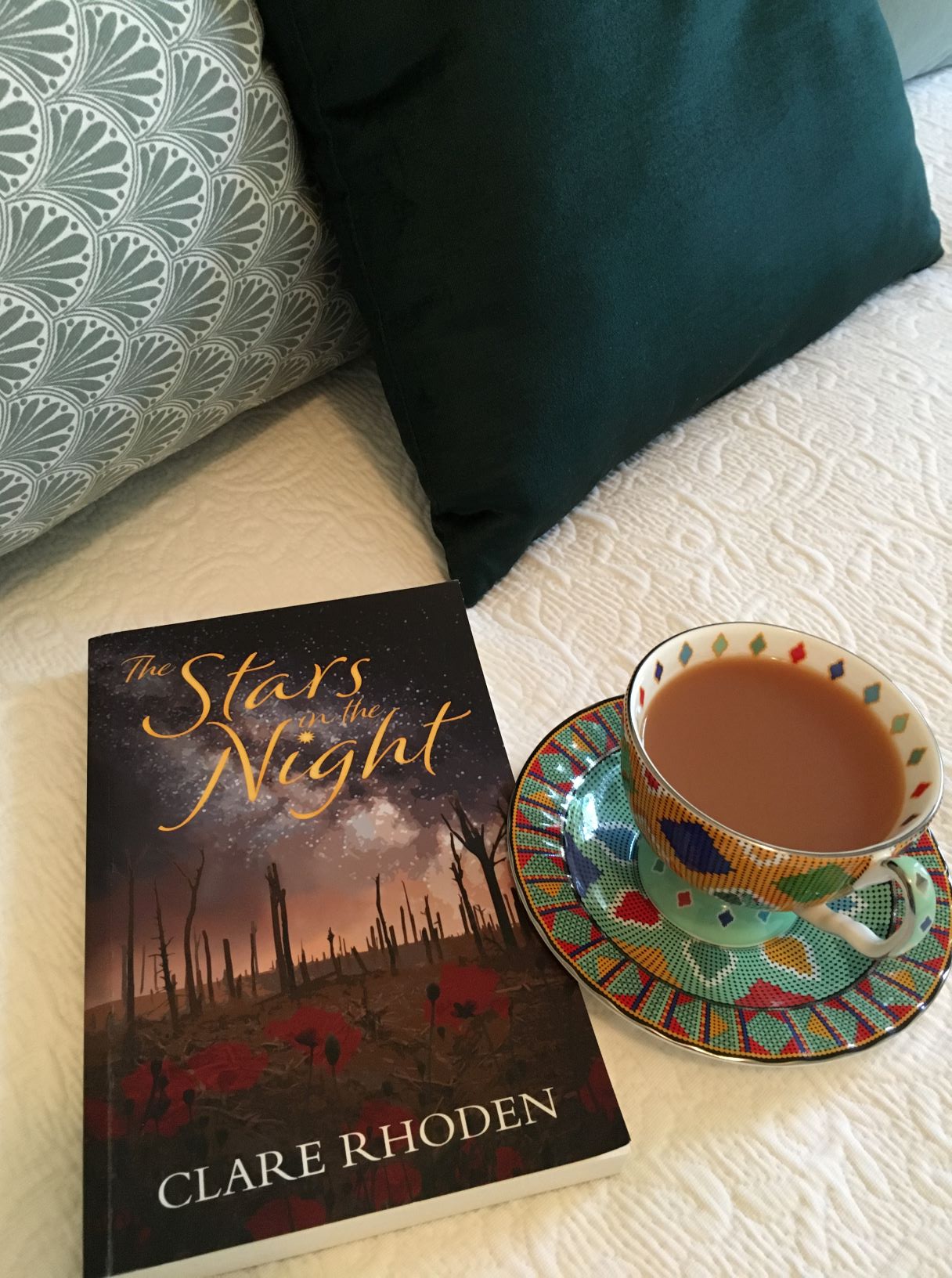
Book Review: The Stars in the Night by Clare Rhoden


Last year, I discovered letters, photos and other paraphernalia which belonged to my grandparents. There were letters from my grandfather when he fought in WW1. He spent time in Egypt and then in France where he was wounded. The Stars in the Night took my breath away as I was transported to some of the same places where my grandfather had been.

Clare Rhoden tells the story of Harry Fletcher, who with his foster brother Eddie heads off in December 1914 from Semaphore, a town in South Australia to Egypt, Gallipoli and France. He leaves behind the love of his life, Nora and despite the fact they’re from different backgrounds, his desire to come back and marry her drives him to survive.

The author artfully takes us on a journey and what a journey it is.

Through Egypt –

‘every bit of Egypt, from the vomit and crap in the ward to the bustling, slovenly, thieving damn streets, stank like damnation.’

To Gallipoli –

‘Anzac Cove had a stench, too, higher that the waste out the back of the butcher shop in January. Australian and Turkish dead lay bloating between the lines.’

To the trenches of France –

‘There was watery mud up to his chin. The trick was not to swallow any.
He stretched his right leg beneath him. The mud stirred like cold lumpy soup and he found
some sort of purchase… he drove his foot into whatever – whoever – was underneath him.’

At times it’s gut-wrenching as we’re put right into the action. The love and friendship Harry has for Eddie was touching as was the camaraderie the soldiers had for each other. War is not confined to the fight itself but lingers long afterwards into lives and future generations. And Harry’s fight, like so many others never stops.

This is a very well researched and beautifully written novel with wonderful characters. I found it difficult to put down and at times quite emotional. If you haven’t read anything about this war, then try this new release. And even if WW1 is your thing, read it anyway. You won’t be sorry.

Copy provided courtesy of Clare Rhoden Clare Rhoden webpage

Buy links

The Stars in the Night

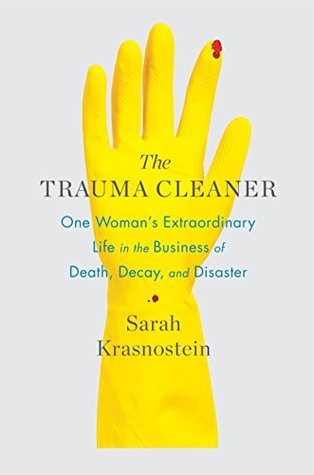
Book Review: The Trauma Cleaner: One Woman’s Extraordinary Life in the Business of Death, Decay and Disaster by Sarah Krasnostein


Last year I sat next to a bookseller on a plane from Sydney to Melbourne. Naturally, we chatted about books and when I asked her for her top recommendation, she gave me The Trauma Cleaner.

Like many others I thought this was a book about cleaning up the gruesome consequences of someone else’s mess. But this book is so much more. It’s an almost voyeuristic examination and insight into a number of people whose houses are so bad that specialist industrial cleaners are needed.

It almost seems fictionalised, surely no-one can live like that. Yet, as fantastical as it might seem, the author is clear about one thing. Nothing is exaggerated. And she should know as she went on the road to see for herself.

“As the heartwood of a tree sings to you of thousands of sunlit days and rainy hours – specific symphonies of soil and the seasons of weathering and revival that will grant you the structural strength to reach for your share of the light – the rotten core of Dorothy’s house is a whispered scream that hurtles you backwards through decades of pitch darkness.”

And so starts the chapter about Dorothy who has lived in squalor for most of her life.

We learn in detail about the owner of one such business, Sandra, the woman who was born a male and the trauma of her life and how she’s coped. Sandra has the ability to put those whose lives have been affected by trauma at ease and because of her perfectionistic tendencies is serious about leaving her clients better than she found them.

Throughout these stories about Sandra’s clients, the author skilfully opens the door on Sandra’s own life as an adopted child who was different but never accepted by her family; of her struggle for identity and love and acceptance as a transgender woman who stood up to the establishment and lived her life her own way.

This is an astonishing memoir, beautifully written. In parts we are shocked by what human beings are capable of, good and bad and the effect on others. Sandra could have made very different choices but her fight and zest for life outweighed all the other demons she carried.
This is a very different book and if it makes you uncomfortable then I think that must be a good thing. This one will stay with me for a long time.

Pic from Goodreads

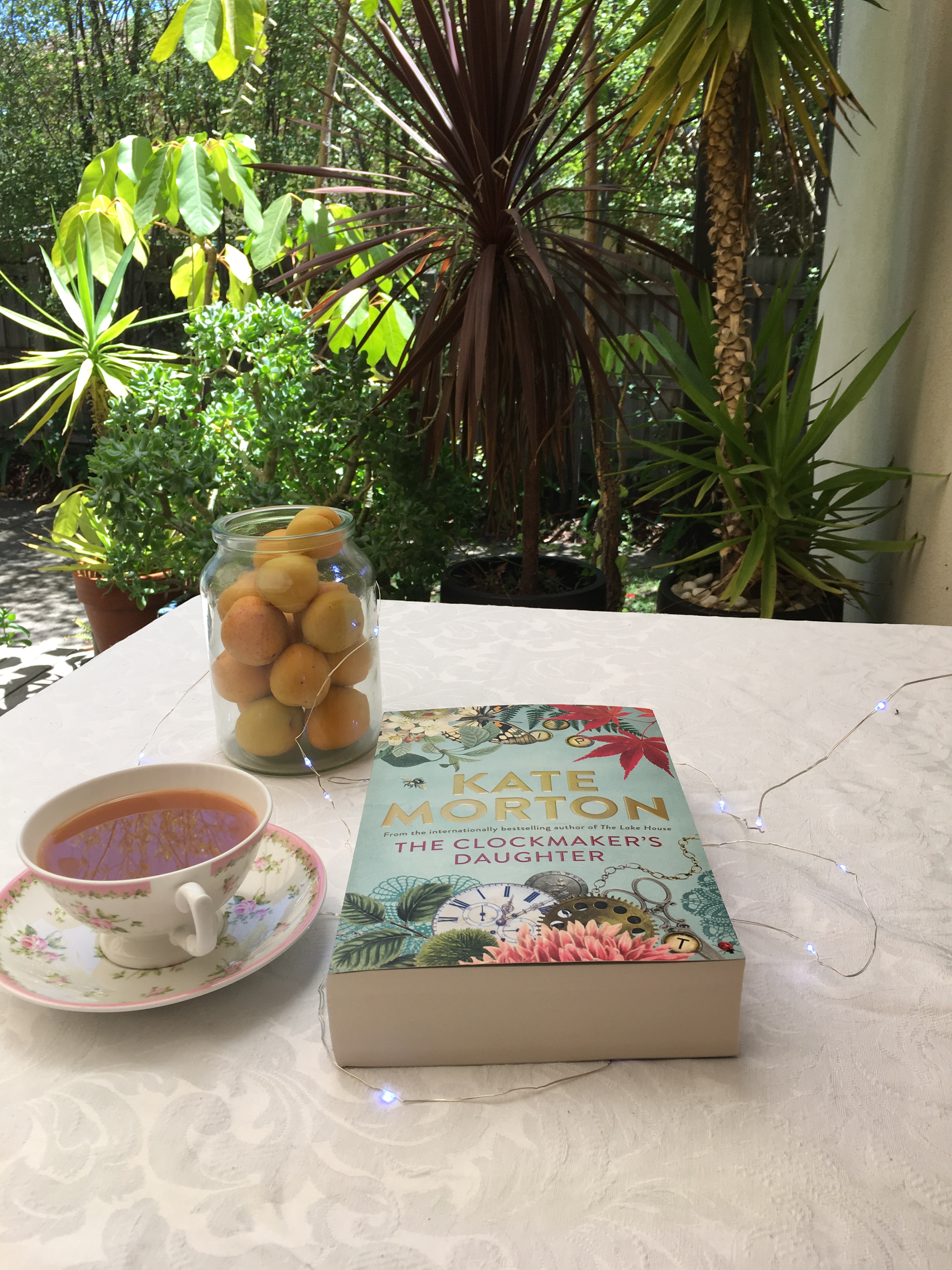
Book Review: The Clockmaker’s Daughter by Kate Morton

Like Kate Morton’s earlier novel, The Lakehouse, the star of this show is actually another old house. Everyone else are bit players in a complicated history spanning more than a century. As you can imagine, it’s not a short read, nor is it particularly easy to read for a half an hour a night as many readers might want to do. No, this requires you to concentrate and remember each timeline, each character, their backstory and how they fit into the tangled web which the author has cleverly created.

Edward Radcliffe is a wealthy artist who, with a group of other artists and models spend the summer of 1862 at Birchwood Manor. A woman is shot and another is missing and what happens there leaves scars and mystery about for generations to come. Fast forward one hundred and fifty years later and Elodie Winslow finds a sketch pad and a satchel which as an archivist peaks her yearning to know more, especially because for some reason she senses a connection.

There is a labyrinth of information and description which at times frustrated me as it slowed the story down a bit too much for me. There was so much detail, yet when it really counted towards the end there was very little.

This novel is almost like a collection of short stories weaving a thread throughout. Of course it all comes together as you would expect although the story with Elodie had too many coincidences for my liking. I wondered if telling the story from Lucy’s and Lily’s point of view might have been more impactful as well as shorter. I might be controversial but I’ll  throw it out there anyway – I didn’t really see the point to the character of Leonard and his story seemed more of a  filler to me.

Don’t get me wrong, this novel is a beautiful and evocatively written novel.

‘Edward’s portrait of Fanny, the one which she wears the green velvet dress and a heart-shaped emerald on her pale décolletage, was brought in by the Association when they started opening for tourists. It hangs on the wall of the first-floor bedroom, facing the window that overlooks the orchard and the laneway that runs towards the churchyard in the village.’

With a good edit, the story would have moved on a bit faster which is what I was after. But if you love a languorous read to take it all in slowly then you will probably really love it. For me it was enjoyable enough but not the brilliant I was expecting or hoping for.