Tag Archives: australian authors

Book Review: Islands by Peggy Frew

I loved Islands. There’s a rhythm of sadness in this beautifully written book as we are led into the lives of various characters and their points of view told in a mix of timelines. The style may not be to everyone’s taste. But my advice is to be patient and perhaps take time to read it to remember everyone.

There was a house on a hill in the city, and it was full, of us, our family, but then it began to empty. We fell out. We made a mess.
We draped ourselves in blame and disappointment and lurched around, bumping into each other. Some of us wailed and shouted; some of us barely made a sound. None of us was listening, or paying attention. And in the middle of it all you, very quietly, were gone.

The Worth family of John and Helen and their young two daughters Junie and Anna could be like any family until Helen has an affair and leaves John. The family begins to splinter slowly in the aftermath of divorce, then completely disintegrates when fifteen-year-old Anna, a troubled and rebellious teen, goes missing. Not knowing how to deal with Anna, Helen decides to give her daughter space, after all, she has taken off before. Blame and tensions arise when Helen fails to report her missing daughter for three days. The unresolved grief about Anna overhangs their lives for years to come.

The landscape is Phillip Island and the imagery is evocative. The house where John’s parents holidayed then retired to is ever-present in the memories of each of the main characters. This imagery is spot on. I know, because I spent my own late teens in a coastal town nearby where my parents owned a holiday house.


“The bald hills crowd in and let go again, and he sails down the last stretch, the flat water below reflecting a half-moon. Past the clustered darkness of the San Remo shops and over the bridge with its tall lights, empty of their daytime perching gulls.”

There are other characters, some of whom you wonder about until the end of their chapter when the connection is revealed.

It’s a remarkable book not just because of the writing but the raw emotion is so moving it stays with you for a long time. Frew’s talent is incredible and I’ll be checking out the rest of her books.

Book Review: The Ruin by Dervla McTiernan

The Ruin is McTiernan’s debut novel and what a novel it is. It’s a cracking read, fast-paced which hooks the reader in and never lets her go until the climactic end.

It begins in 1993 in Galway, Ireland when as a new recruit, Reilly is sent to a scene in a lonely broken down old house to find two abused and starved children, Maude and Jack alone with their dead mother. Twenty years later, Jack is found dead, supposedly suicide… or is it? Reilly uncovers secrets, lies, and corruption and struggles to trust anyone, most of all his own colleagues.

I confess to reading this crime series featuring Cormac Reilly a little out of sequence. The second novel The Scholar was enthralling and I scratched my head about the inclusion of Carrie O’Halloran’s character but now having read this novel, it all makes perfect sense. You can check out my review here. (https://sckarakaltsas.com/2019/05/29/book-review-the-scholar-by-dervla-mc-tiernan/)

Don’t get me wrong. The two novels are strong enough to stand on their own. But if you do read them in sequence, the nuances of the common characters become clearer.
There are two points of view, Reilly and Jack’s girlfriend, Aisling. I enjoyed all the characters which I thought were drawn well. Aisling, an ambitious doctor struggles with her grief and her scenes were particularly heartfelt. Reilly, at times, floundered and the reader felt as much on the outer as he did. I also enjoyed the inner workings and politics of the police department too. I did wonder about Reilly’s method of investigation; why didn’t he go to Maude immediately and ask her questions first, instead of going to the old next door neighbour? But what do I know? I’m not a detective.

Yes, this one is very difficult to put down and there’s lots in it. I’d definitely read another of McTiernan’s books. Check it out.

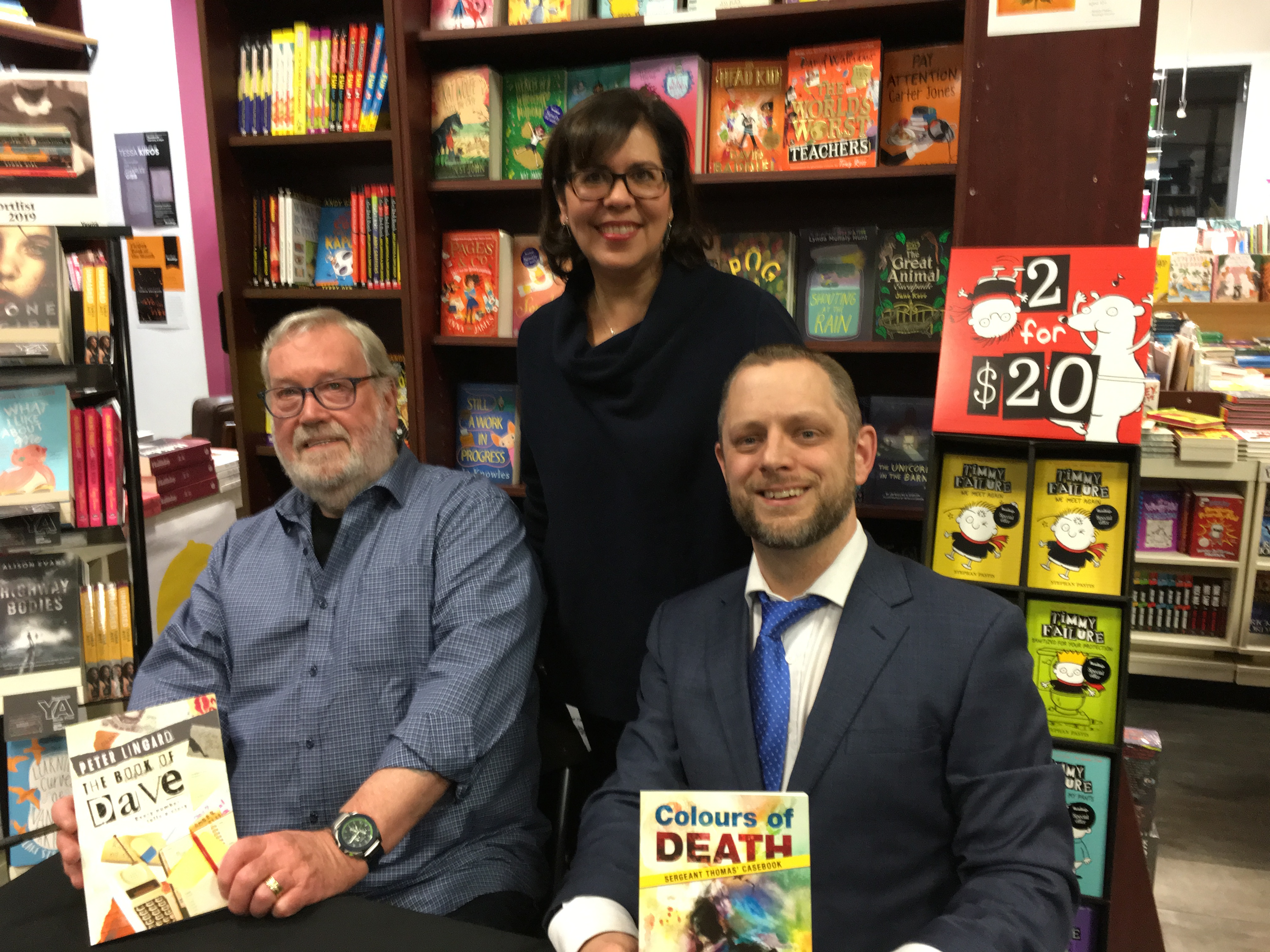
Book Launch: The Book of Dave by Peter Lingard and Colours of Death by Robert New

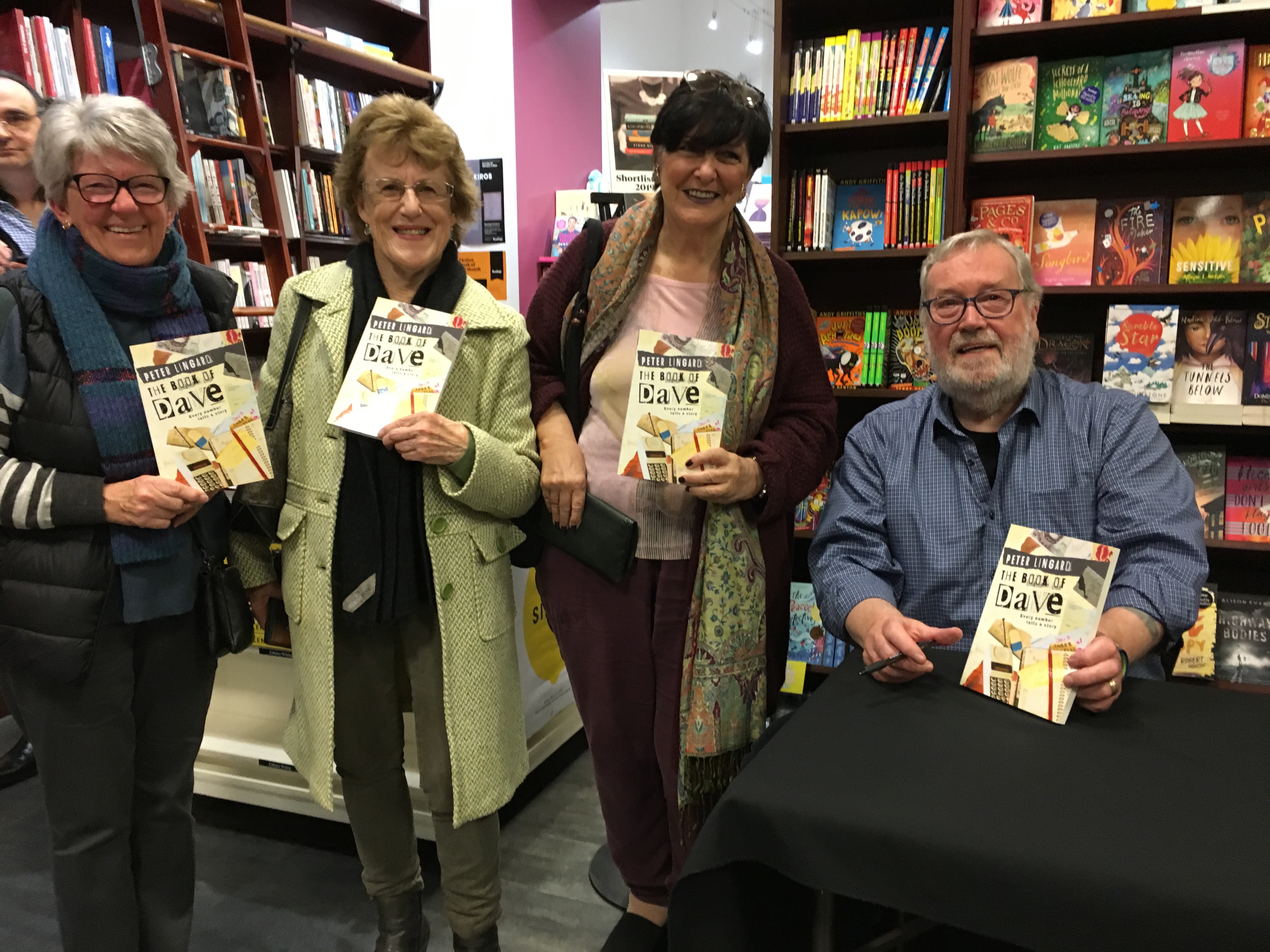
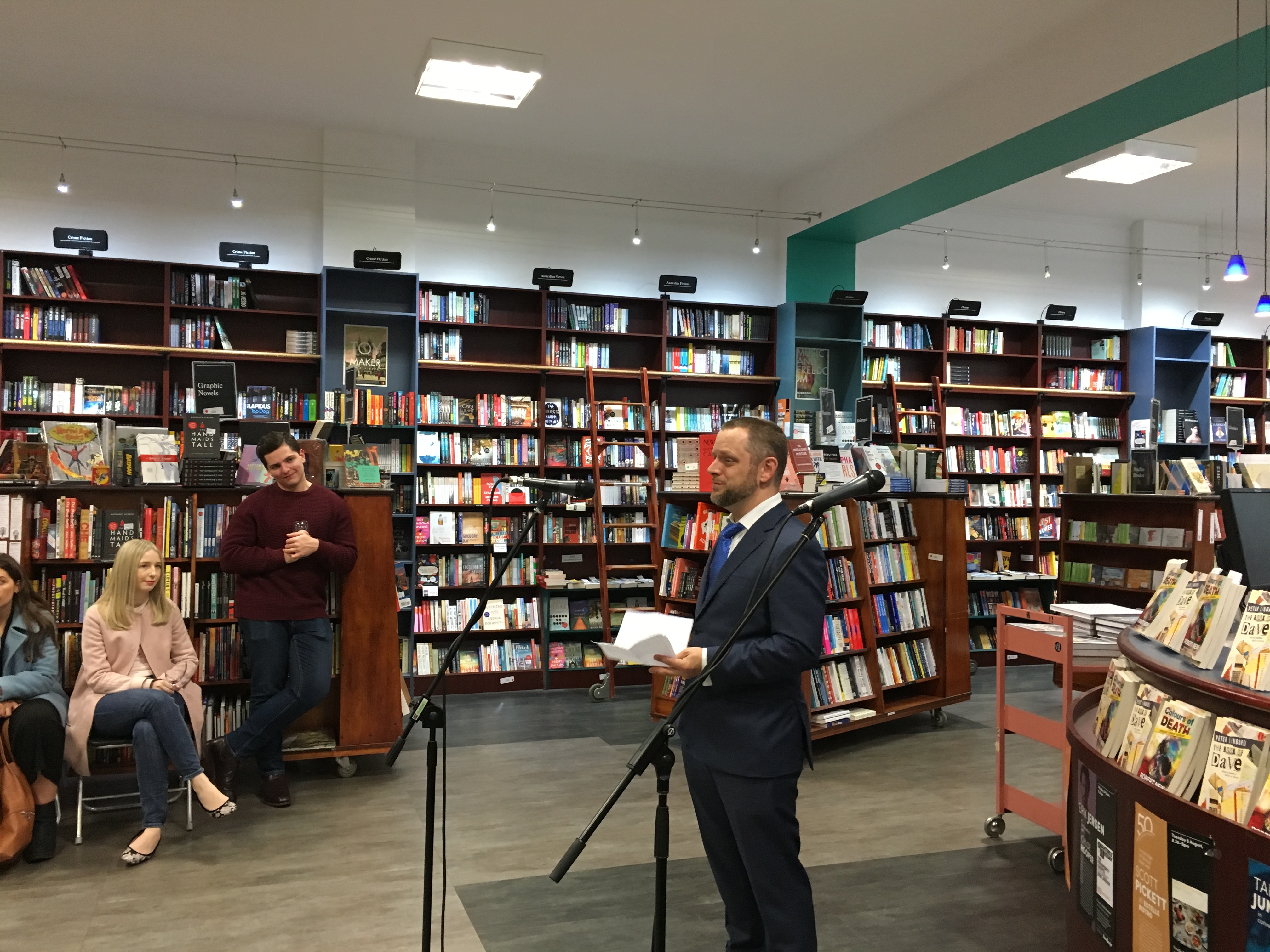
Last night I had the honour of saying a few words and launching two books of short stories for two wonderful writers, Peter Lingard and Robert New at Readings Book Store in Hawthorn.

I met Peter Lingard five years ago when I joined the Phoenix Park Writers Group and admire his writing. Peter has written more than three hundred short stories published in various publications around the world. He’s also written a full-length novel Boswell’s Fairies. (see my earlier review https://sckarakaltsas.com/2017/10/27/book-review-boswells-fairies-by-peter-lingard/) Last night, The Book of Dave was released to the world.

Peter with writers from Phoenix Park Writers Group

A bit about The Book of Dave by Peter Lingard
Dave Wilson is a London barman who, in late December, sifts through telephone numbers accumulated during the year. Each chapter tells the story behind the number.
He joins a band of people who wear pink underwear every Friday, goes to sea in a collier, helps a client sell his invention, takes a sick woman to hospital. Dave becomes friendly with a less than honest policeman, and flies to New York where he falls for an unobtainable woman.

If you ever wanted to get a bird’s eye view at what happens to a barman, this is the book for you. The fact that Peter once worked behind the bar gives some authenticity and he tells each story with humour.

I  also met Robert New five years when I joined Monash Writers Group. He was preparing his second novel, Incite Insight for release and I was writing Climbing the Coconut Tree. We both launched our books three years ago and have supported each other ever since.

Working full time and raising a young family, I asked Robert how he’s been able to write so prolifically and he told me that he simply tries to write at least two hundred and fifty words per day. That’s fewer words than this blog post but over a year adds up. Of course, there are days when he has the time to do more. That’s how he was able to put together Colours of Death. His passion for science shows through in each story as he finds unusual and sometimes bizarre ways people can be murdered.

A bit about Colours of Death: Sergeant Thomas’ Casebook by Robert New
What colour death would you fear the most? This is a collection of nine detective stories where colour plays a role in the mystery.
A high school awards ceremony turns to tragedy when the audience turns blue as they die.
A serial killer’s hair colour could be the key to their capture. An arsonist is trapping people in burning buildings, just to write a story about the rescuers. After a body is dumped in public, working out how the victim died is harder than decoding the intended message.
An incident with the Red Man haunts Detective Thomas, but may also be the key to solving a new case.

There is quite a bit of science behind the stories and you’ll definitely learn something.

It was a privilege to help launch these two books by two wonderful writers and I wish them every success.

Copies are available for sale now. Check them out. Links below:

The Book of Dave by Peter Lingard


https://www.amazon.com/Book-Dave-Peter-Lingard-ebook/dp/B07RG8MH9N/ref=sr_1_1?keywords=The+Book+of+Dave+by+peter+lingard&qid=1561687101&s=gateway&sr=8-1

Colours of Death Sergeant Thomas Casebook by Robert New

https://www.amazon.com/Colours-Death-Sergeant-Thomas-Casebook-ebook/dp/B07RBJR1VJ/ref=sr_1_1?keywords=Colours+of+Death+Sergeant+Thomas%27+Casebook+by+Robert+New&qid=1561687511&s=gateway&sr=8-


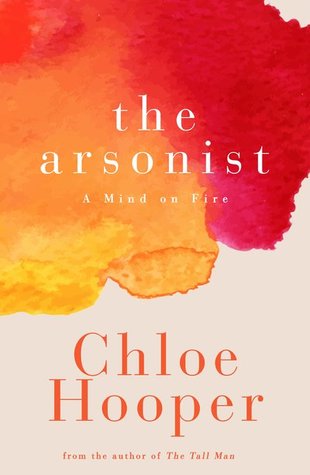
Book Review: The Arsonist: A Mind on Fire by Chloe Hooper

Pic Courtesy of Goodreads

February 7,2009 is etched on my mind forever as it would be for most Victorians. That was the day when our state burned and many people’s lives changed forever. The tenth anniversary just passed, reminded us of the loss and the recovery. We all remember what we did that day. For me, I attended a wedding and the 47-degree Celsius heat and ferocity of the wind felt sinister as smoke blanketed our city and state. Within the next few days, we would learn that 179 people and countless animals had died, numerous property destroyed and for some, an experience too horrible to ever fully recover from.

“Soon it would be known as Black Saturday: four hundred separate fires had burned Victoria, giving off the equivalent of 80000 kilowatts of heat, or 500 atomic bombs.”

Chloe Hooper writes about one of those fires – the one near Churchill deliberately lit which killed forty people. Hooper takes us inside the police investigation and the capture of the man responsible for the fire’s beginning.

In particular, she gives us some insight into the man himself who is autistic and how he, his family and the local community deals with the consequences of his actions. The legal process is explored and at times you can’t help but feel sorry for everyone involved having to relive what happened. The man was found guilty and sentenced to eighteen years in jail.

But this story prompted me to wonder about the other fires; the ones where the Royal Commission identified electricity lines as the cause of sparks and subsequent loss of life. Surely you would think those responsible would also be in jail. Sadly, they are not. A Royal Commission, lawsuits and class actions are what’s left of accountability. And although Hooper doesn’t mention it, what hits home for me in stark contrast is this: that this one man is an easier target to punish than a corporation whose negligence is responsible for even more deaths and destruction. Yes, there was a bucket of money paid out but money doesn’t exonerate or replace lives lost.

It’s sad and it’s tragic but it has now become part of our history and Hooper has done a magnificent job to pull it all together. It’s tight and fast paced and if you didn’t know that it happened, you could almost think it was all fiction. But it’s not. Try and read it if you can.

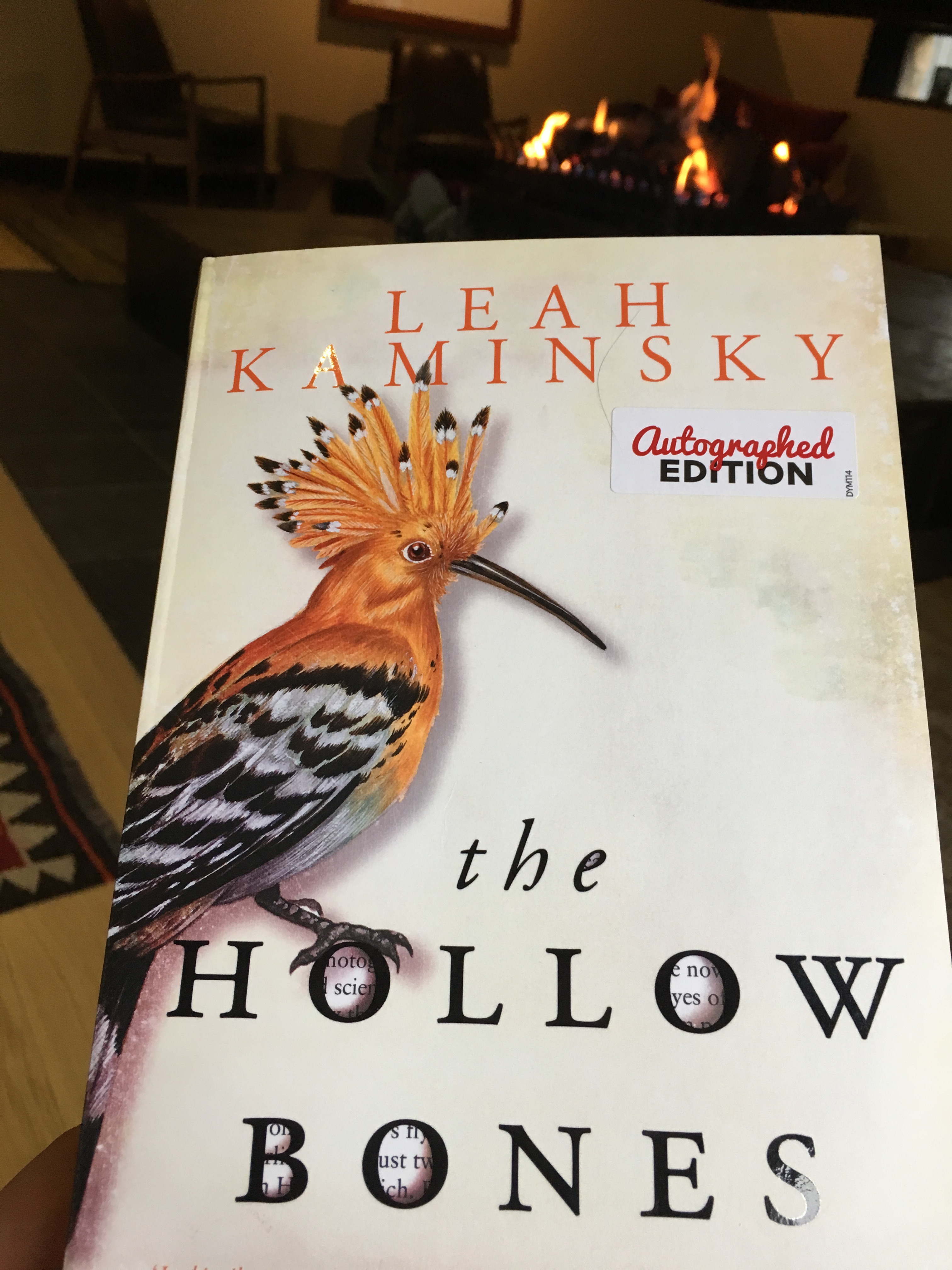
Book Review: Hollow Bones by Leah Kaminsky

An enlightening fictional story of real life German scientist, SS officer, Ernst Scafer was an eye opener. Ernst is obsessed with nature and in particular a hunter of animals and a taxidermist. He is tasked by Himmler and Goring to lead an expedition into Tibet to confirm the origins of the Aryan race. I’d never heard of the so-called World Ice Theory which is as bizarre today as it was then except for the fact that the Nazi hierarchy were consumed by it.

Kaminsky paints a picture of what life in Germany is like from 1937 to 1939. We learn about Ernst as a boy as well as his love for Herta who as a woman must go to Bride School and learn how to be a good SS wife, must be of pure origins and who challenges her husband and his involvement with the Nazi regime. Ernst, however is a man of ambition who uses the regime as a benefactor for his scientific pursuits whatever the costs.

There is a lot in this book and Kaminsky has done a remarkable job researching and piecing a story together. I found the first half of the book about the growth of Herta and Ernst relationship the most interesting and wondered if perhaps this should have been explored more. I found myself wanting more about them and Herta’s missing sister. The second half of the book is mostly about the expedition to Tibet and at times seemed almost a non-fictional account from the research. The current day chapters from the point of view of a slaughtered and stuffed animal slowed the story down for me and jarred. And if you are at all squeamish about animal slaughter it might not be for you.

It’s a very descriptive and well written book which is nevertheless gives a fascinating glimpse about this little known period but it’s not really an easy book to read. The afterword was particularly interesting as it detailed what happened to Ernst and his fellow colleagues and their culpability during the war and afterwards. It’s quite a sickening eye-opener.

Book Review: See What I Have Done by Sarah Schmidt

It’s 4th August 1892 and Lizzie Borden discovers her father dead in the home they share in Fall River, Massachusetts. Her step mother is later discovered upstairs. Both have been brutally slain by an axe. Strangely, Lizzie and the maid, the only two at home heard nothing. This is a respectable, wealthy family and the police and neighbours speculate about who could have done it.

The story mostly covers three days; the day before the murders, the day of and the day after. Schmidt retells this true story from multiple points of view; Lizzie, her sister Emma, the maid, Bridget and a stranger, Benjamin who had been sent to have words with Mr Borden the very morning of the murders.

We quickly learn that not all is right within this family. The sisters striving for independence still remain at home and unwed. They have a tight bond with each other which borders on the obsessive. Money seems to be at the root of the unhappiness. The father is very wealthy yet the family scrimps on basics. Lizzie, although almost thirty seems to be a lost soul striving for her father’s attention and her sister’s love, almost obsessively. Yet, she suffers from a type of amnesia and can barely recollect the events of the morning of the murders. The police appear incompetent and we never really get to the bottom of it. Bridget, the maid has her own problems and is desperate to leave.

The imagery is vivid; rotting pears, decapitated pigeons, rotting mutton soup and foul smells in an upstairs bedroom will leaving you feeling nauseas. Perhaps these repetitive images are a tad overdone, but it all adds to placing us right into this fascinating and intriguing story.

The author does a great job of interpreting the facts. The weak link for me is the penultimate chapter which was from Benjamin’s’ point of view and it jarred. Benjamin comes back to see the sister’s years later and we find out about Lizzie’s arrest and acquittal although little else. Then, the very last chapter takes us to Lizzie’s point of view and back in time again. I think the book might have been better without Benjamin’s chapter.

It’s very well written and the cover is superb. The timeline of facts at the end was also very helpful. We are kept guessing right up to the end. Did Lizzie do it or not? You need to make up your own mind.

Book Review: Any Ordinary Day by Leigh Sales

I closed the last page and had to go for a walk to clear my head and take in the colour of the day. The brilliance of blue sky contrasted with the red, yellow and green of the falling leaves helped me  contemplate what was in this book. The walk brought me into the ‘now’ of savouring my own ordinary day.

Leigh Sales explores what happens to a person when they’re blindsided by a moment they never see coming. She carefully treads through her own life as a mother, wife and award winning journalist, who you think would be resilient having had to confront other people’s tragedies on a regular basis. But journalists are only human too and she readily confesses to her own blindsided moments.

People like Walter Mikac who suffered tremendously when his wife and two young daughters were gunned down; Stuart Diver, who buried under tons of earth and rubble was unable to save his wife; Juliet Darling whose husband was brutally murdered by his son; the list goes on. Sales talks to each one about their trauma and grief and what they valued most from those around them in their road to recovery.  She talks to detectives, medical personnel, families and friends to learn from them. The discussions are honest and at times raw causing Sales to examine the role of journalists and the media and in particular her own actions in the past of pursuing a story despite the cost for the person who has suffered from a trauma.

I was very interested in the role of support and what it is that gets people through. While  Sale weaves in some scientific theory with facts and figures it’s not heavy handed. It’s matter of fact and down to earth and easy to read. At times, it’s confronting but thought provoking enough for you to learn something, if not be inspired.